

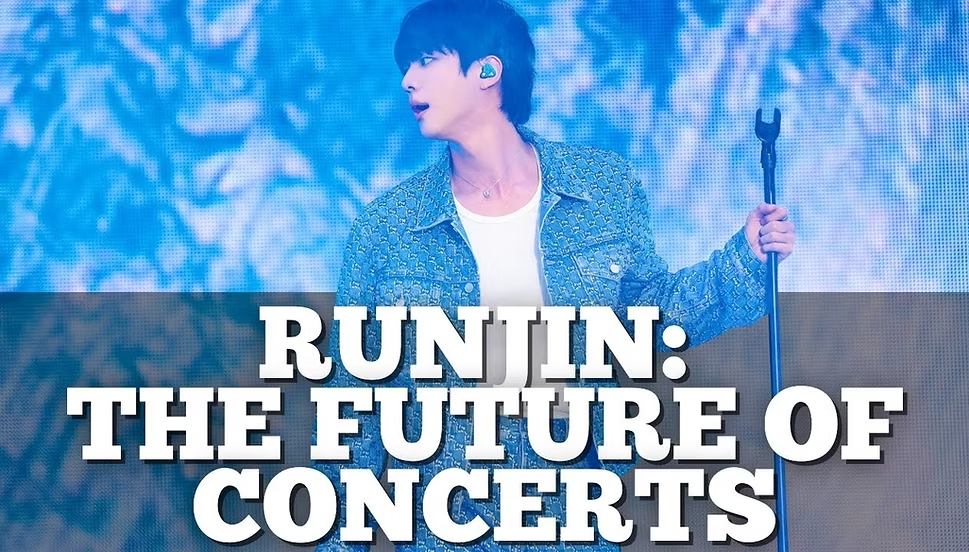
If you were lucky enough to experience Jin’s recent concert in Seoul — whether in person or via livestream — you’ll know one thing for sure: this wasn’t just a concert. It was a transformation.
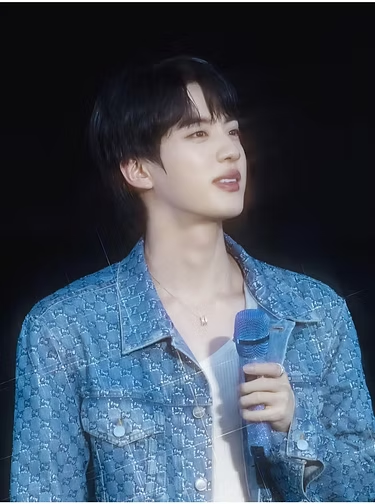
From the moment Jin walked onto the ramp and confidently said, “Challenge accepted,” it was clear: this was more than music. It was a signal that concert culture is evolving, and many still haven’t caught up to what he’s doing.
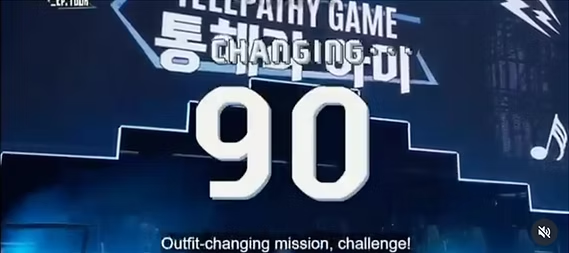
Creating a Core Memory: A Multi-Sensory Experience
In a world where digital content overwhelms the senses, Jin created a tactile memory — something physical and unforgettable.
He handed out raincoats. He asked fans to wear comfortable shoes. These simple gestures became symbols of the moment:
- The anticipation of rain
- The thrill of moving with the crowd
- The surprise of a physical gift from the artist
By tapping into multi-sensory memory, Jin created an experience that fans will forever associate with touch, movement, and emotion — not just sound. This deepens long-term emotional connection in ways digital-only moments can’t replicate.
Preparing Fans to Truly Feel the Music
When fans arrive knowing the experience might involve rain, movement, and participation, they show up differently.
They’re not just waiting to be entertained. They’re mentally present, physically prepared, and emotionally engaged. That shift enhances their understanding of the performance.
Every song becomes part of a shared narrative. The environment adds context — and context makes the content more meaningful.
Creative Control: Jin Took the Lead
This wasn’t a label-run event. It was Jin’s vision from start to finish.
He turned down an immediate post-discharge tour. Later, he changed his mind, which meant everything had to be rushed — including securing a venue. Some criticized the location, but Jin clarified the reality of last-minute production logistics like ingress and egress schedules.
What mattered most? He asked Big Hit to make it happen — and they did. Because this was his show, and he was calling the shots.
Overruling the Director: A Statement of Artistic Control
Even the director had different plans. He wanted an explosive opening with lights and music. Jin disagreed.
He chose a dramatic walkout in silence, lit from behind, with one phrase: “Challenge accepted.”
Sure, it was still bright outside — so the drama didn’t fully land — but that’s not the point. The point is: Jin stood his ground.
He isn’t just another idol following a script. He’s an artist in control of his narrative.
Concert as an Interactive Art Form
Jin’s concert wasn’t just a performance — it was an invitation.
Today’s fans, especially Gen Z, crave authenticity and intent. With AI now capable of mimicking songs, visuals, and writing, younger generations want to know:
- Who made this?
- Why was it created?
- Can I be part of it?
Participation equals authenticity. And Jin delivered.
From live interactions to physical preparation, he turned a concert into an interactive art installation. The audience wasn’t just watching — they were inside the art.
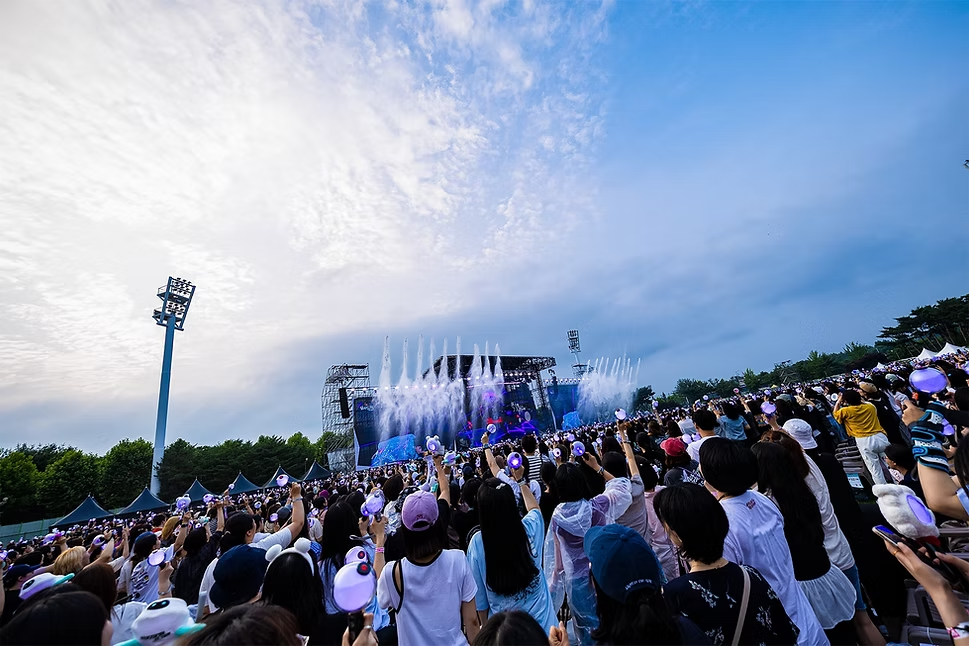
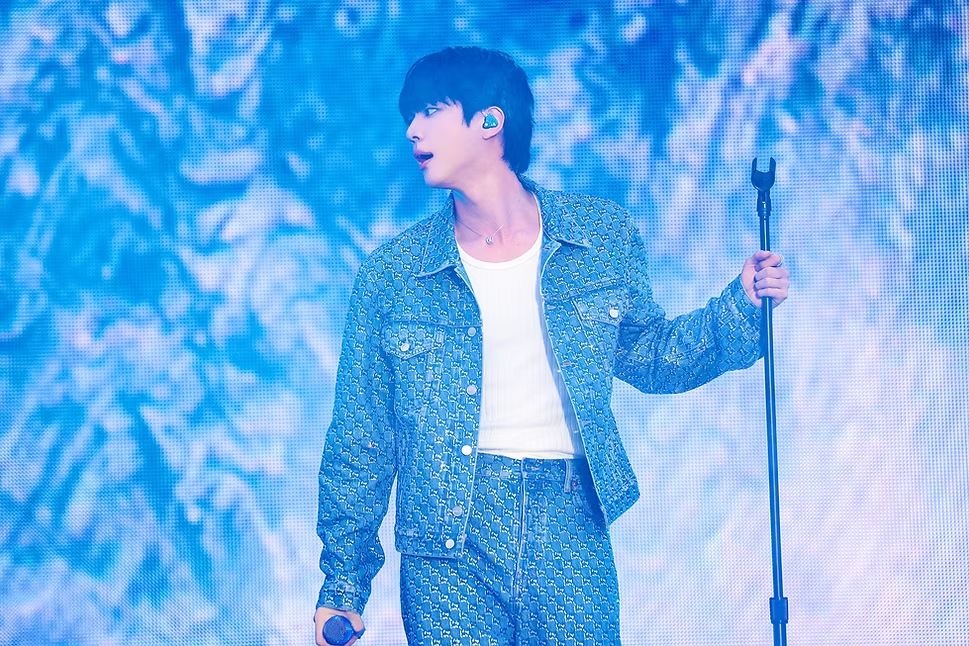
held at the Goyang Sports Complex Auxiliary Stadium in Gyeonggi Province on June 28. [BIGHIT MUSIC]
Third Spaces: Redefining Where We Connect
Gen Z coined the concept of a “third space” — not home, not work, but a place to simply exist, connect, and feel present. For older generations, that could mean a coffee shop. But for Gen Z, it can be fully digital, too.
Jin’s concert became a hybrid third space — physical and digital — where fans gathered, connected, and co-created the energy.
Livestreaming didn’t “spoil the surprise.” It expanded the invitation. For this generation, seeing a show online can actually make them more likely to want to see it live.
AI’s Rise Makes Human Performance More Valuable
Gen Z isn’t scared of AI — they grew up with it. That’s why they’re better at spotting what’s fake.
So the more AI-generated content floods their feeds, the more they crave what’s real:
- Live vocals over autotune
- Messy banter over scripted lines
- Imperfect moments that feel personal
Jin delivered live vocals, genuine laughter, and spontaneous moments. That’s the new standard. And fans are watching closely.
Banters, Call-Outs, and Audience Play
Remember when Jin teased the crowd mid-song for missing the rap part? That wasn’t just a funny moment. It was a signal.
You’re not just here to listen. You’re in this now.
Younger audiences expect banter, interaction, and shared experiences. Passive entertainment feels outdated. They’ve grown up in interactive environments like TikTok, Twitch, and multiplayer games.
They don’t just want to be entertained — they want to be involved.
The Future of Concerts: Beyond Physical Burnout
Not every artist can do 3-hour, dance-heavy shows forever. And they shouldn’t have to.
Jin is showing us a new model — one that prioritizes connection over spectacle.
He created a top-tier concert without breaking his body, and it still felt powerful, immersive, and emotionally rich.
This isn’t just a new chapter for Jin — it’s a new framework for concerts moving forward.
Redefining Value: Experience Over Scale
Younger fans care less about pyrotechnics and more about presence.
They want to feel part of something unique. They want emotional depth, not just production height.
Jin understood that. He crafted an environment where even a raincoat or a joke mid-song became part of the memory.
Closing Thoughts: Jin is Building Connection, Not Just a Concert
Jin may not even realize how far ahead he is — but what he’s building is brilliant.
He’s reshaping concerts into something more:
- A personal space that includes fans
- A memorable experience that engages every sense
- A reciprocal moment of trust between artist and audience
For Gen Z and Gen Alpha — often skeptical of polished celebrity images — this is what builds authenticity. It turns fans into true supporters of the person, not just the performer.
Jin isn’t just singing songs.
He’s creating a living, breathing, evolving art space.
And once you’ve experienced that — you can’t go back to just watching someone sing on a stage.
