

Gangwon Province, South Korea
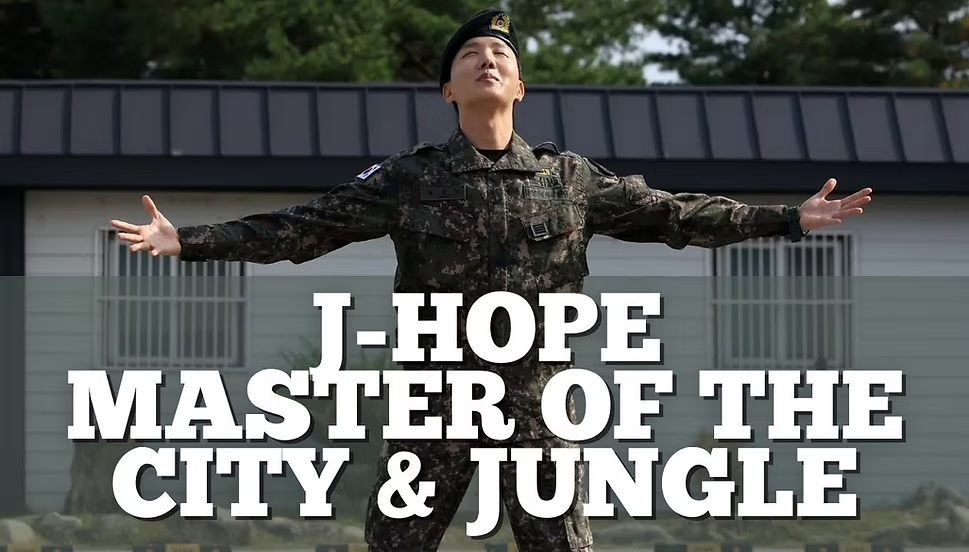
Gangwon Province is more than just a picturesque landscape. Bordering North Korea and containing segments of the Demilitarized Zone (DMZ), this rugged region plays a vital role in South Korea’s national defense. It is home to the 36th Infantry Division, headquartered in Wonju—a unit that trains in both jungle wilderness and urban environments.

Dual Warfare Training Ground
Wilderness and City
What makes the 36th Infantry Division stand out is its dual-domain training approach. On one side is the wilderness: thick, humid jungles teeming with nature’s challenges. On the other side is the city: a concrete maze designed for modern urban warfare. Soldiers here train to master both terrains, becoming flexible and adaptive fighters.
This balance reflects the strategic goal of the Ground Operations Command: to build multi-domain combatants ready for any battlefield scenario.
Where J-Hope Served
This is the division where BTS member J-Hope served—not only as a soldier but as an assistant drill instructor.
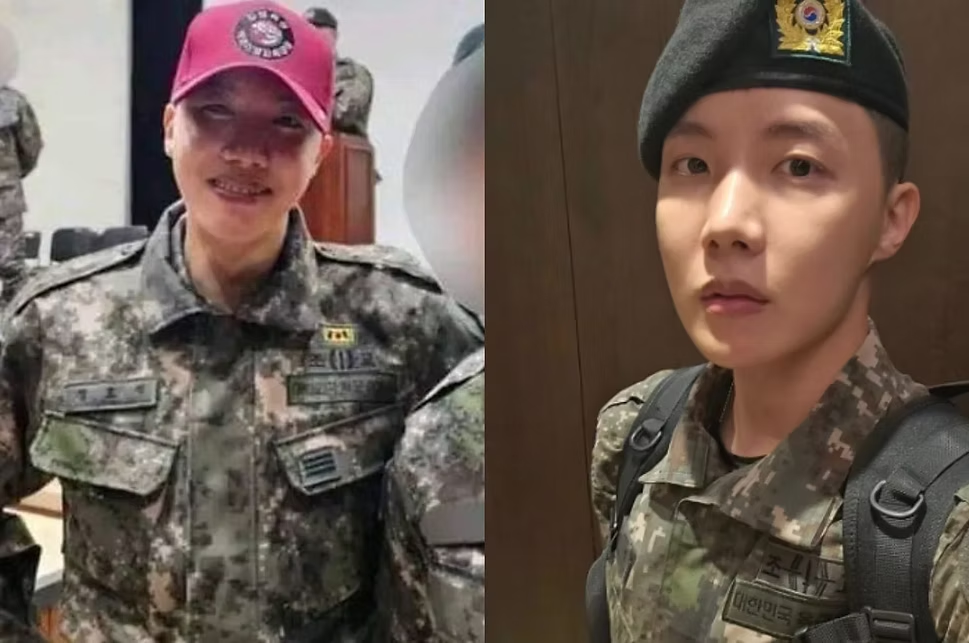
In this role, he helped shape new recruits into agile, capable warriors who could adapt to any situation. Here, adaptability isn’t just a trait—it’s a strategy.
Jungle Warfare Training
Navigation & Movement
In the jungle, all directions can look the same. Soldiers learn to use compasses, GPS, and terrain association—identifying landscape features to match the map. Silent movement is key. Troops move in staggered or single-file formations to reduce visibility and avoid ambushes.
Camouflage & Concealment
Blending in isn’t optional—it’s survival. Soldiers use natural vegetation to create camouflage. They cover themselves in mud, leaves, and branches, and even manage body heat to avoid thermal detection. Light and sound discipline is strictly enforced—no shiny gear or unnecessary noise.
Survival Training
Basic survival skills are drilled into every conscript. Soldiers learn how to catch rainwater, identify edible versus poisonous plants, and administer first aid for common jungle-related injuries. The mental challenge of isolation, fatigue, and hunger can break even the toughest spirits.
Marksmanship in Humid Conditions
Firing a weapon in the jungle is tricky. Moisture and mud can jam rifles. Dense foliage limits visibility. Soldiers are trained to shoot accurately in wet, slippery, and low-visibility conditions, taking into account how humidity affects ballistics and optics.
Urban Combat Training
Movement in Confined Spaces
Urban warfare—known in military terms as MOUT (Military Operations on Urban Terrain)—requires fast, calculated movements in tight, dangerous environments.
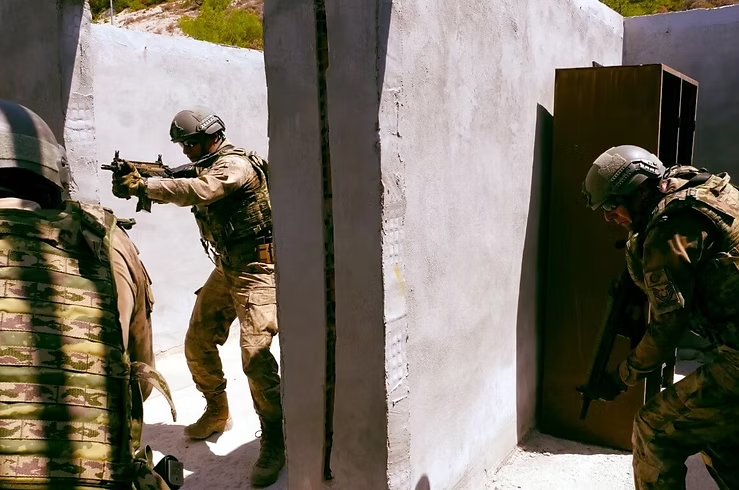
Soldiers use bounding overwatch tactics, leapfrogging from cover to cover. Hand signals replace voice commands to avoid detection.
Use of Cover & Concealment
Walls, shadows, furniture—anything can be used for protection. Troops are trained to understand angles of fire and how to secure high-risk entry points like doorways and staircases.
Urban Survival & Resupply
Being cut off from supply lines is common. Soldiers learn to fortify abandoned buildings, scavenge for food and shelter, and hold positions with limited resources until reinforcements arrive.
Communication & Coordination
Communication is key to survival. Soldiers coordinate with medics, drone teams, and support units. They must always know where teammates are and how to react in chaotic, high-risk scenarios.
J-Hope: The Man of Duality
J-Hope has always been a man of contrasts: dancer and soldier, performer and instructor, artist and warrior. His time in the military didn’t erase his identity—it enriched it. From rehearsing choreography to running tactical drills, Hoseok continues to master balance in every role he takes.
Whether standing under stage lights or patrolling in silence, he remains J-Hope—sharpened, steeled, and more fully himself than ever before.
