

Original published date: November 9, 2024
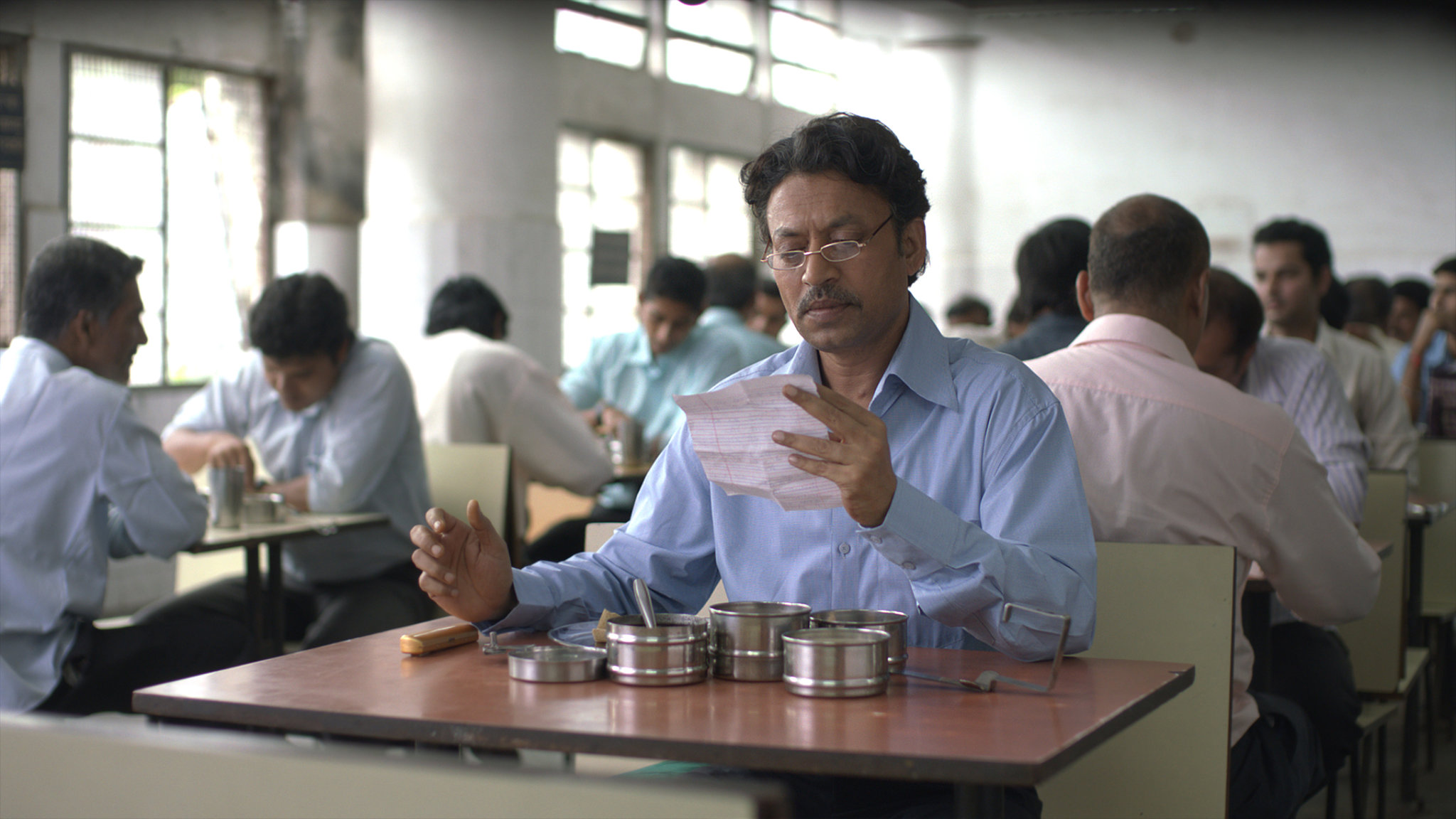
In 2013, director Ritesh Batra released The Lunchbox, a quiet yet profound Indian film that became a global festival favorite. At its center was the incomparable Irrfan Khan, whose nuanced performance carried a story not of whirlwind passion, but of something rarer and more fragile—a “pre-love story,” built on understanding and recognition rather than attraction.
The film follows Ila, a young housewife hoping to rekindle the dwindling spark in her marriage, and Sajaan, an aging widower counting down the days to his retirement and planned move abroad. Through a mix-up in Mumbai’s famously reliable lunchbox delivery system, Ila’s carefully prepared meals land on Sajaan’s desk instead of her husband’s. What follows is not just an exchange of food, but of letters, confessions, and fragments of their inner lives.
What makes The Lunchbox extraordinary is not what happens, but what doesn’t. It is a story about longing, companionship, and the generosity of letting go.
Trapped in the Past
Both Ila and Sajaan carry invisible chains. Ila is stuck in the memory of the husband she once adored, but who no longer sees her. Sajaan is bound to the memory of his late wife, a love so profound he cannot imagine replacing it.
Their written exchanges are not flirtations in the conventional sense. Instead, they are acts of recognition—moments of finding someone who truly understands. In a society where Ila’s role as a dutiful wife should have silenced her, she discovers she can speak freely to Sajaan because he already knows the terrain of her loneliness.
A Nudge from Upstairs
Ila’s confidante is the woman living in the apartment above her, caring for her comatose husband. Rather than urging Ila to focus on her marriage, this older woman encourages her to keep writing to Sajaan, to keep sending the lunchboxes. She teaches Ila to cook better, not for her neglectful husband, but for herself and her letters.
This is radical in its quiet way. It is an act of love from one woman to another, ensuring Ila does not waste her life trapped in lovelessness. The letters are not just meals; they are doorways to freedom.
The Wrong Train, the Right Destination
One of the film’s most memorable lines comes from Shaikh, Sajaan’s eager trainee, who recalls his mother saying: “Sometimes the wrong train takes you to the right station.”
This philosophy runs through the entire narrative. The lunchbox, delivered to the wrong man, becomes the right connection. What begins as a mistake transforms into a revelation—that detours, disappointments, and missteps can be routes to unexpected destinations.
It’s a universal truth: breakups can lead to self-discovery, job loss can spark reinvention, and wrong turns can open unimagined paths.
“Sometimes the wrong train takes you to the right station.”
The Lunchbox
Ila Wasn’t in Love with Sajaan
Although Ila and Sajaan nearly slip into romance, Sajaan ultimately steps back. “Nobody buys yesterday’s tickets,” he says, gently acknowledging the weight of his age and grief.
More importantly, Sajaan recognizes that Ila is not in love with him, but with what he represents. To her, he is proof that love can exist—steady, loyal, and profound. What she craves is not Sajaan himself, but the kind of love he once gave to his wife.
The Greatest Act of Love is Generosity
In the end, Sajaan’s refusal is his most loving gesture. To surrender your own chance at happiness so someone else may have theirs is a rare act of generosity. We are taught to seize the moment, to never let chances slip away. The Lunchbox reminds us that sometimes the braver choice is letting go.
Sajaan chooses to step aside, believing Ila deserves a future untethered by his grief and limitations. It is an act of honor, restraint, and love that asks viewers to reflect: how many of us could do the same?

Nimrat Kaur plays the leading lady in The Lunchbox.
A Tragic Life Doesn’t Need to be Lived Tragically
Ultimately, The Lunchbox is not about whether Ila and Sajaan end up together. It is about two people choosing how to live with their tragedies. Sajaan moves toward acceptance, preparing for solitude in his later years. Ila fights for possibility, for a future where happiness might still be found.
Their story is not a romance in the traditional sense—it is a meditation on the spaces between loss and renewal, on finding comfort in recognition, and on the courage it takes to either step forward or step aside.
The Lunchbox endures as a film that whispers instead of shouts, reminding us that sometimes the wrong delivery is the right beginning.
