

The future of art isn’t coming. It’s already here and it’s not just about new tools or trends. It’s about a battle—a quiet but urgent one—between two forces. One is machine-made content—endlessly generated, optimized, and algorithmically perfect. The other is human art. Raw. Flawed. Soulful. Timeless.
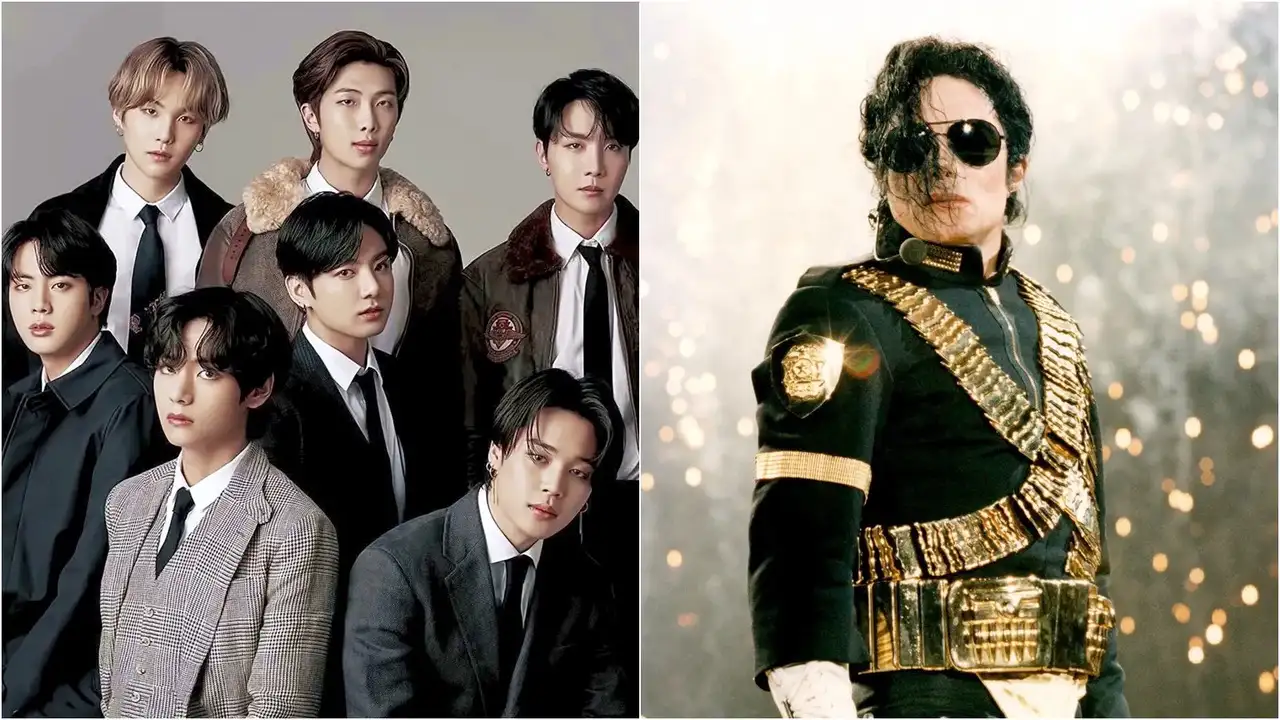
In this article, we’re going to explore how legendary artists like Michael Jackson and the Beatles, global disruptors like BTS, and a rare few others are doing something AI can’t replicate and never will.
We’ll break down:
- Why AI can imitate style but not soul
- How artists like BTS build living, breathing worlds—not just content
- How Michael Jackson didn’t just perform music—he reshaped the artform
- Why depth, meaning, and imperfection are the real future of creativity
- And how the next generation will consume art in a way that makes human authenticity essential
Human Laziness is the Enemy
People love to hate AI. They call it dangerous, unnatural, unethical. And yet, most fail to realize—it’s already everywhere. Unless you’ve disconnected from modern life entirely, AI has been a quiet presence in your decisions, your habits, even your emotions. The problem isn’t that AI suddenly arrived. The problem is that we never noticed how much it’s shaped us all along.
That’s where the real danger lies. Our lack of awareness gives AI a power it doesn’t inherently have.
AI was already in word processors, autocorrecting your sentences in early smartphones, before the public knew what to do with them. We’ve let Google and other search engines shape how we think, what we trust, and even how we argue. We’ve written academic papers, marketing plans, and creative proposals based on what AI-enhanced algorithms told us was true. AI has optimized machines, composed music, corrected pitch on recordings—and done it so seamlessly that we’ve normalized its presence without understanding its influence.
Now that it’s writing poems or generating scripts, people are calling it a threat to humanity—as if creativity was the last sacred space. The panic is performative. This outrage is not about ethics, it’s about ego. AI is no more dangerous now that it is creating music or movies, it’s just visible.
AI was already in word processors, autocorrecting sentences in early smartphones. We’ve let AI shape how we think, what we trust, and even how we argue through our reliance on search engine results. We’ve written academic papers, marketing plans, and business proposals based on what AI-enhanced algorithms told us was true.
Now that it’s writing poems or generating scripts, we are calling it a threat to humanity. The panic is performative. This outrage is not about ethics, it’s about ego. AI is no more dangerous now that it is creating music or movies, it’s just visible.
The same thing happened with social media.
We warned it would compromise privacy, distort beauty standards, and empower anonymous cruelty. We were right but it wasn’t the platforms themselves that did this. It was how we used them.
Are we forgetting that AI is not sentient? It doesn’t act on its own.
AI is not the enemy. Our denial, our laziness, our unwillingness to examine how we got here, and do something about it—that’s the real threat.
Future of Art Consumers
Just as millennials never lived without the internet, Gen Z and Gen Alpha have never lived without visible and integrated AI. They didn’t choose AI. They were born into it.
While older generations criticize their dependence on technology, it was the older generations that built a world running on AI. It was the older generation that normalized devices, outsourced memory to search engines, and created digital lifestyles.
Gen Z and Gen Alpha simply became fluent in the language introduced to them.
It is that fluency has shaped how they define creativity. They don’t view AI as separate or artificial. It’s embedded in their daily life. It’s a utility, not a novelty. They will know what’s AI-generated and what’s human-created and they will engage with both, appreciate both but categorize them differently.
This is already how cultural shifts have always worked.
In the 1500s, opera was the elite art form. When ballroom dancing and more casual music emerged, it was seen as trash—until it wasn’t. Graffiti was once vandalism. Now, it hangs in galleries.
Redefinition of Art: Product vs Art
For generations, we judged creative work based on the final output. Was it beautiful? Memorable? Did it sell? We focused on the result, often ignoring who made it and why. For a long time, that was necessary because it took away our biases against race, genders, and others.
The bias will be necessary again but this time it will be machine versus humanity.
Machines can now replicate the form. It can paint, compose, write, and edit.
It can blend styles, mimic emotion, and predict trends. It’s fast, efficient, and dangerously good at making things that look and sound “right.”
Taste and habits shift and that pushes the nature of things we create and utilize to evolve, including art. The only way we can differentiate what makes something “art” will depend entirely on the presence of a human behind it. The future of art will be defined by origin and intention —and what they lived through to do so.
If there’s no human intention behind the work, it may still be consumed—but it won’t be revered. The creator’s identity, struggle, vision, and process will matter just as much—if not more—than the final form. Art will no longer be judged in isolation. It will be judged in context. Creation without a soul will live in a different category: useful, maybe but not transformative.
The next generation won’t fear AI art but they’ll reserve reverence for something else- the story only a human can live—and choose to tell.
Elevation of Standards: Only the Mediocre should be Scared
Having a human creator may be the baseline for calling something “art.”
However, to make an impact—to move people, to matter—quality still reigns.
AI generated work may be technically brilliant, catchy, and even moving but it will live in a separate category—efficient, optimized, and ultimately disposable. That means artists today aren’t just competing with each other. They’re competing with machines trained on billions of moments of human joy, loss, heartbreak, and healing.
Machines that can identify patterns in emotional responses and produce hits on demand. That’s what we’re up against—not creative intention, but algorithmic perfection.
AI can craft a song based on the most successful love ballads of the past 50 years.
But it can’t fall in love, lose someone, and make something beautiful out of the ashes. It can only remix what’s been done. It can’t originate from something irrationally bold, spiritually painful, or chaotically hopeful.
That’s our edge.
If your work is surfacelevel, formulaic, designed to chase trends—AI will do it better. If you’re relying on polish, you’re replaceable.
If your work is messy, raw, deeply personal—if it carries scars and soul—
you’re offering something a machine never can.
Machines that can identify patterns in emotional responses and produce hits on demand. That’s what we’re up against—not creative intention, but algorithmic perfection.
Substance as the Foundation and Form as its Celebration
Art has two essential elements – substance and form. Substance is the heart—the message, the intention, the lived truth behind the work. Form is the vessel—the sound, the color, the medium that brings it into the world.
In traditional models, form often took the spotlight. We praised visuals, melodies, structures—sometimes more than what they actually meant but as AI rises, that imbalance is no longer sustainable.
AI can master form. It can imitate technique, structure, and genre. It can write a poem that rhymes, compose a melody that hits, and generate images that stun.
What it can’t do is create substance because substance requires life. It comes from experience, confusion, grief, resistance, and growth. That’s why substance will become the nonnegotiable foundation of future art. Without it, all you have is a product, one that might entertain but won’t linger, fills the space but leaves no mark.
That doesn’t mean form disappears. In fact, form is being redefined and expanded.
Music, for example, will no longer be tied to one format. BTS carried the torch. The narratives of their songs stretched across music, film, visuals, literature, physical space, and digital platforms.
A song becomes a short film.
A poem becomes choreography.
An album becomes a live narrative, with fans decoding, celebrating, and contributing to the meaning.
Many wonder why BTS’ fans aren’t quiet when the band is. It’s because BTS’ art is alive and fans can continuously progress, re-interpret, and grow it.
Many Asian artists are following their lead. While no artist has managed to create a narrative in the same expanse as BTS, many artists are using multiple media to tell or grow the story of their songs. Jeff Satur of Thailand, SB19 of the Philippines, and many Kpop groups are now creating cinematic music videos. GEM, one of the most popular singers in Hong Kong, released an album to tell a story across 14 songs.
Audiences today aren’t content just watching—they want to enter the story, feel it, discuss it, even expand it. They want art they can live with, not just consume. For that to happen, depth is essential because without substance, there’s nothing for them to interpret, no meaning to discover, and no experience to embody.
That’s the shift – substance must lead, form must elevate. So if you’re only offering polished superficial trends, AI has you beat.
Consumption of Art
The rise of virtual spaces like the metaverse will also change how we consume art. We will move beyond watching and listening. Art is something we step into and participate in because when every digital space becomes a place of stimulation and interaction, simple consumption no longer satisfies.
If you want people to engage, reflect, remember—you’ll need to give them a chance and resources to be inside the story. Fans would want to move, touch, and connect with the artist and other fans.

Suga, Jin and BTS: The Evolution Of Performance Formats
BTS’ Jin just completed his solo tour. It was a glimpse into the next evolution of performance—one that doesn’t treat the audience as passive observers, but as active participants in the art itself. He built on something BTS has always done – treat art as a multisensory, narrative experience.
Yes, they’ve released global hits like “Dynamite” and “Butter,” but those are outliers in a discography built on introspective storytelling, philosophical references, and emotional continuity.
BTS never limited their art to albums or stages. They created a careerspanning narrative, weaving together music, literature, film, livestreams, exhibitions, webtoons, and more. Each era reflects not just their evolution as artists, but as people. Their songs are layered—built on myth, psychology, literature, and personal history.
They created a universe where their fans, A.R.M.Y. are interpreters, researchers, storytellers, and cocreators. They translate lyrics, analyze symbols, connect references, and build global projects that mirror the messages BTS delivers.
BTS’ art has already moved far beyond music. They’ve turned concerts into multiday festivals. Their popups, museums, and livestreams create immersive spaces where fans don’t just consume—they feel, decode, and reflect.
But until recently, the live concert format remained largely traditional. That’s what’s now shifting.
The solo tour of BTS members Agust D (aka Suga) and J-Hope, marked a turning point. They used the stage not just to perform songs but to conclude a narrative trilogy, turning the concert into the final chapter of a deeply personal story.
Jin took it further, introducing interactivity that turns the audience into part of the performance. People weren’t just showing up to watch, they showed up to participate.
And if this is where BTS is headed, their future concerts may evolve into fully immersive storytelling experiences—merging music, narrative, and realtime interaction.
The artist won’t just perform the story. The audience will live it with them.
Before BTS
BTS didn’t start the revolution.
The transformation of art has always followed cycles of disruption. The Beatles turned the album into a conceptual narrative. They pioneered the music video not just as promotion, but as expression—tying sound, image, and identity together in bold new ways.
Michael Jackson took it further—fusing music, dance, cinema, and stage into global spectacles. He turned concerts into fullscale productions and music videos into cultural events. Michael Jackson created and refined the art of turning a song into a myth.
Now, BTS is reshaping the entire ecosystem—not only through sound or performance, but through structure, philosophy, and technology. They’ve built something that lives across platforms, across formats, across realities.
Their innovation may go unnoticed by those unfamiliar with the language or the context but that doesn’t make it any less revolutionary.
BTS isn’t just adapting to the future of art. They’ve created a model where:
- Fans don’t just consume—they collaborate
- Performances aren’t events—they’re chapters
- Music isn’t just sound—it’s a living archive of emotion, philosophy, and growth
- And if this evolution seems slow to be recognized, that’s not unusual.
The Beatles weren’t hailed as “cultural architects” until years after their split.
Michael Jackson’s full impact wasn’t understood until the end of his career.
Legacy often lags behind vision.
BTS is creating in real time—while critics still debate their legitimacy but one day, when Gen Z and Gen Alpha define the dominant culture, when the market finally mirrors their values, when the language of creativity shifts completely.
The record will show that BTS created an artistic blueprint that machines can never replicate.
