

I remember wondering as a teenager why life doesn’t come with a manual. You buy a 32-inch flatscreen TV and they hand you a booklet thicker than your skull, covering everything from plugging it into the socket to who to call if everything goes wrong.
Life, however, is supposed to be freestyle.
This video gives me the same kind of musings—except twisted, because it does come with an important manual… one that ultimately serves no purpose.
IT’S SPLIT INTO TIMELINES
The music video runs on two timelines—one moving backward, the other forward. At the end, the two finally meet.
But they don’t unfold separately. They’re spliced together: the group in a truck driving backward, then suddenly on bicycles pedaling forward into somewhere unknown. The backward and forward shots are constantly interwoven.
The result? It’s nearly impossible to piece together on a first watch. You need at least a second round just to begin making sense of it.
BACKWARDS… IN SLOW MOTION
The reverse playback offers plenty of comedic visuals. Watching people move in reverse—tripping, falling, scrambling—has its own slapstick charm. But it also reveals details normally blurred in forward motion, which makes you pay closer attention.
That’s where the introspection creeps in. Life moves forward whether we’re aware or not. Most of the time, we only recognize the highlights or scramble to understand what just happened. This video captures that feeling, nudging us to notice not just where we’re going but how we’re getting there.
THE USELESS MANUAL
Throughout the video, a manual appears. It acts like a chapter guide, pushing the plot from one point to the next. On the surface, it seems like instructions for building a machine—requiring five people. Beyond that, nothing makes much sense.
Well… sort of.
Because when you stop trying to apply it literally, the manual suddenly feels like a guide to life itself. And in that sense, it’s golden.
Lines like:
“Every collision is an inevitable consequence of energy in motion.”
“The only thing certain is that change will occur, but not necessarily for the better.”
“The shockwave may seem intense but intensity does not equate to meaning. The larger the shock, the greater the emptiness it leaves behind.”
Somebody should have handed me that manual when I was 18.
Every collision is an inevitable consequence of energy in motion. The manual reads like a guide to life, not machinery.
THE CHAOS IS BY DESIGN
One of the central props is the car—and the manual makes clear just how useless it is. No doors, no navigation, no mirrors, not even the ability to drive. Yet it’s what launches their journey. It’s their call to adventure: no destination, no control, no way to undo what’s about to unfold—only forward momentum.
This theme extends across the MV. The story feels disorganized. Nothing seems to make sense. What exactly are they looking at? What fell from the sky? What is that bright object on the ground?
The “useless manual” explains it all in its own way: suspend logic, stress-test irrational scenarios under real conditions, and see what remains.
THE MANUAL IS NOT ABOUT THE MACHINE
In the end, the manual isn’t about the car—or any machine. It’s about disassembling the five members themselves. It signals that the adventure requires them to shed preconceived notions: of music, of industry rules, of who they’re expected to be.
Step 7 spells it out: “You cannot move forward with old architecture. Outdated values, routines, and roles. Challenges require a clean slate.”
That’s the trick. While viewers fixate on what fell from the sky or what the glowing object means, those are just red herrings. The real “disassembly” is happening within the five themselves.
The real disassembly isn’t of the car. It’s of the five members themselves.
CONTRADICTION AT EVERY LEVEL
Even the melody is a red herring. The beat is slow and chill, perfect for a country drive at sunset. But the lyrics and visuals are pure rebellion—undoing the status quo.
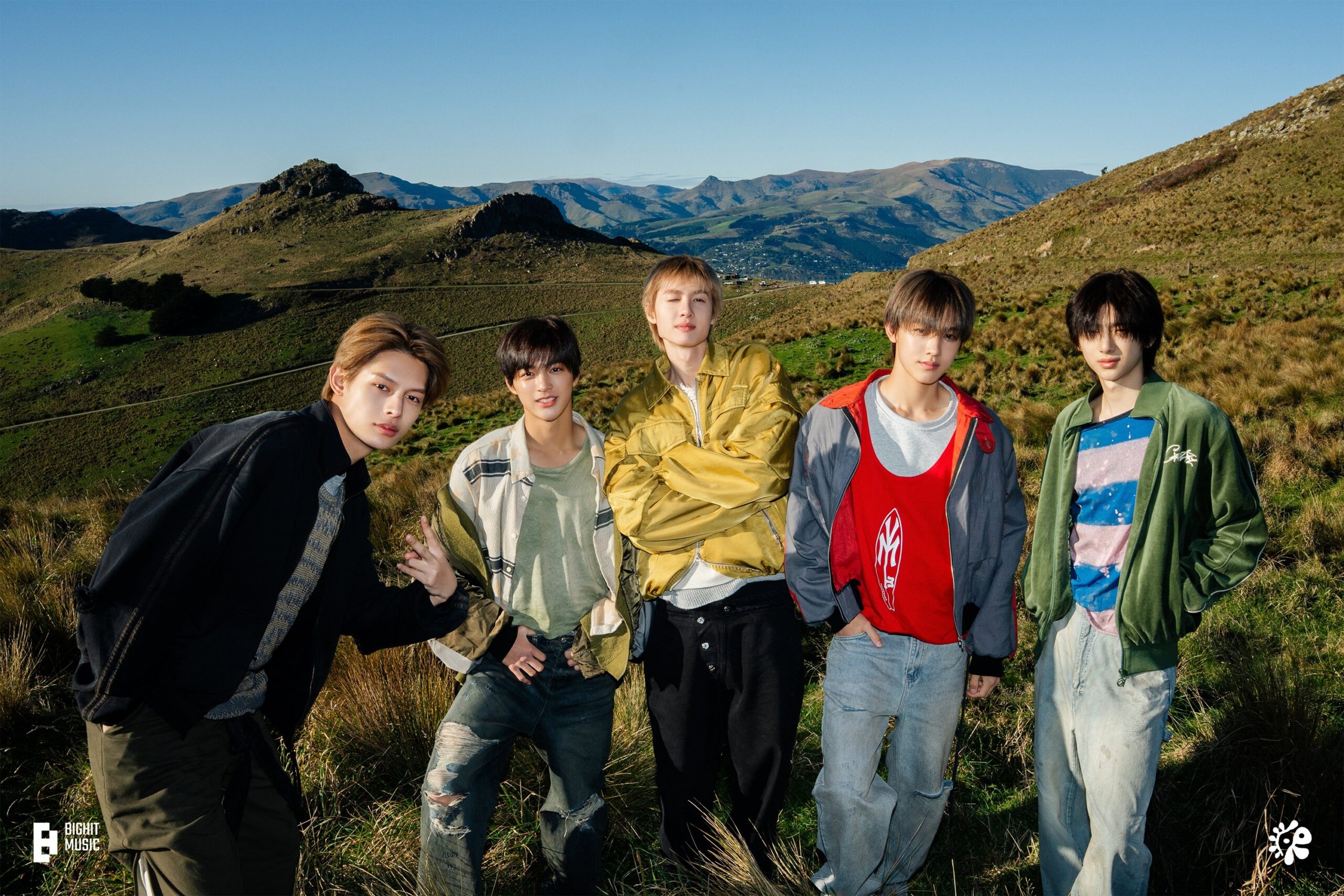
Martin (the leader) has said this was deliberate. Because the melody was already laid-back, the obvious move would have been chill lyrics. Instead, they went the opposite way: chaotic words, chaotic visuals. They tapped into teen angst—feeling suffocated, wanting to break free. Not full-on destruction, but an inner need to escape, to drive far away.
Another contradiction: the main theme of breaking free runs parallel with being pulled back. The reverse playback drives this home—reminding us that even when you run, memory and time tug at your heels.
IT’S SAD, NONETHELESS
Even with its chaotic, rebellious energy, the video circles back to something bittersweet: the temporary nature of freedom.
The lyrics hammer it in: “Run, vroom / Step on that pedal,” “Driving so fast, cutting across the long night.” Driving here isn’t about reaching a destination. It’s about motion as freedom.
“We’ve been dreaming of that fleeting freedom.”
They know the freedom won’t last. Skipping school, sneaking out, reckless joyrides—these are temporary bursts, embraced precisely because they’re forbidden and fleeting. That knowledge makes the song ache beneath its surface.
INSPIRED BY CORTIS’S ORIGINAL CONCEPT
CORTIS has a habit of releasing multiple versions of their MVs, often including one entirely conceptualized and executed by the members themselves. As of now, their original version hasn’t dropped—but the credits note that this MV was inspired by a concept originally devised by CORTIS.
And that feels fitting. Because if JoyRide is about dismantling old structures and reimagining freedom, then its origin story mirrors its own message: the best manual is the one you throw away.
CLOSING LINE
Sometimes a music video isn’t just a story—it’s a puzzle, a mirror, even a philosophy lesson disguised as chaos. CORTIS’s JoyRide is all three. At first glance, it’s about teens on a reckless escape. Watch closer, and it unravels into timelines running backward and forward, a cryptic manual that pretends to explain everything, and contradictions that feel uncomfortably close to real life.
In the end, JoyRide doesn’t hand us answers any more than life does. It gives us fragments—movement, chaos, rebellion, fleeting freedom—and dares us to piece together meaning. Maybe that’s the point: the manual is useless because there is no manual. All you can do is drive.
