

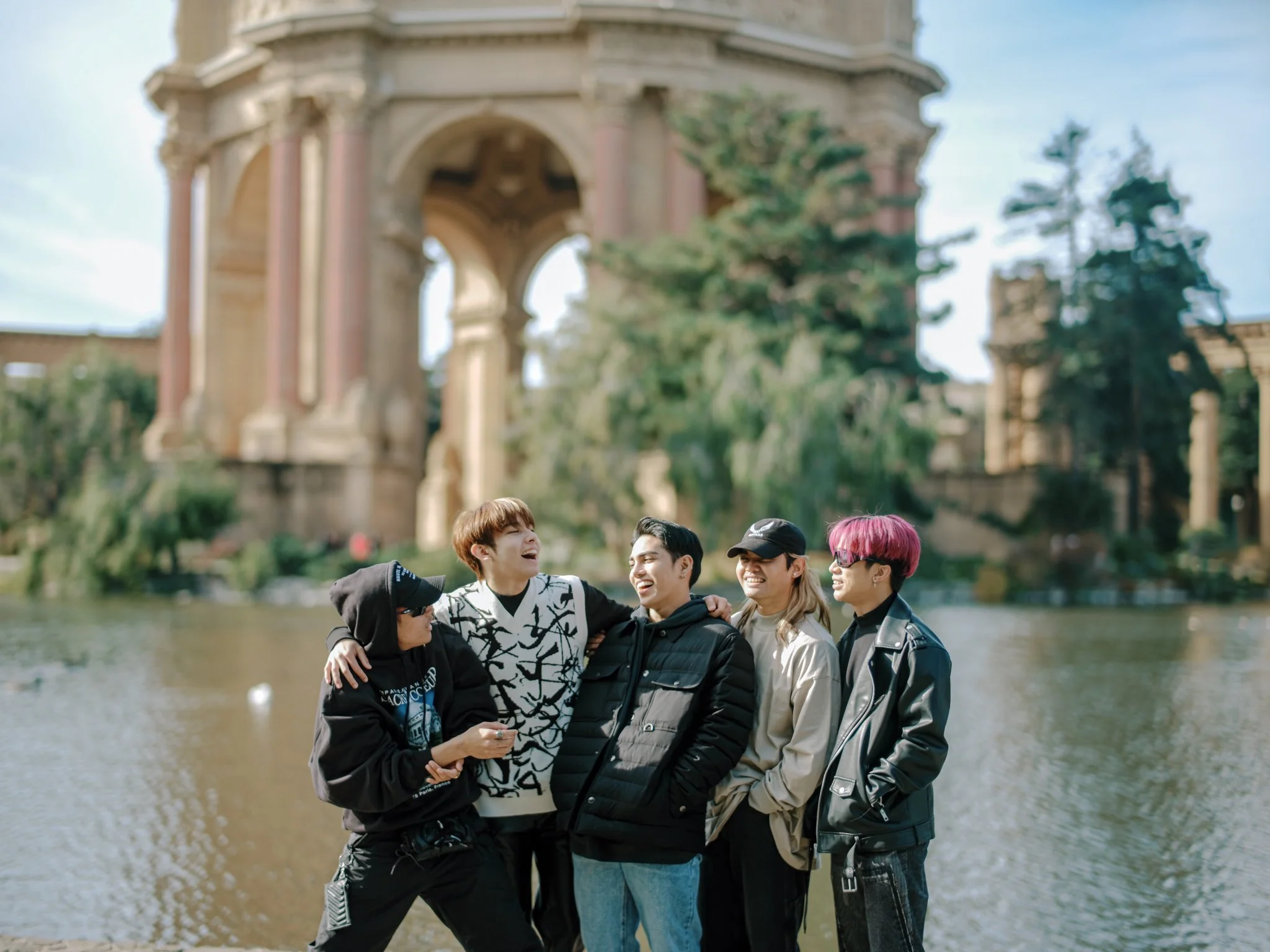
SB19 continues to make history. They sold out the North American leg of their tour, with 1Z Entertainment noting seven straight sellouts across the region (including the final Honolulu date), and they just played a sold-out Tokyo show confirmed by the Philippine Embassy in Japan. These are not isolated events—they’re signals of an act that consistently converts demand in multiple markets.
And at home, they don’t just pull local audiences—they attract fans flying in from other countries. During a recent tour kickoff, SB19’s self-owned company, 1Z Entertainment, even tried a bundled tourist package for foreign fans—an approach aligned with how K-pop folded tourism into fan experiences. (That test sold out, a proof-of-concept the Philippines should scale.)
THE BIGGEST ACT IN THE PHILIPPINES
Even during the glory years of Philippine pop, when names like Pops Fernandez, Gary Valenciano, Martin Nievera, and Regine Velasquez reigned supreme, no one achieved the breadth of SB19’s success. Those stars filled arenas, but they did not sell out multi-day residencies in venues like Araneta or MOA Arena while simultaneously drawing crowds abroad.
SB19 doesn’t just stage a Manila show and leave it at that. They tour provinces, reaching cities often overlooked by big-name acts. And they don’t just fill those venues—they sell them out. This is unprecedented. They are tapping into communities that have been left out of the mainstream entertainment ecosystem and proving that demand exists outside the capital.
Some argue that technology and the groundwork laid by K-pop gave SB19 a boost. Social media, YouTube, and global awareness of Asian pop certainly created opportunities. But every generation has its tools. What sets SB19 apart is that, unlike K-pop idols, they don’t have the backing of a multi-billion-won entertainment giant or the promotional machinery of a national broadcaster. They’ve built their empire with grit, talent, and a fraction of the resources.
By sheer commercial metrics, SB19 is arguably the most successful Filipino act of all time. And yet—they remain without institutional support.
SB19 proves Filipinos don’t reject their own talent—they reject mediocrity.
CULTURAL SUCCESS AS ECONOMIC CATALYST
One group cannot undo decades of economic inequality. But history shows that a single act can spark entire industries back to life. In Hollywood, one blockbuster can rescue a studio and inspire dozens of copycats, spawning waves of economic activity. In South Korea, BTS was the act that shattered the last cultural barrier to the U.S. market. Their impact was so profound that at their peak, they contributed nearly 3% to South Korea’s GDP.
SB19 represents the same opportunity. They’ve cracked open doors that were long shut to Filipino performers. But unlike Korea or the U.S., the Philippines has no coordinated plan to connect SB19’s cultural momentum to the larger economy. There is no pipeline between the interest they generate and national programs that could amplify and sustain it. The spark is burning—but we have no system to build the fire.
THE QUESTION OF MONEY AND INFRASTRUCTURE
Before BTS broke internationally, Big Hit Entertainment was teetering on the edge of bankruptcy. Their survival hinged on South Korea’s cultural financing programs, which allowed companies producing cultural content to access loans and grants. Those funds raised the quality of their music videos, improved production standards, and gave them the leverage to compete on equal footing with Western acts.
SB19 is in a parallel position now. They have the raw talent, the fanbase, and the international interest. What they lack is the financial cushion that could accelerate their global expansion. Preferential loans, tax incentives, or government-backed funds could make the difference between them plateauing in Asia and breaking through in North America—the single biggest music market in the world. Without that, they are competing uphill, self-financing while carrying the burden of being cultural trailblazers.
This is where the government needs to act. Not to “manufacture” success, but to give successful acts like SB19 the tools to scale.
SB19’S STORYTELLING: A BLUEPRINT FOR CULTURAL LORE
SB19’s artistry extends beyond music. They are storytellers. Their trilogy of albums—Pagsibol (Growth), Pagtatag! (Foundation), and the upcoming Simula at Wakas (Beginning and End)—lays out a cohesive narrative of struggle, triumph, and renewal. This is the kind of myth-making that cultures use to define themselves.
Imagine a government-backed program turning this trilogy into a cultural drama, a series of films, or a musical. South Korea funds shows that double as advertisements for its culture. The U.S. institutionalizes grants and tax credits to keep Hollywood pumping out stories that influence the world. SB19 already has the narrative arc and the fanbase. All it needs is support to translate that into cultural exports.
Beyond group projects, the solo work of SB19 members also carries thematic weight—personal stories of resilience, identity, and ambition that mirror the Filipino spirit. Collectively, they already hold the ingredients for a full year’s worth of content that could resonate globally, from music to TV to theater.
SB19 cannot carry this weight alone. They need infrastructure, policy, and institutional support. The Philippines already has a Creative Industries Development Act. What’s missing is budget and execution.
THE WEST IS WATCHING—BUT THE PHILIPPINES IS NOT
The North American music industry has been quietly learning from BTS. Record labels are shifting from being mere distributors to managing intellectual property (IP). They’ve realized that the real money is in building ecosystems—merch, fandom apps, character licensing, and film crossovers. Geffen even partnered with HYBE to learn firsthand.
SB19 already operates this way. They have one of the strongest fan-artist ecosystems in Southeast Asia. Their fans act as marketers, promoters, and evangelists. Their music and concepts are ripe for IP expansion—graphic novels, interactive apps, even tourism tie-ins. The West sees this as the future. The Philippines, ironically, seems blind to it.
Government could step in by reforming IP laws, creating training programs under TESDA to help young creatives develop SB19-inspired projects, and even launching platforms that connect fans directly with artists. Korea has WeVerse; the Philippines could have its own, uniquely localized version.
BRIDGING CULTURAL GAPS IN THE PROVINCES
A major structural weakness in the Philippines is the lack of cultural infrastructure in provinces. Limited airports, poorly maintained theaters, and few multi-purpose venues mean most cultural activity is Manila-centric.
SB19 is already proving that demand exists across the islands. If the government invested in regional cultural centers—venues that could host concerts, exhibits, and festivals—it would not only bring art to underserved areas but also spark local industries. Imagine a tour stop in Cebu or Davao that isn’t just a concert, but a week-long festival featuring traditional music, food fairs, and art exhibits. SB19 could be the draw, but the spillover would revitalize regional culture.
Such integration could even help shape a distinctly Filipino sound. Traditional rhythms and instruments could merge with pop, producing something globally unique. This is how Japan developed its J-pop identity and how Korea incorporated traditional motifs into K-pop visuals. The Philippines has even richer material to work with—but it requires structural support.
THE GLOBAL FAN GAP: MONEY LEFT ON THE TABLE
For SB19’s international fans, one of the greatest frustrations is access. Their albums and merchandise are hard to find abroad. Many can’t even purchase albums on global platforms like Amazon. Meanwhile, embassies and consulates remain passive, missing an obvious opportunity to serve as cultural connectors.
This isn’t just an inconvenience. It’s lost income. Fans are ready to spend, but there’s no channel to spend through. South Korea built its soft power partly by making K-pop omnipresent—albums, merch, and media were always within reach. The Philippines, by contrast, makes its culture scarce.
CULTURE AS ENTRY POINT
South Korea’s concert venues often double as cultural centers, with museums and interactive exhibits that teach history alongside entertainment. America has done this for decades, with Hollywood serving as both cultural export and national branding tool.
In the Philippines, SB19 could play this role—but the follow-up isn’t there. A fan might fly in for a concert, but once the show ends, there is little else to explore that ties them into Philippine culture. No museums attached to arenas, no curated cultural experiences, no institutional bridges. SB19 opens the door, but fans step inside to find emptiness.
NURTURING A CULTURE OF SPENDING ON THE ARTS
Another major factor in Korea’s success is domestic spending power. A strong economy means fans can afford albums, tickets, and merchandise. This self-sustaining loop feeds their cultural exports.
Filipinos don’t yet have that same disposable income. That’s not something SB19 can fix on their own. It requires government commitment to strengthen the economy broadly so Filipinos can afford to support their own cultural products. Without economic empowerment, even the most passionate fandom will have limits.
POLICY RECOMMENDATIONS (ACTIONABLE, 12–18 MONTH HORIZON)
1) Cultural Export Finance & Insurance (Modeled on KOCCA/K-Sure)
- Stand up a Content Export Facility: concessional loans + export credit guarantees for acts with proven foreign demand (tour sells >70%, top-tier DSP metrics).
- Tie tranches to deliverables: foreign distribution, visaed showcases, multilingual marketing, and a U.S./JP distribution partner.
2) IP & Creative SME Upskilling (TESDA × CCP × IPOPHL)
- Fast-track IP enforcement and template contracts for music-adjacent media (webtoons, docs, games).
- Fund 50 micro-studios annually to build licensed SB19-adjacent content; revenue-share back to artist and state fund.
3) Provincial Creative Hubs (National Creative Infrastructure Program)
- Co-fund 10 regional venues (2–5k capacity) with black box theaters + small galleries.
- Require each SB19 provincial stop to anchor a 7-day cultural program with LGUs, museums, and local artisans.
4) Cultural Tourism Pipelines (“Second Spend”)
- Package concert + heritage: museum passes, food routes, and craft markets; measure per-visitor spend uplift.
- Task DOT + DFA to pilot consulate-level pop-culture kiosks (albums, books, crafts) in 5 cities with SB19 demand.
5) Global Distribution & Trade Missions
- Use RA 11904 to fund distribution MOUs so Filipino albums/merch are consistently listed on major retailers (U.S., JP, CA).
- Run music trade missions around SB19’s tour cities—label meetings, sync pitching, and diaspora retail onboarding.
SB19 AS A SOFT POWER CATALYST
For decades, Filipinos have wrestled with colonial mentality, the fear that our culture cannot stand alongside the West’s. SB19 is living proof that this is false. They show that when Filipino talent is given a platform, it can not only stand shoulder-to-shoulder with global acts—it can lead.
But SB19 cannot carry this weight alone. They have cracked open a door to global recognition, but it is up to the government to build the institutions, infrastructure, and policies that will transform that opportunity into national soft power.
SB19 is not just a boy band. They are a cultural asset. A rare one. If we do not act now, we risk squandering the momentum they’ve created. The world is already listening. The only question is: will the Philippines answer?
