

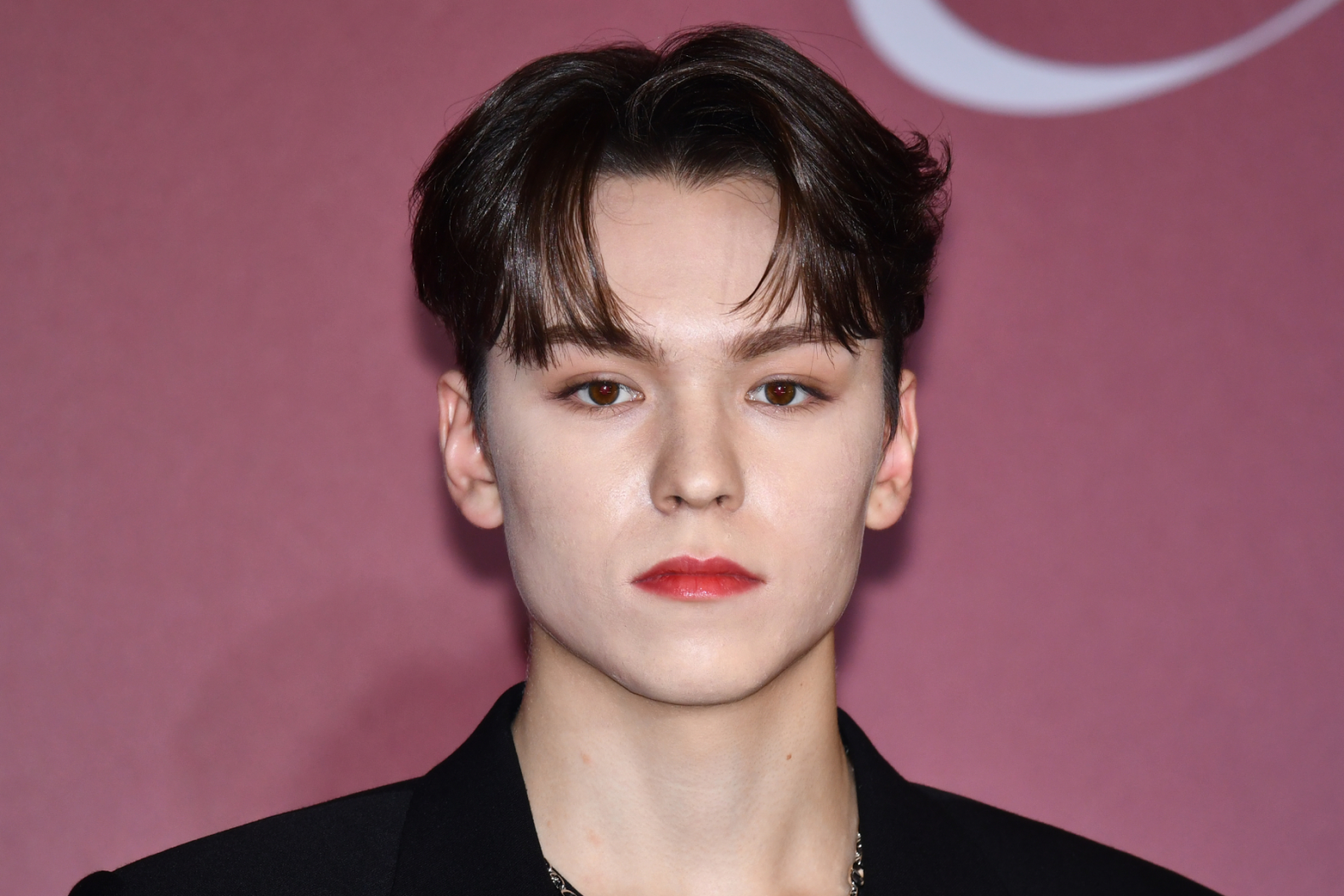
A fan of Seventeen tweeted a post of Vernon’s mom which she posted on facebook. It created a fandom war between CARATS and ARMY but also between the mother and ARMY.
Instead of treating this as another round of fanwar, we’re going to:
- unpack the specific points she raised,
- why her framing created the reaction it did,
- what both ARMY and other fandoms can realistically learn from the exchange
- the timeline issues in her posts,
- the claims about Big Bang and PSY,
- the comment about ARMY “attacking” Carats,
- the broader challenge of speaking publicly, and
- anchor everything to RM’s recent livestream,
But first, this is her post, you can just pause if you want to read.


The ARMY Perspective
There’s also a wider point that often gets lost in cross-fandom conversations: discussing BTS carries a different weight than discussing almost any other group.
One reason Vernon’s mother’s comments triggered such a sharp reaction is her framing. It subtly rearranged the historical sequence of events, even if unintentionally. And with BTS, timeline drift is immediately noticeable because their rise was documented across every conceivable channel: Western press, Korean economic reports, industry analyses, government briefings, academic papers, market data, and international touring records. Their trajectory is one of the most publicly recorded in modern pop history.
Her posts contained a few key timeline issues.
1. Suggesting Seventeen was acquired to “offset” BTS’s enlistment losses
Seventeen is one of the groups acquired to diversify the income stream of HYBE, that’s what any business does, diversification of income.
HYBE was diversifying aggressively because BTS was too successful, not because they were bracing for a financial dip. Tying the acquisition to enlistment-era income is not malicious—it’s simply historically inaccurate. But inaccuracies involving BTS rarely travel quietly.
2. Framing HYBE’s expansion as something Seventeen “enabled” during BTS’s conscription period
HYBE’s major expansion moves—the IPO (2020), Ithaca acquisition (2021), and multi-label structure—were funded directly by BTS’s global success in the 2017–2021 period. This was before enlistment, and before Seventeen’s sales surge.
Seventeen absolutely contributed significant revenue later, especially from 2022 onward. But the foundational capital, investor confidence, and international leverage came from BTS during their record-breaking consecutive years. Her framing unintentionally compresses or reverses this sequence.
3. Presenting Seventeen’s success as a stabilizer that allowed HYBE to “build the next generation”
HYBE’s “next generation”—TXT (2019), ENHYPEN (2020), LE SSERAFIM (2022), NewJeans (2022)—were already being planned, recruited, and incubated long before Seventeen’s biggest sales years. Many were in training or pre-debut development while Pledis was still independent.
The narrative she offered makes it sound as if HYBE used Seventeen’s revenue to launch the next wave, when in reality HYBE’s R&D and multi-label strategy was already underway due to BTS’s blockbuster international success.
4. Positioning Seventeen as a group that had to “share the spotlight” with BTS inside a behemoth company
When Pledis joined HYBE, BTS had already spent years widening the global spotlight for every Korean act. Seventeen did not lose visibility by joining HYBE; they gained global infrastructure, distribution channels, touring capacity, and international marketing BTS had already carved out.
Her framing unintentionally implies a competitive spotlight that neither group participates in and that doesn’t reflect how these companies structure their portfolios.
5. Her Claim That ARMY Attacks Carats Celebrating Seventeen
Another part of her post that drew attention was her suggestion that Carats “suffer” because ARMY allegedly disrupts or undermines their celebrations.
First, every fandom—without exception—has a disruptive section.
Carats do. ARMY does. Blinks do. ONCEs do. MOAs do. The larger the fandom, the louder that fraction becomes. Their behavior often has little to do with the values of the majority. So pointing to ARMY alone ignores a reality that spans the entire ecosystem.
Second, fandom spaces are full of impersonators and bait accounts.
There are accounts that masquerade as ARMY—and as Carats, and as Blinks—specifically to spark conflict.
Third, she should be familiar with how this ecosystem works.
As the mother of an idol, she has spent years watching how online fandom dynamics function.
Her comment created the impression that ARMY is uniquely guilty of bad behavior, which is factually untrue. All fandoms have moments of volatility, especially when milestones, sales, or achievements are involved. Highlighting ARMY alone flattens a far more complex dynamic, and it risks widening a divide that most Carats and ARMYs don’t want.
The healthier approach—and one she could have taken—is acknowledging that online spaces amplify extremes, and those extremes rarely represent the core of any fandom.
6. Her mention of Big Bang and PSY as the ones who truly “paved the way”
Another element that intensified ARMY’s response was her assertion that “Big Bang inspired BTS and Seventeen’s self-production” and that PSY “might rightfully be considered the act that paved the way.” T
Long before BTS debuted, the three rappers—RM, Suga, and J-Hopewere independent underground rappers or trainees deeply rooted in hip-hop culture. In that world, writing your own lyrics is a foundational discipline. It’s about authorship, identity, credibility, and respect in the scene.
If Big Bang had an influence, it was on the vocal line—Jimin, V, and Jungkook—who admired their stage presence and showmanship.
PSY’s success didn’t “pave the way” for BTS in the way she implied. “Gangnam Style” was a global phenomenon, but it came with complicated consequences. Western media consumed it as novelty-pop, reinforcing caricatures of Asian artists rather than expanding genuine artistic curiosity. Rappers like Tiger JK have spoken openly about how PSY’s virality made it harder for Korean hip-hop artists to be taken seriously in the U.S.
When BTS began promoting globally, they often found themselves battling those exact stereotypes—the “horsey dance,” the expectation of comedy, the assumption of gimmick rather than craft.
So her framing—that Big Bang and PSY “paved the way” for BTS—conflicts with the lived experience of the group. If anything, BTS had to dismantle the image that Western audiences held of Korean performers because of how Gangnam Style was received.
BTS’s rise is so heavily recorded that any deviation from the documented history gets amplified instantly.
Other fandoms can avoid unnecessary backlash by anchoring their discussions in widely accepted industry facts, rather than speculative or revisionist framing. When the foundation is solid, the conversation becomes healthier for everyone involved.
Understanding that BTS represents more than a kpop group
BTS has become a reference point for business models, international expansion, political diplomacy, and the global visibility of Korean culture. When another fandom invokes their name, intentionally or not, they’re invoking an entire historical arc that includes:
- HYBE’s rise as a multinational entertainment corporation
- the first sustained global touring blueprint for a Korean act
- unprecedented chart performance
- the fandom infrastructure that reshaped consumption of art
- the economic boom that extended to peer groups, not only BTS
That scale creates sensitivity because the discourse around BTS is never “just discourse.” It lives inside a much larger conversation about influence, equity, and recognition.
Business analysis must be handled with care
When fans of other groups describe BTS with purely corporate language—“income offsets,” “company leverage,” “trade-offs,” “market share”—the message often sounds more dismissive than intended. Not because analysis is unwelcome, but because it strips away the artistic and cultural layer that BTS themselves prioritize.
The lesson here:
If you’re going to talk about BTS in an industry context, it works better to pair the business framing with artistic framing. Otherwise it begins to sound like reducing the group to machinery, which will always land poorly with any artist’s fandom, not only ARMY.
Avoiding comparative framing unless absolutely necessary
Comparing any group to BTS, positively or negatively, tends to create tension because comparisons are rarely neutral. They’re usually interpreted as a subtle hierarchy, even when the original intent was to contextualize.
The more sustainable approach is to speak about one’s own group on their own merits. Carats don’t need to diminish BTS to uplift Seventeen. ONCEs don’t need to diminish BTS to uplift TWICE. MOAs don’t need to diminish BTS to uplift TXT. The industry is big enough to hold multiple success stories without collapsing them into competition.
What This Incident Reveals About Public Communication
Audience awareness
Vernon’s mother was responding from a personal slice of the internet—likely assuming she was speaking to fellow parents, casual observers, or fans of Seventeen. But the moment screenshots circulated, her audience expanded into millions of people with different agendas, sensitivities, and historical memory. Once you reach that scale, your words no longer interact with listeners; they interact with the narratives those listeners already carry.
Loss of control of interpretation
Her post was framed with industry terms—acquisitions, income periods, corporate trade-offs—and fans took that language in directions she likely didn’t anticipate. The meaning wasn’t entirely in the words; it was in how those words intersected with years of debates about HYBE’s management, BTS’s role in the company’s growth, and ongoing anxieties about how different fandoms perceive each other. Once the post left her hands, she could not control how it was read.
How tone collapses online
Tone requires context, pacing, and body language—none of which survive platform migration. A sentence meant to be observational becomes combative in transit. A neutral point becomes a jab. And when the text moves without the speaker, people fill in the gaps with their own assumptions. That collapse isn’t anyone’s fault. It’s simply what happens when social media becomes the mediator between intent and interpretation.
The Broader Lesson for Fandoms
Personal disposition vs. public responsibility
Fans often speak with sincerity—whether pride, frustration, or loyalty. But sincerity in a parasocial ecosystem carries responsibility. The larger the fandom, the heavier the consequences of every public comment, even unintentionally. Personal feelings can trigger large-scale narratives simply because the audience is too broad to contain them.
The ripple effect of a single comment
One parent’s Facebook reply traveled across platforms, ignited multiple fandoms, and created tension neither BTS nor Seventeen asked for. That’s how finely wired the system is. One comment becomes a discourse cycle because people respond not to the comment itself, but to years of unspoken competition, perceived disrespect, or unresolved resentment.
Empathy toward Carats
Carats didn’t create this situation, yet they become collateral when the narrative inflates. Many of them admire BTS. Many ARMYs admire Seventeen. The majority of both fandoms simply want to enjoy their groups without inheriting the conflicts created by third parties. Remembering that is essential to keeping the ecosystem healthy.
RM’s Livestream as the Anchor
I thought that had she spoken from humility, if her framing was about gratefulness for what BTS built, but also hoping that fans will also acknowledge the hard work and contribution of his son. I think she would have gotten more support from ARMYs. Definitely would have gotten more support from armies. After all, many armies know that BTS members are actually friends with many Seventeen members. Hindsight is always 2020. But more than anything, I hope that we learn something from it. More than contributing to the noise, what I’m hoping for is we learn something that we can actually use in our daily lives, in our careers, when we post, we can improve our communication, be more conscious of all the factors that could affect the interpretation of our message.
RM’s recent livestream underscored a larger truth about where BTS wants their relationship with ARMY to be right now. He spoke about work—real work—happening behind the scenes. The album, the tour, the return to the stage. He made no reference to rivalry, competition, or needing to defend their position. Instead, he talked about reconnecting with ARMY through the music that built the foundation in the first place.
The message was simple but grounding: the members are preparing something meaningful. They’re focused on creation, not comparison. And they hope ARMY can meet them there instead of getting swept into arguments that pull focus away from the comeback they’re building. If anything, his livestream served as a reminder that the group has always asked fans to rise above the noise rather than sustain it.
