

Nominees will be announced January 22, 2026.
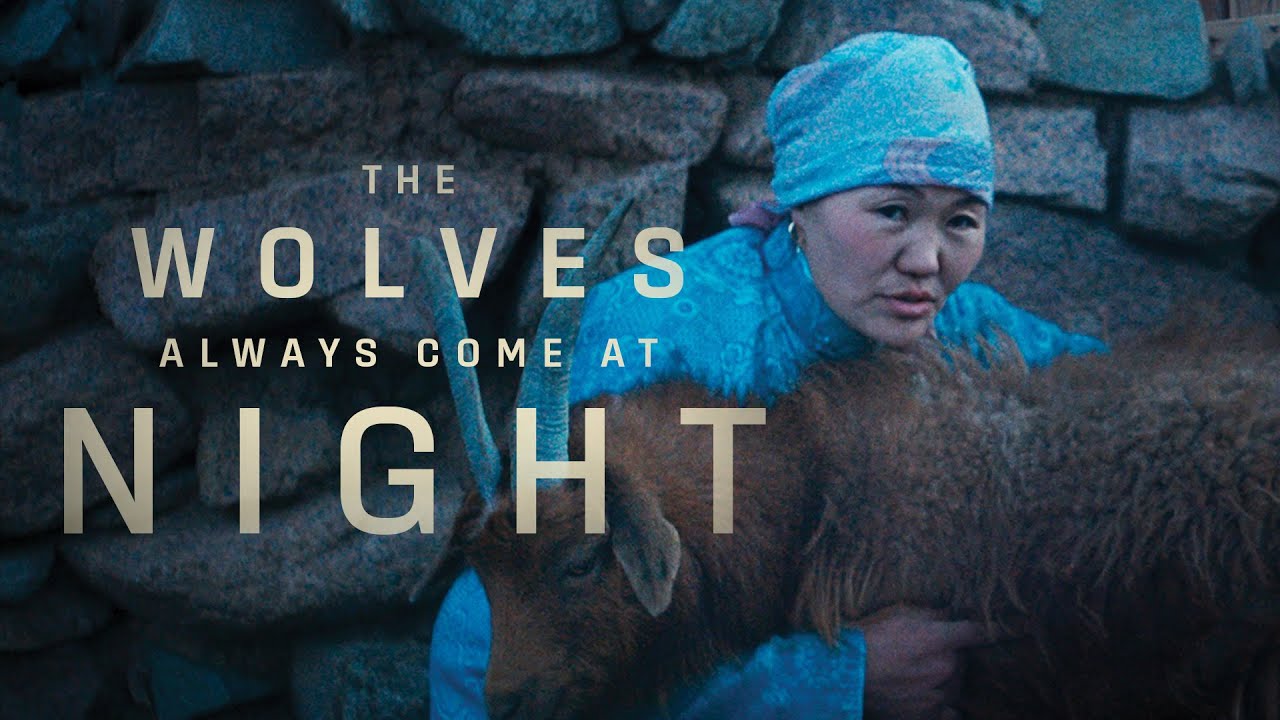
Australia: The Wolves Always Come At Night (Gabrielle Brady)
A docu-drama about a Mongolian couple forced out of the Gobi Desert by climate change and into a city they barely recognize. It’s a rare three-way collaboration between Germany, Australia, and Mongolia, and premiered in TIFF’s Platform section before touring the festival circuit.
Trivia: Director Gabrielle Brady’s previous film Island of the Hungry Ghosts won so many festival awards that programmers joked it had a “passport thicker than the script.”
Bangladesh: A House Named Shahana (Leesa Gazi)
Leesa Gazi becomes the first woman to ever represent Bangladesh in the Oscar race. Adapting her own novella, she centers a fierce, sharp-tongued divorcee in ’90s rural Bangladesh fighting for autonomy in a society that would rather she didn’t.
Trivia: This is Bangladesh’s 21st submission—and the first one adapted from the director’s own novel.
Bhutan: I, the Song (Dechen Roder)
Bhutan’s Oscar history is more dramatic than some of its films. After Lunana: A Yak in the Classroom was disqualified because Bhutan didn’t have an approved committee, they fixed the paperwork, resubmitted the same movie the following year—and snagged a nomination.
Roder’s I, the Song continues the country’s gentle but razor-sharp storytelling tradition.
Trivia: Bhutan has produced only five Oscar submissions ever, but one of them (Lunana) became the smallest-budget Best International Film nominee in Academy history.
Cambodia: Tenement (Inrasothythep Neth & Sokyou Chea)
A folk-horror debut about a Cambodian-Japanese artist returning home and being haunted by visions tied to the country’s turbulent past. It premiered at Rotterdam’s Big Screen Competition.
Trivia: Cambodia’s only Oscar nomination was for The Missing Picture, a film told almost entirely with clay figurines.
China: Dead To Rights (Shen Ao)
A historical drama set during the Nanjing Massacre, following civilians hiding in a photo studio while trying to expose atrocities.
Trivia: Despite 38 submissions, China has never won an Oscar in this category—yet two of its directors, Zhang Yimou and Ang Lee, have shaped global cinema more than many Oscar winners.
Hong Kong: The Last Dance (Anselm Chan)
A dark comedy about a wedding planner who accidentally ends up working in the funeral industry with a Taoist priest. It’s now the highest-grossing local film in Hong Kong history.
Trivia: Hong Kong’s first three Oscar nominations all came from directors who later became pillars of Asian cinema—Zhang Yimou, Chen Kaige, Derek Tsang.
India: Homebound (Neeraj Ghaywan)
A Hindi drama about childhood friends preparing for the national police exam. Executive produced by Martin Scorsese, because apparently he’s now the unofficial godfather of Indian indie cinema.
Trivia: India’s first-ever Oscar-nominated film (Mother India, 1957) lost by just one vote—the closest result in Academy history.
Indonesia: Sore: Wife From The Future (Yandy Laurens)
A sci-fi romance about a man in Croatia visited by a woman claiming to be his wife from the future. Based on Laurens’ own viral web series.
Trivia: Indonesia has submitted films since 1987—but no submission has ever made the nomination list.


Japan: Kokuho (Lee Sang-il)
A three-hour epic about a lineage of kabuki performers entangled with postwar Japan’s economic rise. It became Japan’s second-highest-grossing live-action film of all time.
Trivia: Japan has three Best International Feature wins—Drive My Car, Departures, and of course Crouching Tiger, Hidden Dragon… which Japan submitted despite being in Mandarin.
Kazakhstan: Cadet (Adilkhan Yerzhanov)
A horror story about a bullied boy in a military academy. Yerzhanov is famously prolific—he has directed almost a film a year for 15 years.
Trivia: Yerzhanov once joked that he shoots films “faster than studios can reject them.”
Kyrgyzstan: Black Red Yellow (Aktan Arym Kubat)
A gentle romance between two villagers. Kubat is basically a one-man Oscar submission machine—Kyrgyzstan keeps sending his films because no one matches his consistency.
Trivia: Kyrgyzstan has submitted films 18 times but has never made the shortlist—not even when one submission (Night Accident) accidentally got submitted twice.
Mongolia: Silent City Driver (Janchivdorj Sengedorj)
A drama about a formerly incarcerated hearse driver who finds comfort caring for stray dogs. Winner of Tallinn’s Grand Prix.
Trivia: Mongolia’s film industry is so small that half the country knows each other’s film crews by name.
Nepal: Anjila (Milan Chams)
A sports biopic about Anjila Tumbapo Subba, captain of Nepal’s women’s national football team.
Trivia: Nepal’s first ever Oscar submission (Caravan) remains the country’s only nomination—even though it released 25 years ago.
Papua New Guinea: Papa Buka (Bijukumar Damodaran)
The country’s first-ever Oscar submission. It follows an aging war veteran guiding Indian researchers uncovering forgotten WWII stories.
Trivia: It’s the only film on this list directed by a non-national (Bijukumar Damodaran is Indian)—a rare move for a first submission.
Philippines: Magellan (Lav Diaz)
A philosophical telling of Ferdinand Magellan’s violent colonizing voyage. Lav Diaz’s films often run between five and ten hours; this one is mercifully shorter because even Diaz knows the Oscars don’t have that kind of stamina.
Trivia: The Philippines has submitted 35 films since 1953—zero nominations.
Singapore: Stranger Eyes (Yeo Siew Hua)
A thriller about a father unraveling secrets while searching for his missing daughter. It premiered in competition at Venice.
Trivia: Singapore submitted zero films between 1960 and 2005—then suddenly decided to participate again after a 45-year nap.
South Korea: No Other Choice (Park Chan-wook)
Park Chan-wook represents South Korea with No Other Choice, a darkly comic social thriller that premiered at Venice 2025 to strong acclaim. Starring Lee Byung-hun, Son Ye-jin, Park Hee-soon, and Lee Sung-min, the film adapts Donald E. Westlake’s novel The Ax, following a laid-off paper-mill manager who spirals into violence as he tries to secure a new job.
This marks Park’s most awards-friendly outing since Decision to Leave, and the film has been widely noted for its sharp mix of satire, dread, and economic anxiety. South Korea officially selected it as its Oscar entry on September 2, continuing the country’s strong track record in the category.
Trivia: Park wrote an early draft of the film over two decades ago but revived it because he felt the themes—job scarcity, corporate instability, and economic pressure—“fit the present better than the past.”
Taiwan: Left-Handed Girl (Shih-Ching Tsou)
A drama about a single mother building a new life at a night market. Produced and edited by Sean Baker—yes, the Anora Sean Baker.
Trivia: Taiwan’s only win in this category is Crouching Tiger, Hidden Dragon, which technically isn’t Taiwanese—but the Academy accepted it because no one wanted to argue with Ang Lee.
Tajikistan: Black Rabbit, White Rabbit (Shahram Mokri)
A psychological drama about fear and intertwined destinies, premiering at Busan and heading to the BFI London Film Festival.
Trivia: Mokri is Iranian but often represents Central Asian countries—he’s a pan-regional Oscars MVP with several nations claiming him.
Thailand: A Useful Ghost (Ratchapoom Boonbunchachoke)
A supernatural drama where a dead woman returns by inhabiting… a vacuum cleaner. An unexpectedly elegant film considering the premise.
Trivia: Thailand got its first-ever Oscar shortlist spot last year, proving Southeast Asian horror finally broke the Academy’s “no ghosts allowed” bias.
Vietnam: Red Rain (Dang Thai Huyen)
A retelling of the 81-day defense of the Quảng Trị Citadel during the Vietnam War. It became the highest-grossing Vietnamese film of all time.
Trivia: Vietnam has only one Oscar nomination—The Scent of Green Papaya—and it was directed by a French-Vietnamese filmmaker who shot the film in France.


