

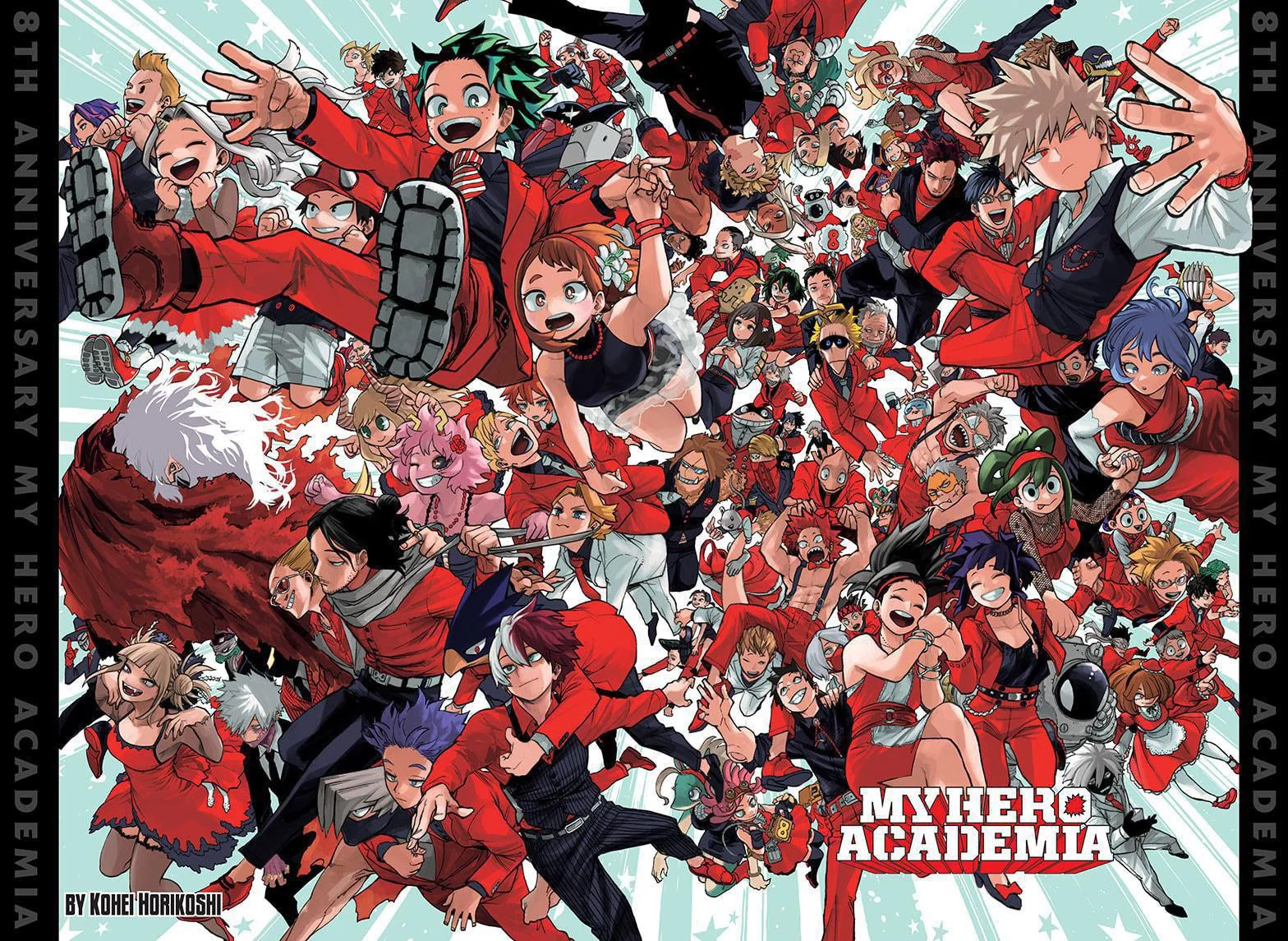
As the clock strikes midnight on December 13, 2025, the world of anime bids a poignant farewell to one of its most iconic franchises. My Hero Academia—the sprawling shonen epic from creator Kōhei Horikoshi—reaches its anime conclusion tonight with the premiere of Season 8’s finale episode, adapting the manga’s epilogue arcs and wrapping up a decade-long journey that began in 2014.
The manga itself signed off on August 5, 2024, after 42 volumes and over 430 chapters, leaving behind a legacy that transcends entertainment to spark global conversations on heroism, society, and personal growth.
For fans, it’s a bittersweet close: a celebration of triumphs and a mourning of what comes next. But as the credits roll on Izuku Midoriya’s story, My Hero Academia (often abbreviated as MHA or BNHA) stands as a testament to anime’s power to inspire, challenge, and unite.
A World of Heroes: The Premise That Captured Hearts
At its core, My Hero Academia is a vibrant reimagining of the superhero genre in a society where superpowers—called “Quirks”—are the norm. Roughly 80% of the population possesses these abilities, ranging from gravity manipulation to explosive sweat glands, turning everyday life into a high-stakes spectacle of potential villains and licensed heroes. The story centers on Izuku Midoriya, a Quirkless teenager in a world that idolizes power. Bullied and sidelined, Izuku’s unyielding dream of becoming a hero like his idol, All Might—the grinning Symbol of Peace—drives the narrative.
After a selfless act of bravery, All Might passes his stockpiling Quirk, “One For All,” to Izuku, thrusting him into U.A. High School, Japan’s premier hero academy. There, alongside a diverse ensemble including the fiery rival Katsuki Bakugo, the empathetic Ochaco Uraraka, and the stoic Shoto Todoroki, Izuku hones his skills amid intense training, villainous threats from the League of Villains (led by the decayed Tomura Shigaraki and the shadowy All For One), and societal upheavals. Key arcs explore internships, festivals, and all-out wars, blending pulse-pounding action with heartfelt character studies.
What elevates the series beyond spectacle are its themes: the essence of true heroism (selflessness over strength), perseverance against impossible odds, the redemptive power of friendship, and critiques of a commodified hero system rife with inequality and discrimination against the Quirkless or “heteromorphs” (those with animalistic mutations). Inspired by Western comics like Spider-Man and X-Men, yet rooted in Japanese shonen traditions, MHA weaves optimism with realism, asking: In a flawed world, who gets to be the hero?
HIROKAZU KORE-EDA TO DIRECT LIVE-ACTION LOOK BACK: WHY THIS ADAPTATION MATTERS
The Finale: Closure, Controversy, and Catharsis
Yet, across divides, posts evoke nostalgia: “Every time I see this e
The manga’s conclusion, revealed in Chapter 430 and expanded in a bonus epilogue chapter, jumps eight years forward, showing a rebuilt society where former students like Bakugo and Todoroki rank among top pros, while Izuku—now Quirkless again—teaches at U.A. A powered suit funded by his classmates allows him to reclaim his hero mantle, symbolizing collective support over individual glory. The anime’s final season, airing since October 4, 2025, adapts this with added emotional depth, including a special episode extending the epilogue for more closure on character fates.
Fan reactions, mirror the series’ polarizing yet passionate spirit. Many hail the ending’s grounded realism praising its refusal to deify Izuku and emphasis on communal heroism.
Others decry it as “bittersweet to a fault,” lamenting Deku’s (Izuku’s hero name) power loss and perceived rushed resolutions, like the emotional weight of Himiko Toga’s arc leaving scars on Ochaco.
Voice acting in the dub finale drew mixed responses, with sub viewers breaking down over All Might’s mentorship and Deku’s “SMASH” cries, while dubs felt “misfired” for some.
Yet, across divides, posts evoke nostalgia
Why It Resonated: Themes That Echo in Real Lives
MHA’s appeal lies in its universal relatability, striking chords with audiences worldwide through themes of resilience and empathy. Izuku’s journey from “useless” underdog to symbol of hope mirrors the struggles of anyone facing systemic barriers—be it disability, bullying, or societal exclusion. As one analysis notes, the series champions “perseverance and determination,” showing dreams achievable through hard work, not innate privilege.
Friendship arcs, like Bakugo’s redemption from bully to ally, underscore growth through vulnerability, while explorations of trauma (e.g., Todoroki’s abusive family) normalize mental health discussions in a genre often dominated by power fantasies.In a post-pandemic era craving uplift, MHA’s “optimism in heroism” provided escapism laced with purpose. Fans on platforms like Lemon8 praise its “complex yet relatable relationships,” with self-discovery resonating across ages and cultures.
It even influenced real-world activism, with “Deku energy” memes motivating perseverance in protests and personal challenges. For marginalized viewers, the Quirkless protagonist validates feeling “different” as a superpower.
Key Resonating Themes
Perseverance: Izuku’s “no-Quirk” start inspires underdogs, proving effort trumps talent.
Friendship & Teamwork: Bonds like Class 1-A’s evolve from rivalry to unbreakable support, mirroring real-life growth.
Heroism Redefined: Questions fame vs. selflessness, critiquing “celebrity culture” in heroes (and influencers).
Overcoming Adversity: Tackles bullying, trauma, and inequality, fostering empathy in a divided world.
Cultural Impact: Sparking Debates on Society and Identity
Beyond fandom, MHA has reshaped cultural discourse. Its “Society of the Spectacle” critique—heroes as commodified celebrities in a surveillance state—draws from Marxist ideas, exposing how power imbalances breed “villainy.” Discussions highlight parallels to real oppression: Quirk licensing as a metaphor for gun control or innate rights curtailed by fear, stifling a “post-scarcity utopia.”
The series boosted anime’s mainstream acceptance, blending Western individualism (Izuku’s bold dreams) with Japanese collectivism, influencing youth ideals amid economic pressures. Yet, it faced backlash via “cringe culture,” where explosive popularity led to memes mocking fans, alienating newcomers and perpetuating anime stigma.
Positively, MHA inspired cosplay booms, fan theories on social psychology, and even policy chats on inequality. As one essay posits, it fits global superhero lore by emphasizing hope’s role in justice.
Commercial Triumph: A Global Powerhouse
MHA’s end caps a juggernaut: over 100 million manga copies sold worldwide by April 2024, rivaling One Piece and Dragon Ball. The final Volume 42 shattered records, selling 1 million copies on launch. Films like ‘You’re Next’ grossed ¥3.52 billion ($23.5M USD), the franchise’s top earner.
Merchandise, streaming on Crunchyroll, and games fueled Toho Animation’s 91% revenue spike to ¥46.3B ($299M), with North America driving a third via hits like Jujutsu Kaisen crossovers.
Commercial Milestones
- Manga Circulation: 100M+ copies (incl. spin-offs)
- Top Film Gross: ¥3.52B ($23.5M) for You’re Next
- Annual Sales Peak: 5.5M copies in Japan (2017)
- Animation Revenue Boost: 91% growth for Toho (FY 2024)
Standing Apart: MHA’s Fresh Take on Shonen
In a sea of shonen like Naruto or Dragon Ball, MHA differentiates through subversion. Unlike power-hungry leads, Izuku is a “kind but smart” strategist, rejecting special-bloodline tropes for earned growth. Its world-building feels “pseudo-realistic,” pondering societal ripple effects of superpowers—licenses, discrimination, spectacle—over endless tournaments.
Rivalries evolve meaningfully (Bakugo’s arc outshines Sakura’s in Naruto), and diverse masculinities—from Deku’s empathy to Bakugo’s intensity—broaden appeal. Pacing zips through hype moments with gorgeous art, reconstructing shonen cynicism into joyful heroism.
As fans note, it’s “Naruto but well-written,” with inventive designs and tight themes adding global draw.
Plus Ultra: A Legacy That Endures
My Hero Academia ends not with a bang, but a handoff—of torches, dreams, and inspirations. As Horikoshi reflected, it’s about passion persisting beyond the page. Fandom thrives in AUs and fanworks, ensuring Class 1-A’s spirit lives on.
In a world needing heroes, MHA reminds us: You don’t need a Quirk to save the day—just heart. Go beyond. Plus Ultra.
