

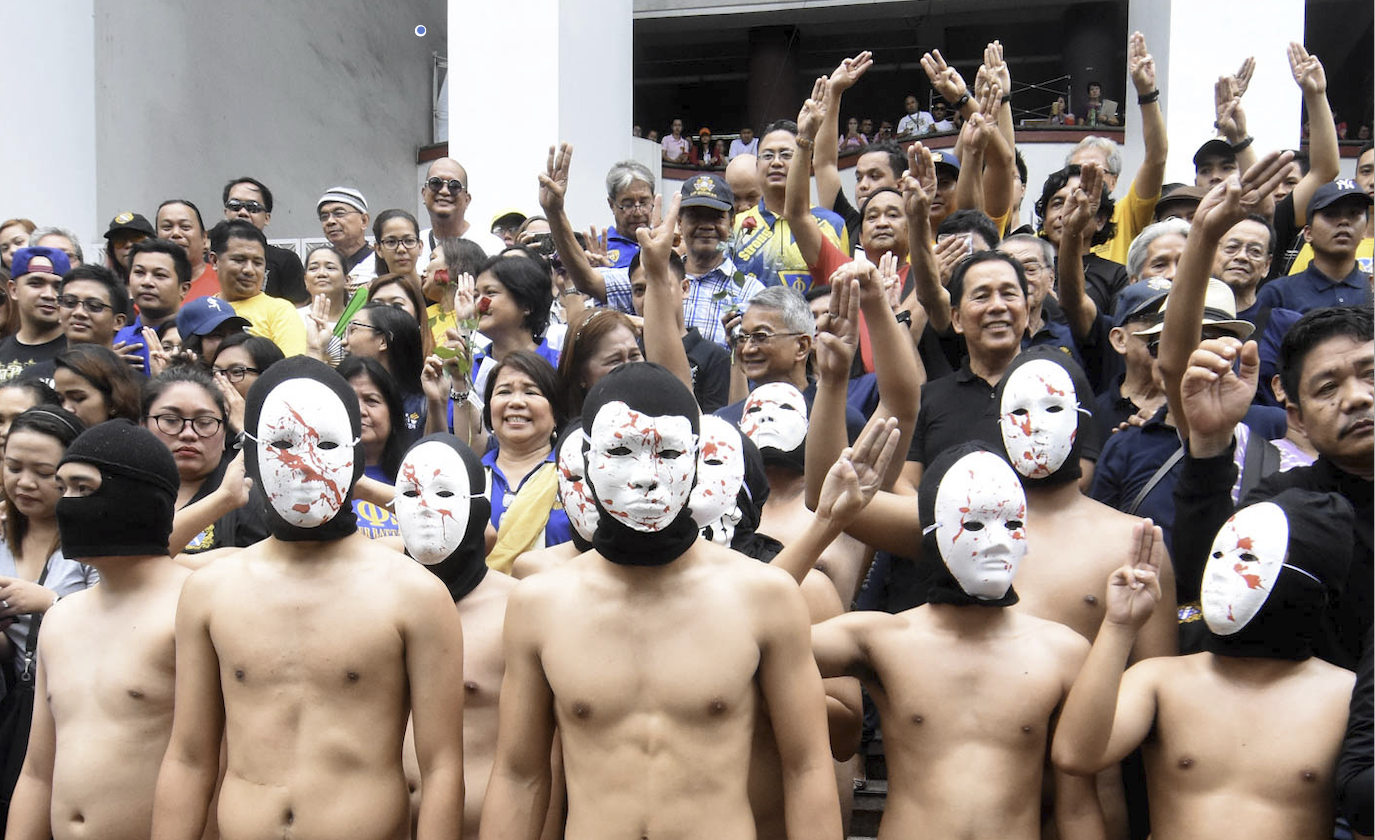
Every December, at the University of the Philippines, a tradition unfolds that almost always catches first-time observers off guard. Male students sprint across campus—sometimes past libraries, sometimes near administrative buildings—wearing nothing at all.
This event is called the Oblation Run, and while its spectacle tends to dominate headlines, its origins, symbolism, and evolution tell a much more complex story about student activism, nationalism, and how protest rituals take shape in post-colonial societies.
The University Behind the Tradition
Founded in 1908, the University of the Philippines (UP) holds a unique place in the country’s intellectual and political life. It is not simply a top academic institution; it has long functioned as a breeding ground for activists, artists, lawmakers, and dissenters.
From the anti-dictatorship movements during the Marcos era to contemporary debates over press freedom, sovereignty, and social justice, UP has historically positioned itself as a space where political speech is not just allowed but expected. Student demonstrations, faculty manifestos, and symbolic protest acts are woven into campus culture.
The Oblation Run emerges from that lineage—not as a prank, but as a ritualized form of attention-seeking dissent.
How It Started: A Film, a Fraternity, and 1977


The first Oblation Run took place in 1977, initiated by members of Alpha Phi Omega, one of UP’s most prominent service-oriented fraternities.
Contrary to popular belief, it did not begin as a protest against government policy. It was originally organized to promote the Filipino film Hubad na Bayani (Naked Hero), which itself dealt with themes of sacrifice, vulnerability, and national struggle during a politically tense period under martial law.
What began as a publicity stunt quickly took on a life of its own.
By the late 1970s and early 1980s, the run had detached from its cinematic origins and was absorbed into the broader protest culture of UP—particularly as students sought increasingly visible ways to express opposition during periods of censorship and repression.
Why “Oblation”? The Statue That Defines the Campus
The run takes its name from the Oblation, a statue created by national artist Guillermo Tolentino. Found on every UP campus, it depicts a nude male figure with arms outstretched, offering himself upward.
The symbolism is explicit: a selfless offering of one’s body, labor, and intellect to the nation.
In Filipino cultural discourse, the Oblation represents sakripisyo—the idea that service to country requires vulnerability, even erasure of self-interest. The statue’s nudity is intentional. It strips the figure of class, status, and protection.
Whether running naked meaningfully translates that symbolism is debatable—but the connection is not accidental.
From Stunt to Statement: What the Run Represents Today
Over time, the Oblation Run evolved into a platform for protest. Participants now typically:
- Cover their faces to protect anonymity
- Carry placards naming specific causes
- Coordinate routes and timing with campus authorities
Issues raised have ranged widely: tuition increases, press freedom, corruption scandals, foreign military presence, climate policy, and labor rights.
The nudity remains constant; the message changes year to year.
This transformation reflects a familiar pattern in protest history. Acts that begin as shock tactics often become codified rituals—predictable, anticipated, and culturally legible.
Does Anyone Actually Read the Signs?
Here’s the uncomfortable truth: probably not very closely.
From a communications or marketing perspective, the Oblation Run is not an efficient message-delivery system. The human eye is drawn to motion, spectacle, and taboo; text becomes secondary. Most media coverage focuses on the act itself rather than the content of the protest.
But efficiency may not be the point.
The run functions less as persuasion and more as agenda-setting. It guarantees coverage. It forces acknowledgment. It keeps protest embedded in the public imagination, even if the specifics blur.
In that sense, it succeeds not because people read the signs—but because they remember the ritual.
Why It Endures
Few student traditions last nearly five decades without institutional support, commercial sponsorship, or official sanction. The Oblation Run survives because it sits at the intersection of:
- National symbolism
- Youth dissent
- Ritualized transgression
- Media inevitability
It is shocking enough to remain visible, but familiar enough to be tolerated. Controversial, yet normalized. Offensive to some, emblematic to others.
And perhaps most importantly, it remains student-led.
How It’s Viewed Today
Public opinion in the Philippines remains divided. Critics see it as outdated, indecent, or distracting. Supporters argue that its very absurdity reflects the frustration of young people who feel unheard by conventional channels.
The university itself neither fully endorses nor outright bans the practice, instead regulating it for safety and order. That uneasy coexistence mirrors UP’s broader relationship with dissent: not always comfortable, but rarely silenced.
A Final Thought
There is no requirement to find the Oblation Run noble, effective, or coherent. Its power lies less in logic than in persistence.
It is a reminder that protest is not always polite, that tradition can emerge from provocation, and that universities—at their most honest—are places where meaning is argued, not agreed upon.
If nothing else, the Oblation Run proves this: once a ritual embeds itself into a nation’s cultural memory, it no longer needs to make perfect sense to survive.
