

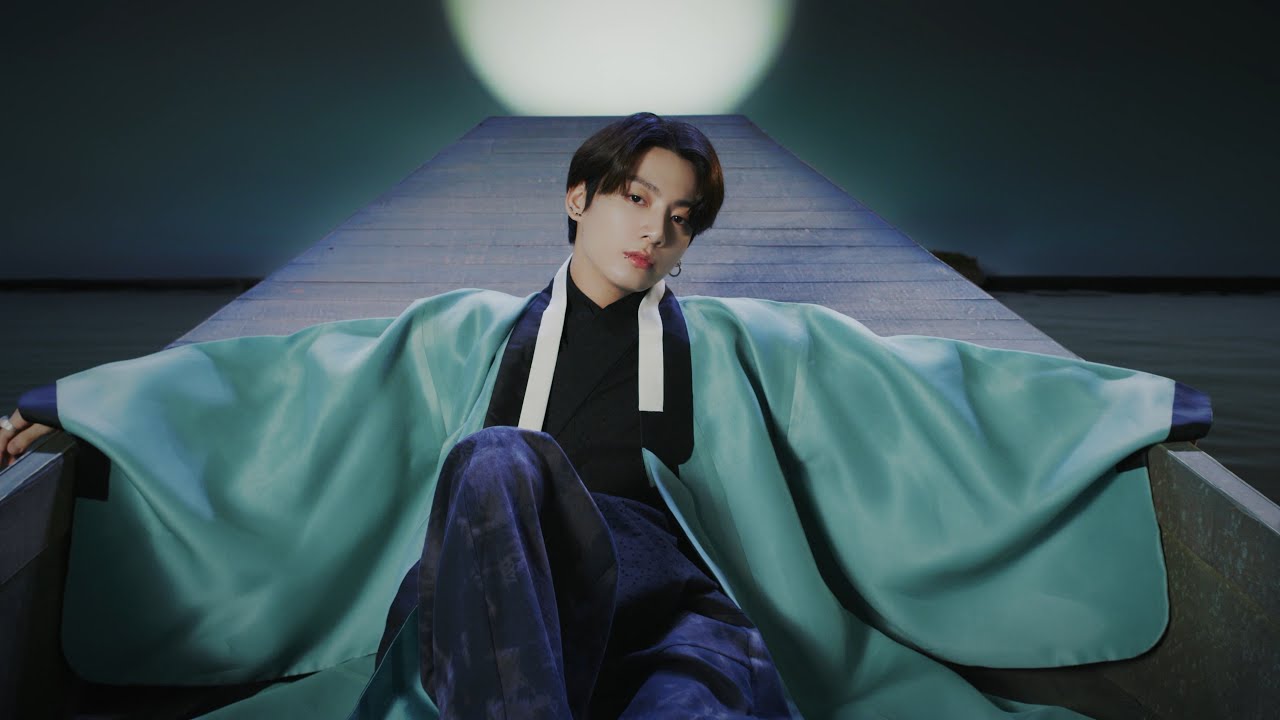
Jungkook may be the hardest member to pin down when it comes to Korean cultural influence— ecause it has been quietly transformed. Rather than inheriting tradition in recognizable forms, he translates its values into something contemporary, reshaping them without dismantling their foundation.
The values are still there—restraint, endurance, presence—but they surface through a modern sensibility shaped by a different generation, a different pace, and a different emotional vocabulary.
Let’s look at how Korean culture iinfluences Jungkook’s songwriting and how he is taking control of it.
1. 계획된 삶 속의 무계획 감정 (Unplanned Emotion Inside a Planned Life)
Korean society values 계획 (planning): education tracks, career timelines, life stages. Korean society is widely studied as one of the most life-scripted modern societies.
Confucian Life Sequencing (전통적 기반)
Confucian ethics—still deeply embedded in Korean social structure—frame life as a series of proper stages:
education → examination → employment → marriage → family → social contribution
Author and researcher Cho Haejoang repeatedly describes Korean subjectivity as shaped by compressed, externally timed life trajectories:
- modernization happened fast
- success windows are narrow
- life choices are expected to be made “on time”
She argues that Koreans often experience temporal anxiety not because they failed — but because they are slightly out of sync with expected milestones.
Jungkook followed all of them—without ever choosing them. That’s could be why in his writing, resists control:
In “My Time”, he sounds disorientated.
왜 나만 다른 시공간 속인 걸까? Why am I the only one living in a different time and space?
He doesn’t say I lost my youth. He asks why does time feel wrong for me?
This reflects a uniquely Korean generational anxiety – doing everything “right” yet feeling emotionally out of sync
“Telepathy” — rejecting urgency as a value
| Korean lyrics 너무 빠른 건 조금 위험해너무 느린 건 조금 지루해우리의 속도에 맞춰 가보자고 | English translation Too fast is a little dangerousToo slow is a little boringLet’s try moving at our own pace |
This is one of Jungkook’s clearest quiet refusals of externally imposed timing.
Not late.
Not early.
Our pace.
What makes him even more unique is his response. Instead of trying to change the system, he reroutes to find something that would feel more like his.
2. 담담함 (Damdamham): Emotional Flatness as Maturity
Damdamham is a Korean adjective meaning “calm, unadorned, understated.” Although this is not an old and strict cultural concept, it is commonly used in reviews of literature, film, acting.
It is one of the most coveted “praise” or adjective by any Korean artist because it is represents emotional maturity. In Korean aesthetics, emotional control is often seen as depth. 담담함 refers to a calm, unadorned emotional tone—saying profound things without raising one’s voice.
“Still With You” — holding on by noticing, not confessing
| Korean 나지막이 들리는 이 에어컨 소리이거라도 없으면 나 정말 무너질 것 같아 | English The low, quiet sound of the air conditionerIf even this weren’t here, I feel like I’d completely fall apart |
The emotional content is severe—I might collapse—but the delivery is almost conversational. There’s no crying imagery, no dramatic language. He anchors himself to a mundane detail and states the emotional consequence plainly.
This mirrors classical Korean poetry (sijo), where brevity and understatement carried weight.
“Film Out” — grief without protest
| Korean 손을 뻗는 순간에훅 사라져버려 | English At the moment I reach out,you suddenly disappear. |
There is no reaction line. No “why,” no cry, no collapse. The disappearance is stated as fact. This is often how Korean literature handles loss: by underreacting, not overexplaining.
Western songwriting often equates authenticity with emotional exposure. Korean tradition often equates authenticity with emotional restraint.
3.’Jeong’ is Jungkook’s of Way of Loving: 곁에 있음 (Being Beside)
Perhaps nobody embodies jeong stronger than Jungkook. Jeong is a bond or connection, it transcends relationships, the foundation of love, relationship and connection.
Jeong seems to be Jungkook’s love language, he gives, cares, he is present and does not require anything in return. It’s 곁에 있음—being beside someone without imposing.
“Still With You” — staying without possession
| Korean 서로 발걸음이 안 맞을 수도 있지만그대와 함께 이 길을 걷고 싶어요 | English Our steps might not always match,but I still want to walk this path with you. |
He acknowledges mismatch—different pace, different timing—without trying to correct it.
Jeong accepts difference and stays anyway.
“Still With You” — presence without certainty
| Korean 언젠가 아침이 오는 걸 알면서도별처럼 너의 하늘에 머물고 싶었어 | English Even knowing that morning will eventually come,I wanted to remain in your sky like a star. |
This is reflected across 99% of Korean dramas and literature. Love is proven through non-intrusion. You don’t demand closeness or require possession, you just make yourself available. That unselfishness for lack of a better term, take a different turn with Jungkook, though.
He is much more emotionally transparent and verbally direct. He doesn’t hide behind metaphor as much as earlier generations might. He names the feeling, then lets it sit.
4. 시간 감각 (Korean Sense of Time): Cyclical, Not Linear
It is in Jungkook’s sense of time that his rebellious side comes out but not in the “sex drugs and rock n roll” type but more in how he approaches the temporariness of life. There seems to be a natural fluidity in his pace, not rushing, not slowing down either.
Korean temporal perception—shaped by seasonal agriculture and Buddhist influence—tends to view time as repetitive and circular. This is a widely studied aspect of Korean culture.
Mircea Eliade discussed in The Myth of the Eternal Return contrasts Western linear, teleological time with cyclical, ritual-based time common in East Asian and agrarian societies. Time is not something you “progress through” but something you re-enter through seasons, rituals, and repetition.
Korean author Cho Haejoang frequently discusses how Koreans experience time as accumulative pressure, not linear progression.
“Telepathy” — rejecting speed as a moral value
| Korean 너무 빠른 건 조금 위험해너무 느린 건 조금 지루해우리의 속도에 맞춰 가보자고 | English Too fast is a little dangerousToo slow is a little boringLet’s try moving at our own pace |
This is a direct refusal of externally imposed timing. There’s no goal state, no finish line—only 속도 (pace), adjusted relationally.
“My You” — time marked by seasons, not progress
| Korean 네 번의 계절 또다시더 짙어지게 또다시 | English Four seasons once again,growing deeper once again. |
The word 또다시 (“again”) is crucial. Time here does not move forward toward conclusion—it returns, intensifies, and loops.
Jungkook remains consistent with Korean’s cultural emphasis on timing (때) and how it dictates their life but he refuses to follow everyone’s rhythm. He wants to keep his own pace.
Historically, han developed through repeated national hardship: colonization, war, division, authoritarian rule. Koreans had to change, not just how they think, but also how they feel in order to stay sane and survive. Jungkook keeps this tradition but in approaches it minimalistically.
5. 찰나 (Chal-na): Jungkook Writes in the Instant, Not the Arc
In Korean, 찰나 refers to a fleeting instant—a moment so brief it barely registers, yet emotionally complete. It has no exact english translation. English words like moment or second describe duration.
찰나, by contrast, describes existence—a moment that is complete even though it vanishes.
That nuance comes from its Buddhist root (kṣaṇa): the smallest indivisible unit of time in which something exists before dissolving.
If I am forced to describe Jungkook’s writing in one word, that would be it. Chal-na. His songs are rarely about:
- what led here
- what this means
- what comes next
“Still With You” — rehearsing a sentence that hasn’t been spoken
나지막이 들리는 이 에어컨 소리 The low, quiet sound of this air conditioner
이거라도 없으면 나 정말 무너질 것 같아 If even this weren’t here, I feel like I’d completely fall apart
The song doesn’t depict the reunion. It freezes on the instant of imagined speech—a sentence practiced silently.
“My You” — questioning reality before sleep
사라질까? 혹시 꿈일까? Will it disappear? Could this be a dream?
뒤척이다 또 잠이 든다 I toss and turn, then fall asleep again
This is not existential doubt stretched into philosophy. It’s a half-conscious thought that passes before sleep.
“My Time” — sudden awareness, not reflection
Oh, I think I was in yesterday
’Cause everybody walk too fast
This isn’t a retrospective analysis of lost youth. It’s a sudden realization mid-motion—the feeling of being temporally misaligned as it hits him.
This is not existential doubt stretched into philosophy. It’s a half-conscious thought that passes before sleep.
They are about what this feels like right now. And this is something he has said about himself many times. He lives in the moment. Planning, conceptualizing and development are things he does for work. When he is not working, he is all about the moment. It comes through.
Examples:
- the hum of an air conditioner
- standing still under a sunset
- practicing words he hasn’t said yet
- wondering if this moment is a dream
But he expresses it with traditional Korean restraint—no spectacle, no overstatement.
