

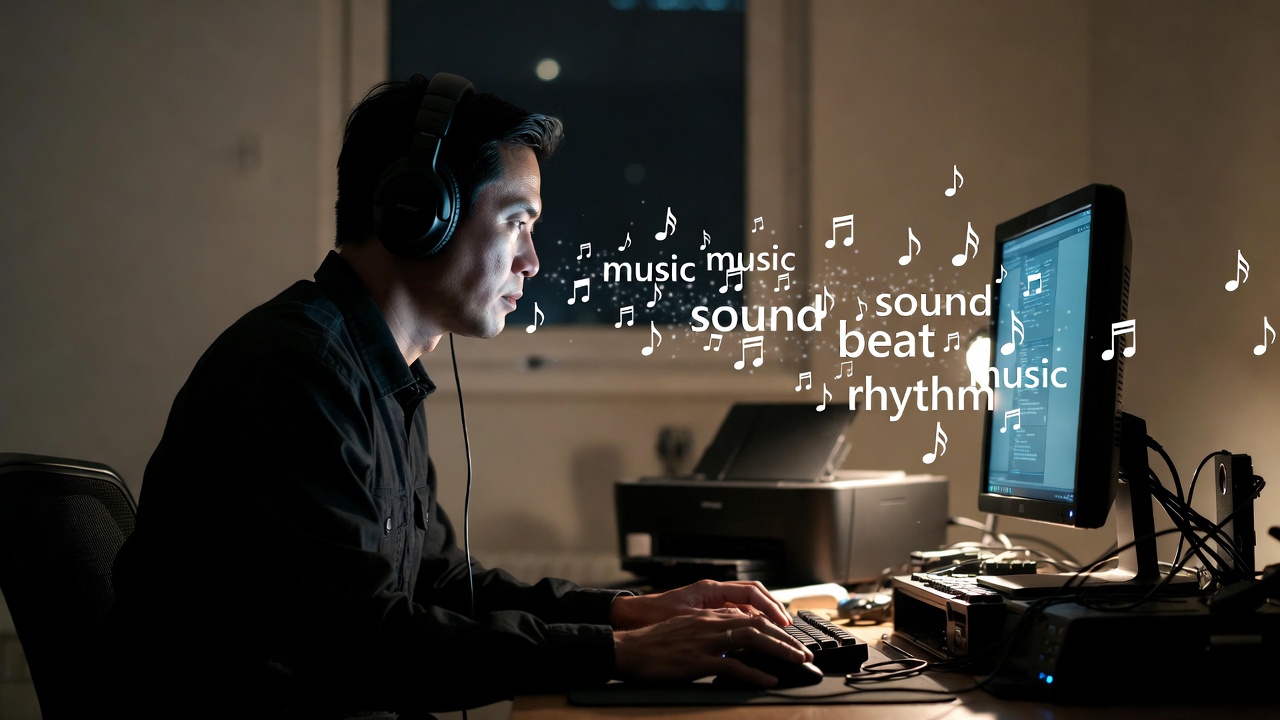
Google is starting to creep into the entertainment industry via AI-generated music with new investments in Lyria and Producer AI, signaling a broader strategy to embed generative tools directly into the creative pipeline rather than treating them as experimental add-ons.
The move reflects a shift in how major technology companies are positioning AI — not merely as infrastructure, but as a co-creative layer across entertainment, media, and digital production.
What is Lyria
Lyria is an AI-powered songwriting and music generation model designed to assist in lyric writing, melody creation, and stylistic composition. Rather than functioning purely as a beat generator, Lyria is structured to work at the conceptual and lyrical level — an area often overlooked in the rush toward tempo, drops, and production gloss.
The system can:
- Generate lyrical drafts based on mood, theme, or genre
- Suggest melodic contours and phrasing
- Adapt witing styles to specific eras or influences
- Provide structural outlines for song development
Unlike earlier AI music tools that focused heavily on instrumental backing tracks, Lyria’s positioning centers on songwriting itself — particularly the architecture of verses, hooks, and narrative structure.
What Is Producer AI?
Producer AI focuses on the technical and compositional side of music production. It acts as a digital co-producer, assisting with beat construction, arrangement, mixing suggestions, and sound design.
Capabilities include:
- Generating instrumental stems
- Suggesting chord progressions
- Creating rhythm structures across genres
- Offering mix and mastering presets
- Real-time adaptive arrangement suggestions
For independent creators or aspiring musicians without access to studios, session musicians, or experienced producers, tools like Producer AI aim to lower the barrier to entry.
AI’s Reputation Problem
Artificial intelligence has developed a public relations issue — especially among creatives who associate it with replacement rather than augmentation.
Yet the irony is difficult to ignore.
Search engines are powered by machine learning models. Social media feeds are curated by recommendation algorithms. Engineering software relies on AI for structural simulations. Medical diagnostics use AI-assisted imaging. Financial markets deploy AI models for risk assessment. Autonomous systems in aerospace and automotive industries depend on machine learning optimization.
Most people who claim to reject AI are interacting with it daily — often unconsciously.
The discomfort is less about AI existing, and more about AI entering visible creative spaces like music and art, where identity and authorship feel personal.
Why Lyria Matters for Songwriting
The current streaming era rewards immediacy. TikTok trends frequently hinge on short, repetitive hooks. Labels increasingly commission songs engineered for virality: compact runtimes, simple lyrics, highly memorizable phrases.
The result is not a collapse of creativity — but a narrowing of lyrical ambition.
Poetry in mainstream pop has receded. Narrative arcs are compressed. Emotional nuance is often sacrificed for algorithmic replay value.
This is where a tool like Lyria presents an unexpected possibility.
If used intentionally, it can:
- Generate alternative lyrical phrasings beyond cliché hooks
- Encourage thematic development across verses
- Surface poetic structures that might not emerge in a high-pressure writing room
- Help non-native English writers refine metaphor and rhythm
For independent artists without publishing teams or seasoned co-writers, access to iterative lyrical assistance could revive depth rather than diminish it.
If used the right away, AI may help restore the very craftsmanship that the streaming economy compressed.
How Producer AI Could Function as Training Ground
Producer AI is unlikely to replace experienced human producers in high-level commercial contexts. But it may function as a training simulator.
For beginners:
- It can demonstrate arrangement logic.
- It can expose users to genre conventions.
- It can provide immediate feedback loops.
In many ways, it resembles early photography tools. Automatic settings did not eliminate professional photographers; they expanded access and forced professionals to elevate their craft.
Similarly, AI production tools may create “good enough” starting points, demo tracks even — sketches that humans can build on, not finished works. The ceiling of creativity still depends on human judgment, emotional intelligence, and lived experience.
The Human Variable
At its core, technology is agnostic.
AI systems generate patterns based on existing data. They do not experience heartbreak. They do not live through cultural transitions. They do not navigate identity crises or collective trauma. They recombine what has already existed.
Human creativity, by contrast, is born from friction — from relationships, memory, grief, ambition, failures, joy, and everything in between.
If music ever begins to sound emotionally flat in the AI era, that will not be because machines developed souls. It will be because humans stopped drawing from their own.
AI can draft lyrics. It cannot feel them.
AI can suggest chord progressions. It cannot attach them to lived memory.
Unless humans abandon depth and reduce themselves to pattern repetition, creative authorship remains fundamentally human.
A Tool, Not a Replacement
Google’s investments in Lyria and Producer AI reflect a larger industry recognition: generative AI is moving from novelty to infrastructure.
The critical question is not whether AI will exist in music. It already does — in recommendation systems, mastering tools, distribution analytics, and royalty tracking.
The question is how artists choose to use it.
Used carelessly, AI can homogenize output.
Used strategically, it can expand access and accelerate learning.
Technology can be “good enough.”
The ceiling of excellence still belongs to human experience.
