

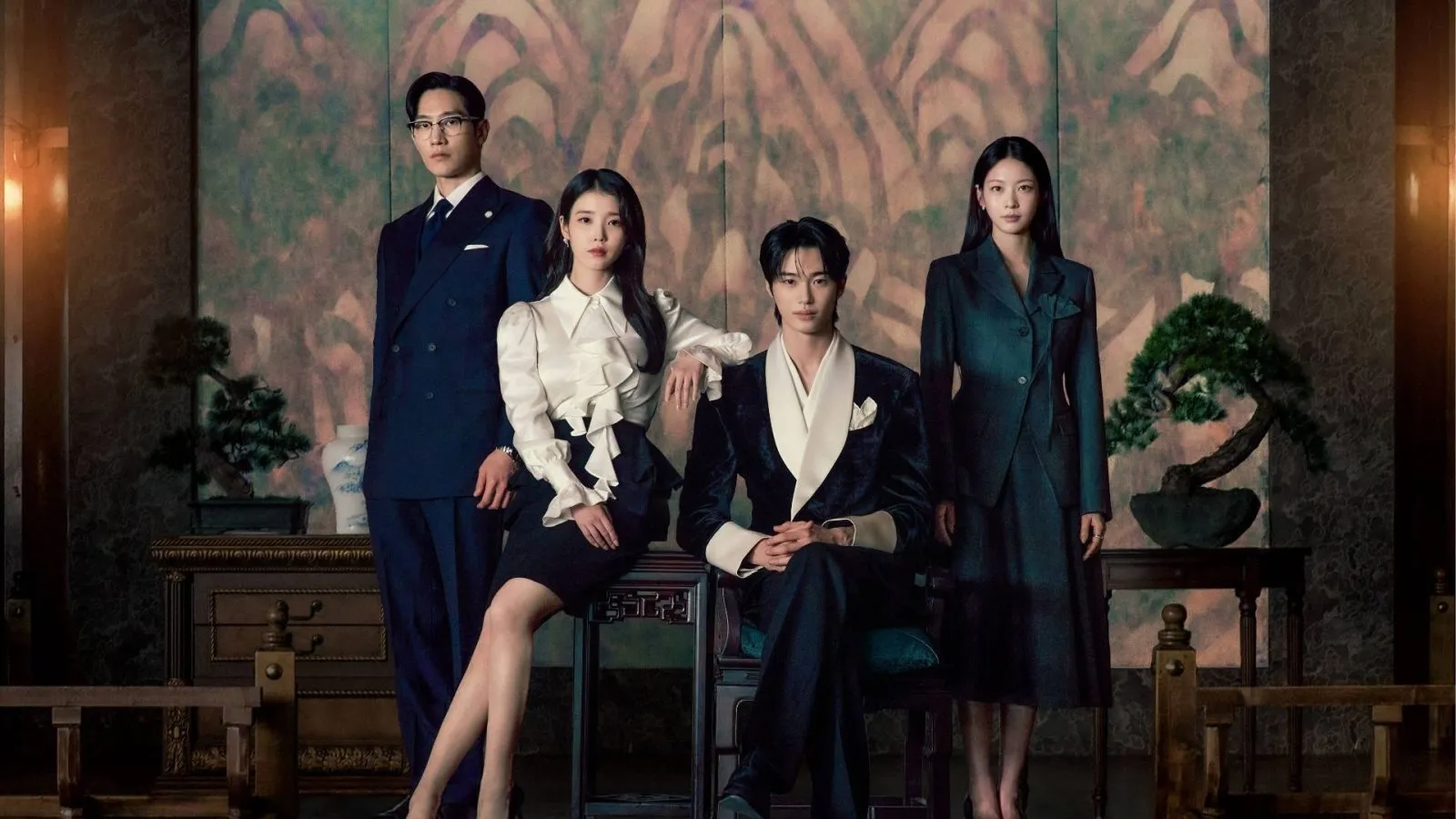
The MBC weekend drama wrapped with solid ratings (peaking at 13.8% nationwide), yet it’s now facing potential clawback of promotional funds from the Korea Media and Communications Commission (KMCC, also referred to as KCC) over alleged historical distortions in Episode 11. The coronation scene — where the monarch wore a nine-jade crown (associated with vassal states) instead of the imperial twelve-jade version, and officials chanted “long live” variants more fitting for subordinates — sparked outrage among viewers who saw it as undermining Korean sovereignty, even in a fictional modern constitutional monarchy setting.
The production team apologized quickly, promising fixes for reruns, VOD, and OTT. Lead actors Byeon Woo-seok and IU followed with personal statements on May 18, expressing regret for not giving enough thought to historical context and how it might land with audiences. IU even got emotional during her birthday event, while experts like Professor Seo Kyoung-duk piled on criticism for weak historical consultation.
This isn’t just drama drama — it’s a window into how Seoul funds its cultural exports while trying to balance national image, artistic freedom, and accountability.
How Korea Funds Historical Content (and Why)
South Korea didn’t stumble into Hallyu; it engineered much of it. After the 1997 Asian financial crisis, President Kim Dae-jung launched the “Hallyu Industry Support Development Plan.” Cultural spending jumped from $14 million in 1998 to $84 million by 2001. The thinking? One Hollywood blockbuster like Jurassic Park earned as much as exporting 1.5 million Hyundai cars. Why not invest in stories instead of steel?
Key players today:
- Ministry of Culture, Sports and Tourism (MCST): Oversees big-picture strategy, including a dedicated Hallyu department.
- Korea Creative Content Agency (KOCCA): The workhorse. It offers loans, subsidies, R&D support, training, and export help for TV dramas, films, docs, games, animation, and more. Historical or fusion content often gets priority because it showcases unique Korean heritage.
- KMCC/KCC and partners like KCA: Focus on broadcasting, overseas promotion, and showcases (like the Cannes International Series Festival push that included Perfect Crown alongside three other projects).
Support comes via direct subsidies, tax incentives, investment funds (government often seeds 20-30% of big pots), export promotion, and co-financing. In recent years, hundreds of millions of USD annually go toward content startups and global pushes. Historical dramas get extra love because they preserve Joseon-era aesthetics, rituals, hanbok, and palace life while packaging them for modern global audiences.
The Wins: Culture Preserved + Hallyu Exploded
This system has delivered. Hallyu exports ballooned from ~$189 million in 1998 to over $12 billion by 2019, with ongoing growth. Long before K-pop became dominant globally, Korean historical dramas were already building international curiosity around Korean culture. Series rooted in Joseon dynasty politics, royal court rituals, Korean folklore, resistance history, Confucian traditions, and traditional aesthetics, introduced global audiences to Korea in ways textbooks and tourism campaigns never could.
For many international viewers, Korean dramas became their first exposure to cultural elements like hanbok, Korean cuisine, court etiquette, and others.
Unlike documentaries or educational programming, dramas created emotional attachment. Viewers learn facts about Korea. They emotionally connect to Korean stories, values, conflicts, and aesthetics through characters and narratives.
The numbers themselves show how large that influence became.
South Korea’s cultural exports have grown dramatically over the past two decades. According to government and industry reports, exports tied to Korean content industries—including music, television, film, gaming, animation, and publishing—grew from a relatively niche sector in the early 2000s into a multi-billion-dollar global industry. Korean content exports surpassed $13 billion USD in recent years, while tourism connected to Hallyu also surged significantly.
Series like Jumong, Moon Embracing the Sun, Kingdom, and others traveled internationally and helped shape foreign perceptions of Korean history and identity.
At the same time, Korean cinema grew into a major global force. Parasite winning the Academy Award for Best Picture became a symbolic turning point, while Korean filmmakers, actors, and creatives increasingly entered global mainstream conversations.
K-pop expanded even further. BTS transformed Korean music into a worldwide industry generating billions in economic impact through expanded narrative rooted in music.
What makes South Korea particularly interesting culturally is that despite being highly modernized and deeply open to Western influence, the country has remained strongly rooted in Korean identity. The latest project of BTS, ARIRANG, is grounded on Korean values and principles. Millions of their fans all over the world are now singing ARIRANG, a Korean folk song, after BTS used it in their album.
While absorbing outside influences, Korean entertainment consistently re-centers Korean identity within the final product.
That is one reason Hallyu became so globally distinctive. Korean dramas still foreground:
- Korean social structures,
- Korean emotional sensibilities
- Korean family dynamics
- Korean historical memory
- Korean beauty standards
- Korean language
- Korean cultural rituals
Movies and TV series effectively turned Korean history into globally consumed narrative culture. They preserved symbols, rituals, aesthetics, and historical memory by continuously reintroducing them to newer generations domestically while simultaneously exporting them internationally.
These productions are no longer viewed purely as entertainment. They are also seen as cultural preservation, national representation, historical education, and soft power infrastructure,
So when a drama appears to mishandle historically significant symbols or rituals, the reaction becomes much larger than ordinary fandom criticism.
Because for many Koreans, these productions are not simply fictional worlds anymore. They are part of how Korea presents and preserves itself both domestically and internationally.


The Tension: Funding Comes with Responsibility — and Friction with Art
Here’s the rub. When you take public money tied to “national interest” or “cultural promotion,” you’re expected to uphold certain standards — positive image, historical respect, social harmony. Contracts often include clauses on “public interest harm” or controversies, which is exactly what KMCC is reviewing for Perfect Crown (though officials later clarified it was mostly promotional support, not full production subsidy).
Artistry, on the other hand, thrives on freedom, provocation, and sometimes “pain” — bending norms, critiquing society, experimenting with history for metaphor or drama. Strict oversight risks bland, state-approved content. Creators might self-censor to avoid funding cuts or backlash.
The Shadows of Mr. Queen
Mr. Queen was 2020 fantasy-comedy about a modern male chef whose soul ends up trapped inside the body of Queen Cheorin during the Joseon era. It was intentionally absurd, irreverent, and comedic. The show became massively popular domestically and internationally because it approached historical drama differently—more chaotic, self-aware, and satirical compared to traditional sageuks.
But the controversy started because some viewers and scholars accused the series of disrespecting Korean history and historical figures.
One major issue involved the way the drama referenced the Annals of the Joseon Dynasty (조선왕조실록), which is considered one of Korea’s most important historical records and is even recognized by UNESCO. In the drama, the annals were jokingly described in a way some viewers interpreted as reducing them to “tabloid-like” records. That angered critics because the annals are treated with enormous cultural and historical importance in Korea.
There was also criticism surrounding the portrayal of King Cheoljong and other historical royal figures. Some people felt the comedy and exaggeration crossed into mockery rather than reinterpretation.
The backlash grew enough that viewers filed complaints, historical groups criticized the production, and petitions circulated online.
Eventually, parts of the controversy escalated into broader conversations about whether Korean historical dramas were becoming too careless with cultural heritage in pursuit of entertainment value.
Mr. Queen itself was not malicious. It was clearly fictional and intentionally comedic. But the reaction showed that once historical symbols and figures are involved, many Koreans no longer see these productions as “just entertainment.” They become tied to cultural and historical dignity.
And that is exactly where the tension with artistry begins.
The Big Question
Creativity often thrives through reinterpretation, exaggeration, satire, and experimentation. Historical fiction almost always bends reality to some extent. Writers compress timelines, dramatize personalities, invent dialogue, and reshape events emotionally.
But once a country actively builds its entertainment industry as part of its soft power strategy, the stakes become different.
Historical dramas stop being viewed only as creative works. They also become unofficial educational tools and cultural ambassadors.
Which means creators can suddenly find themselves operating under two competing pressures – make compelling art and protect cultural legitimacy.
And those goals do not always peacefully coexist.
The moment public institutions support a production—even indirectly through promotion or export assistance—the expectation of “public responsibility” enters the conversation.
That can create a chilling effect creatively.
Writers and producers may begin self-censoring and avoid themes that could create conflict.
The irony is that part of what made Korean entertainment globally successful in the first place was precisely its willingness to take creative risks and explore darker themes. So Korea now faces an interesting balancing act.
How do you preserve cultural dignity and historical respect without accidentally limiting the creative unpredictability that made Hallyu powerful globally?
