

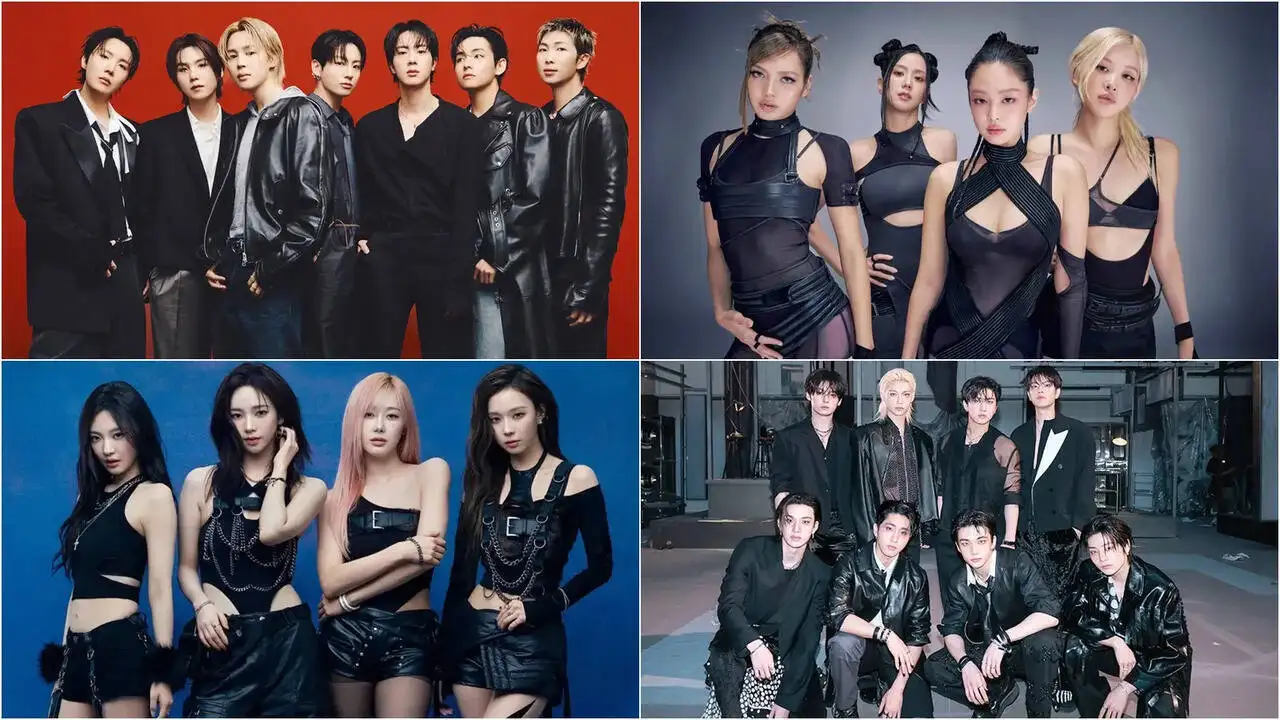
The four biggest names in K-pop—HYBE, SM Entertainment, JYP Entertainment, and YG Entertainment—are sharing the same sandbox under a government-backed initiative to build what organizers openly hope will become a festival capable of surpassing Coachella. That alone makes Fanomenon different from anything the Korean music industry has attempted before.
On July 27, the Popular Culture Exchange Committee, co-chaired by Culture, Sports and Tourism Minister Choi Hwi-young and J.Y. Park, officially unveiled Fanomenon 2027, scheduled for December 2–12, 2027. The festival will span eleven days across Changdong Seoul Arena and Goyang KINTEX Hall 2, built around one central idea: fandom is no longer just the audience. It has become a cultural force in its own right.
What They’re Actually Building
Fan + Phenomenon = Fanomenon (패노메논).
Rather than centering artists alone, the project treats fandom itself as the phenomenon worth celebrating.
Changdong Seoul Arena, the new purpose-built venue expected to open in the first half of 2027, will host the headline concerts alongside the new Fandom Awards. Instead of recognizing only artists, the ceremony will honor the year’s ten most influential fandoms, with artists accepting awards on behalf of their fans. Organizers say the winners will be determined using both quantitative and qualitative evaluations rather than pure popularity voting.
At Goyang KINTEX Hall 2, the focus shifts beyond live performances. The exhibition space will bring together companies from food, beauty, fashion, gaming, webtoons, film, and drama, creating an experience that extends well beyond music. Rather than functioning as an oversized merchandise hall, KINTEX is being designed as a temporary K-culture city where fans can spend days exploring different parts of Korea’s creative industries.
The numbers reflect equally ambitious expectations. Organizers project approximately 520,000 visitors, including 200,000 international travelers, generating more than ₩1 trillion in economic impact. The government will support immigration, transportation, and safety operations, while a joint venture formed by HYBE, SM, JYP, and YG will oversee the festival itself.
A Step Above
Company-wide concerts are nothing new.
SM Entertainment has spent decades refining the agency concert through SMTOWN LIVE, while HYBE expanded the format with Weverse Con Festival, inviting artists beyond its own roster and experimenting with broader fan programming. Both events helped prove that audiences were willing to spend entire weekends immersed in music rather than attending a single concert.
Fanomenon pushes that idea much further. Instead of one company promoting its own artists, four longtime competitors are working together to promote Korean culture itself. The festival isn’t designed around a single label or platform. It’s designed around the idea that K-pop has become the gateway to a much larger cultural ecosystem, and that ecosystem is now valuable enough to become the attraction.
Eleven Days Changes Everything
Most major music festivals last somewhere between one and four days.
An eleven-day schedule changes what organizers are asking fans to do. Instead of flying into Seoul for one concert before heading home, visitors are being encouraged to stay for several days—or even an entire vacation. The structure creates enough space for fans to attend multiple concerts, discover artists they may never have seen before, participate in fan events, and explore exhibitions without feeling like every experience has to fit into a single weekend.
That additional time also opens the door to programming that shorter festivals simply cannot accommodate. While this first announcement focuses primarily on K-pop, an event stretching across eleven days naturally creates room for K-hip-hop, K-rock, indie artists, emerging acts, producers, DJs, and cross-genre collaborations. Whether those become part of future editions remains to be seen, but the format certainly makes that kind of expansion possible.
The exhibition component quietly does some of the festival’s most important work. Companies from food, beauty, fashion, gaming, webtoons, and film aren’t simply filling extra floor space. They represent industries that have increasingly benefited from K-pop’s global popularity. Fans may travel because of their favorite artists, but once they’re in Korea they also discover skincare brands, restaurants, fashion labels, games, cafés, and tourism destinations. Fanomenon formalizes that relationship by turning music into the gateway to Korea’s wider cultural economy.
Korea Is Exporting an Annual Tradition
Perhaps the most interesting part of the announcement isn’t the lineup or even the scale. It’s the long-term strategy.
Organizers have already designated December as Fanomenon’s permanent home on the calendar. Every year, the flagship edition will remain in Korea while a separate touring version begins overseas, starting with Los Angeles in May 2028. Beyond that, the committee envisions permanent K-Culture Centers in major cities around the world, combining performance venues with exhibition and industry spaces.
That changes how the inaugural festival should be viewed. Fanomenon isn’t intended to be a one-time celebration or even an annual concert series. It’s an attempt to establish a recurring global tradition, with Seoul serving as its permanent home. Much like other countries have signature cultural events that draw international visitors every year, Korea is trying to create a destination that brings global fandom back each December.
J.Y. Park described the project as an effort to keep K-culture economically sustainable for future generations. Reflecting on the early 2000s, when he and Bang Si-hyuk shared a small room in the United States while dreaming about taking Korean music global, he said imagining the world’s attention turning toward Seoul every December once felt impossible. Fanomenon is an attempt to turn that vision into permanent infrastructure.
The Real Test
Whether Fanomenon eventually surpasses Coachella is almost secondary. The more interesting questions come after the opening ceremony.
Can four companies that have spent decades competing continue collaborating once the excitement of the inaugural edition fades? Can the Fandom Awards evolve into a meaningful recognition of fan communities rather than another popularity contest? Can an eleven-day festival consistently deliver enough programming to convince international visitors to make it part of their annual travel plans?
Those questions won’t be answered until the festival actually opens.
What is already clear, however, is that Korea’s biggest entertainment companies are thinking beyond larger concerts or bigger world tours. Fanomenon represents an attempt to build a permanent destination where music, tourism, consumer brands, and cultural industries reinforce one another. If successful, it won’t simply be another festival on the calendar. It could become the annual gathering place for the global K-culture community.
