

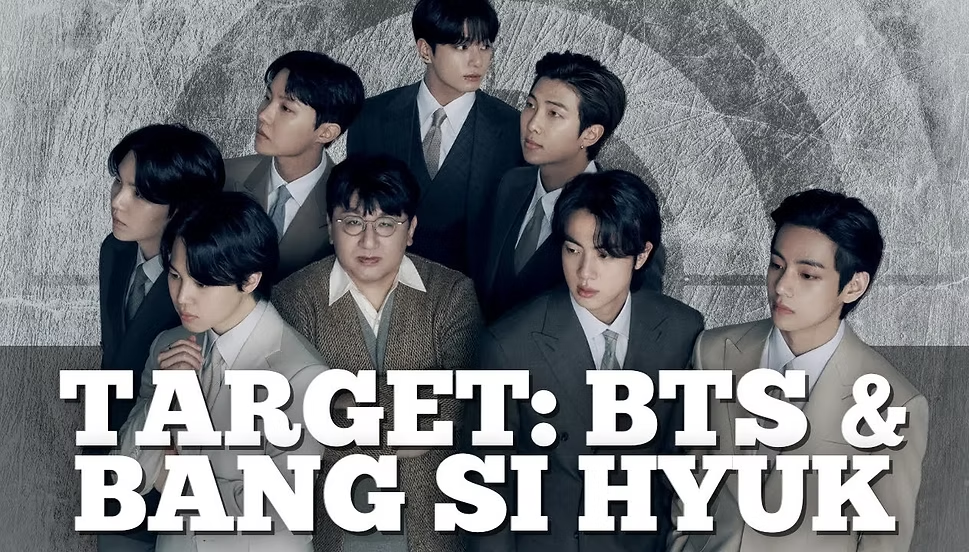
Last week, Mnet reportedly published an article stating that HYBE and Chairman Bang Si Hyuk had been raided by authorities. After two prior rejections, a third search warrant was allegedly granted, and the supposed raid was carried out. However, the article was deleted less than two hours after publication—making it impossible to find now. Fortunately, some fans had already shared the article’s link on X (formerly Twitter) and Patreon, preserving evidence of its brief existence.
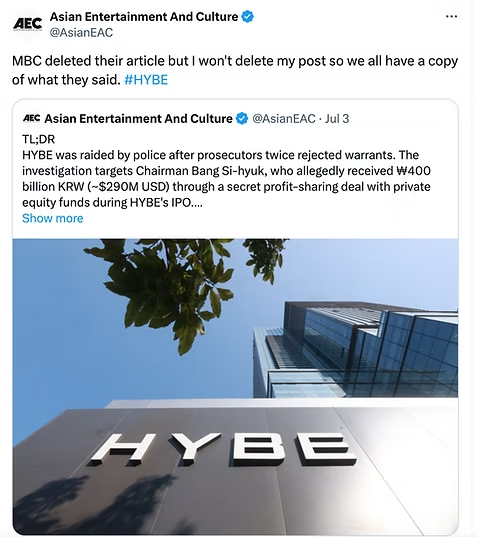
Screenshot of a tweet from @AsianEAC on X, reporting that the raid on HYBE occurred after prosecutors initially denied two search warrants.
The article alleged that Bang Si Hyuk was under investigation for receiving ₩400 billion through a secret profit-sharing deal—an old case HYBE had already been cleared of. Despite the lack of new findings, the case appears to be making a comeback, and attempts to secure a search warrant persisted until one was finally granted, or so the deleted article claimed.
Viral Misinformation: Fake News About HYBE
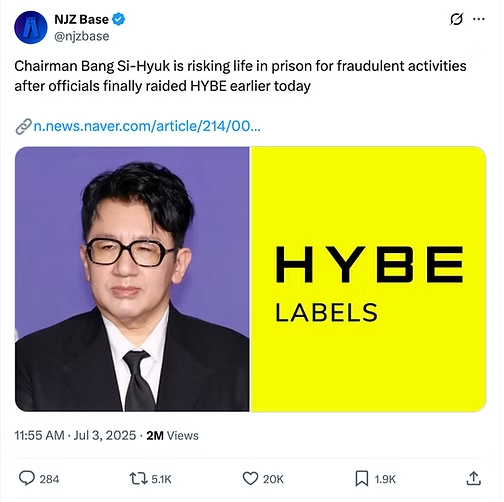
After the Mnet article vanished, several social media accounts—particularly toxic NewJeans fan pages—amplified the claims. One popular account posted that Bang Si Hyuk was “risking life in prison for fraudulent activities after officials finally raided HYBE earlier today.” Unlike Mnet, these accounts haven’t retracted or deleted their statements.
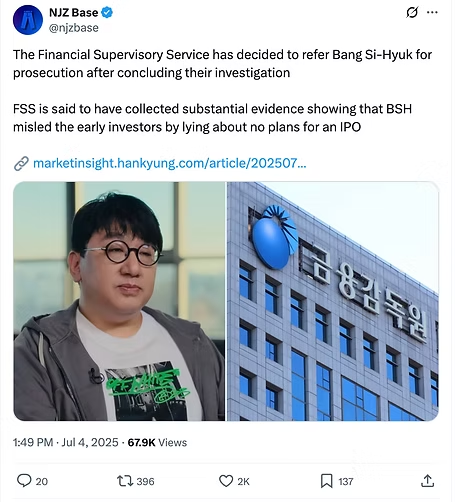
One publication went even further, stating that the Financial Supervisory Service had begun sanctioning Bang Si Hyuk for “fraudulent illegal activities.”
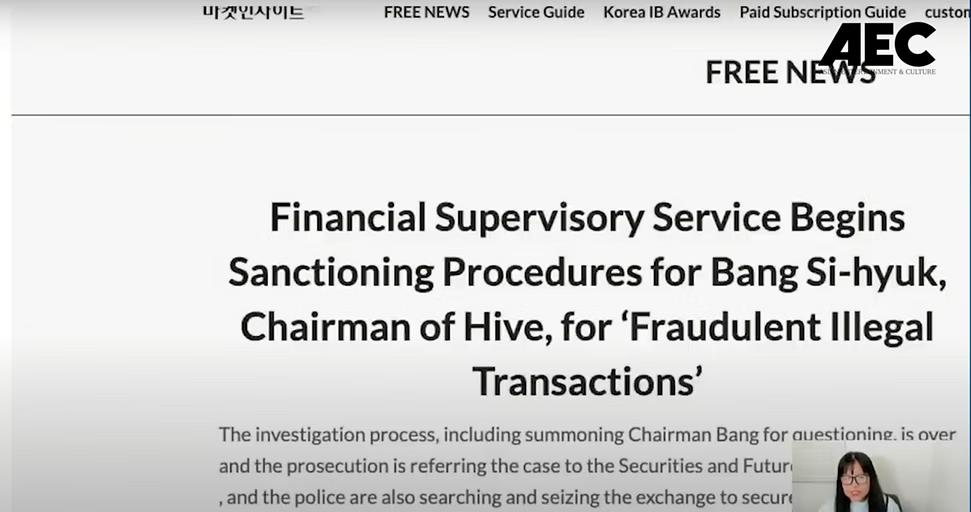
But here’s the truth: no raid ever happened. The authorities raided a different company, not HYBE. Still, the fake news continues to circulate.
The Legal Right Not to Appear in Court
Another point of attack concerns Bang Si Hyuk’s absence from court in the case against Kakao, where HYBE accused Kakao of manipulating SM Entertainment’s stock prices during their acquisition battle.
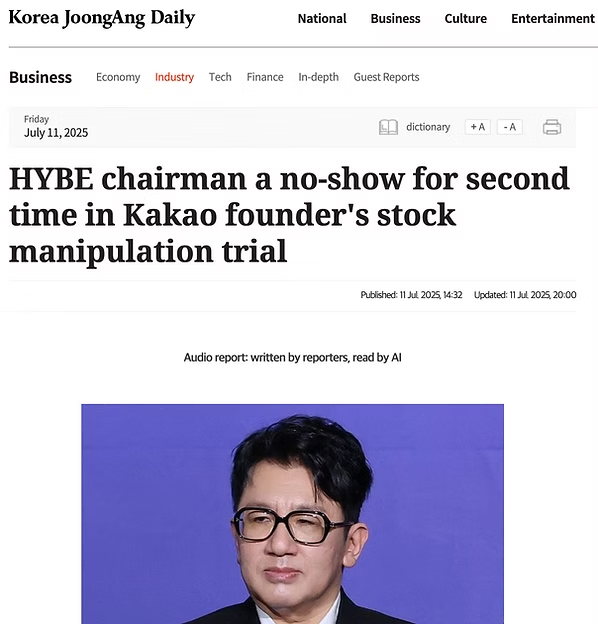
News headline from Korea JoongAng Daily reporting that HYBE chairman Bang Si Hyuk missed his second court appearance in the Kakao founder’s stock manipulation trial.
Source: Korea JoongAng Daily
Despite sufficient evidence to indict Kakao, Bang Si Hyuk has opted not to appear in court as a witness.
Critics claim he’s disrespecting the legal process, but this isn’t true. In South Korea—as in many countries—individuals have the right to avoid court appearances by submitting a valid reason through their lawyers. The court accepts these absences, and representation through legal counsel is a common and lawful practice. There’s nothing illegal or suspicious about Bang Si Hyuk’s decision to stay out of court personally.
The Real Scandal: Reporter Stock Manipulation
Interestingly, the real scandal isn’t Bang Si Hyuk or HYBE—it’s about journalists. The prosecution is currently investigating about 20 South Korean reporters for alleged market manipulation.
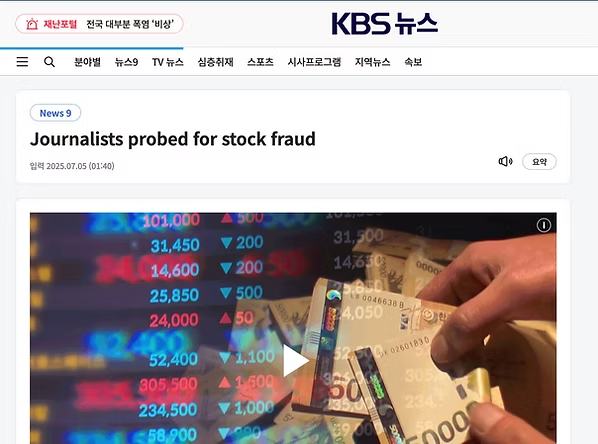
Headline from KBS News reporting that 20 journalists are under investigation by South Korean prosecutors for suspected involvement in stock price manipulation.
Source: KBS News
The scheme goes like this: journalists would buy company stocks, write favorable articles to boost those stock prices, then sell for a profit. In some cases, they allegedly did the opposite—writing negative reports to lower stock prices, buying in, and waiting for a rebound.
This pattern has repeated for years, with around 20 former and current journalists now under investigation. Many appear to have used inside information gained during reporting to benefit personally. This unethical practice has serious implications—not just for the financial sector but for media credibility in general.
HYBE Continues Legal Action in Korea and Abroad
HYBE has not remained silent in the face of defamatory reports. The company is actively pursuing legal action both in South Korea and internationally, including recent discovery filings in the United States related to SEVENTEEN.
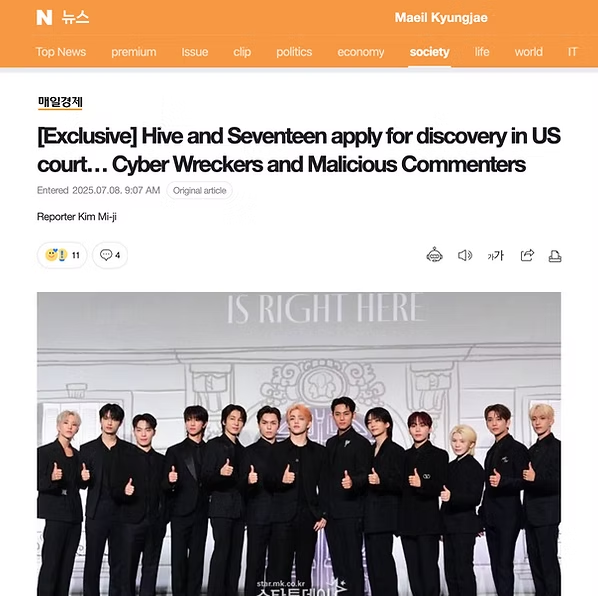
Headline from Naver News about HYBE and SEVENTEEN filing for U.S. court discovery to identify cyberbullies and malicious commenters.
Source: Naver News
These efforts aim to gather evidence for future lawsuits against individuals spreading malicious information.
The belief is that HYBE is waiting for the Kakao case to conclude before turning its focus on reporters and social media accounts contributing to misinformation. Gathering solid proof takes time—but once it’s ready, expect action.
What Fans Can Do: Submit Evidence
HYBE has urged fans to help by submitting screencaps of malicious posts or articles. Importantly, screenshots should include the entire screen—not just the offensive content. This means capturing the visible time and date on your computer or mobile device as well. You can send these screencaps to HYBE’s reporting email (commonly [email protected] or similar).
Also, note that being a BTS fan does not make someone immune from accountability. An X account that supports BTS but bullies others could still be sued. In short, decency in posting matters.
The Cultural Context: Why Some Koreans Resent BTS
A Korean friend recently helped provide insight into why some South Koreans appear to harbor resentment toward BTS and Bang Si Hyuk. A mix of Confucian values, collectivism, and social competition is at play.
In traditional Confucian thinking, rising above one’s social class—especially without an elite education—is seen as upsetting the natural order. Success stories like BTS’s challenge this belief. For some, it’s not admiration—it feels like betrayal.
Another cultural element is Korea’s strong sense of collectivism. Individuals are expected to uplift the group as they rise. When someone becomes successful alone, it’s often perceived as selfish, even if they’ve contributed nationally or globally.
Add in South Korea’s highly competitive society—where appearance, achievements, and success are status symbols—and the envy is amplified. However, this doesn’t reflect the majority opinion.
The Silent Majority: Koreans Who Support BTS
Despite the loud negativity online, the reality is very different. According to my Korean friend (who lives in South Korea), the people expressing hate toward BTS or Bang Si Hyuk are a vocal minority.
He emphasized that most South Koreans appreciate BTS and what they’ve done for the country’s global image. Many believe the group deserved military exemption. Particularly in rural areas, locals feel BTS’s service was a missed opportunity, considering their contributions to South Korea’s soft power and economy.
A Changed Perspective After Military Service
Interestingly, public opinion took another turn after BTS enlisted. Rather than using their service to say “they’re just like everyone else,” people are now saying everyone should serve—since not even BTS was granted exemption.
My Korean friends—many of whom aren’t even BTS fans—point out that no Olympic gold medalist could match BTS’s contribution to the nation’s GDP. If BTS didn’t qualify for exemption, then nobody should. Their view? BTS set the bar so high that no one else can realistically reach it.
The Bottom Line: Don’t Be Fooled by the Loud Minority
Many of the posts you see online—from calls to boycott SUGA’s appearances to demands that BTS never return to Korean broadcasts—don’t represent Korean public opinion. According to locals, these are often driven by jealousy, misinformation, or hidden agendas.
So, if you’ve started to feel bitter toward Koreans because of these online narratives, don’t be misled. The majority are quietly grateful. And with more interviews and investigations on the way—including one from a Korean sociologist scheduled for release in August—more light will be shed on what’s really going on.
Let’s stay grounded in facts—and support with reason, not rumors.
