

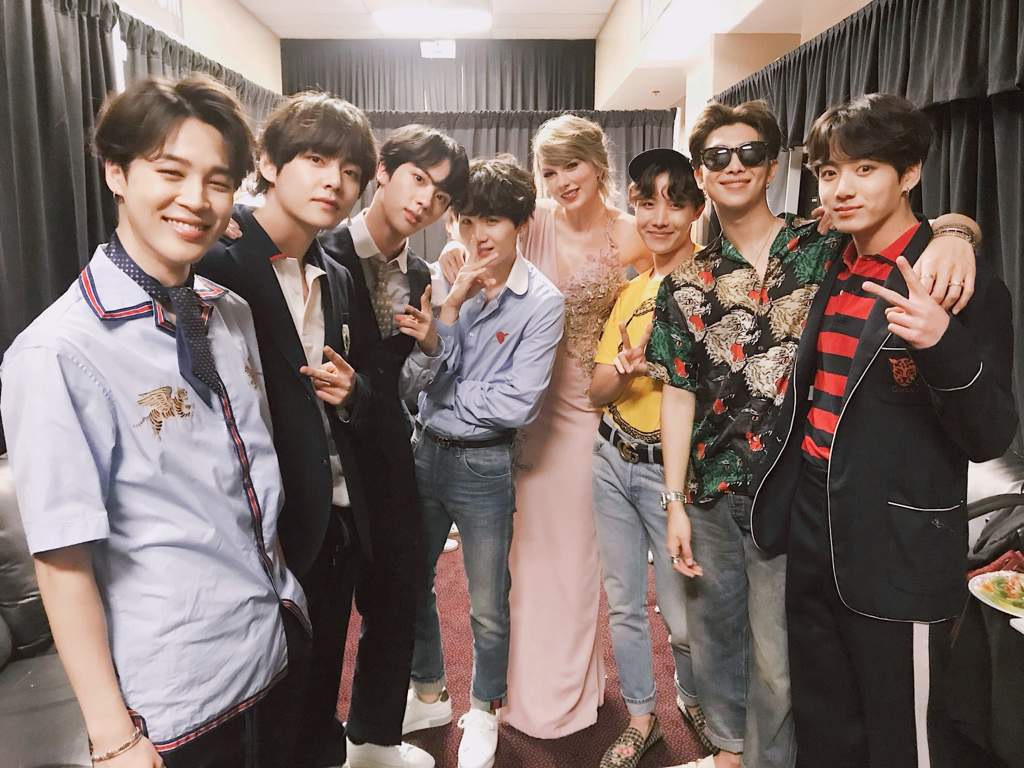
In the high-stakes world of music charts, few battles have been as fierce—or as revealing—as the ones fought over Billboard’s methodologies. Back in 2019, when K-pop powerhouse BTS debuted their album Map of the Soul: Persona at No. 1 on the Billboard 200 with 230,000 equivalent album units (including 196,000 pure sales), the narrative wasn’t just celebration. It was an accusation. Fans of the group, known as ARMY, were slammed for “manipulating” the charts by buying multiple physical copies of the album. Critics decried it as inorganic, a desperate ploy by “obsessed” international fans to game the system.
Articles accused BTS fans of “gaming the system” and “rendering Billboard’s charts useless.” Social media pundits sneered that the group’s numbers were inflated by obsessive fans rather than genuine demand.
The backlash grew loud enough that Billboard changed its rules, restricting sales to one email address and one payment method per buyer, and limiting how many album versions could count toward chart totals.
ARMY’s “depth”—fiercely loyal, organized support—propelled BTS to six Hot 100 No. 1s and seven Billboard 200 toppers, all with minimal radio play (e.g., “Butter” held No. 1 for 10 weeks on sales/streams alone). Yet it was framed as cheating. Compare: Taylor Swift’s The Tortured Poets Department (TTPD) shattered records with 2.61 million equivalent units in its first week, including 1.914 million pure sales. It had 19 version
Western acts like Travis Scott bundled albums with Astroworld merch for 270,000 first-week units in 2018, no backlash. The double standard was alpable.
As BTS gears up for a full-group reunion by late 2025 following the completion of their mandatory military service, it’s time to interrogate not just the charts, but the entire ecosystem of success metrics.
How Billboard’s “Reforms” Started With BTS
BTS’s rise to global dominance was meteoric, but it came with thorns. Map of the Soul: Persona, released April 12, 2019, wasn’t just an album; it was a cultural event. Featuring Halsey on the lead single “Boy With Luv,” it debuted at No. 1 on the Billboard 200, marking BTS as the first group since the Beatles to score three No. 1 albums in under a year. Globally, it sold over 4 million copies, becoming the third best-selling album of 2019 according to IFPI, despite underreported overseas figures (actual sales likely exceeded 3 million pre-orders alone).
But the triumph was tainted. ARMY’s strategy—coordinated purchases of multiple album versions to maximize chart impact—drew fire. Fans organized via social media, buying up to four copies per person (aligning with Billboard’s then-limit of four per transaction), resulting in 196,000 pure sales in week one.
In August 2021, Billboard itself published an article questioning BTS’s chart dominance, claiming ARMY was “organizing mass purchasing” that distorted results. Fans were outraged. The piece painted the fandom as a calculating collective rather than a community of listeners. ARMY demanded an apology.
The irony was brutal: BTS never used ticket bundles or merch-album packages, tactics that had long inflated Western artists’ numbers. (Forbes, July 2020).
Billboard responded swiftly. In 2022, it capped digital sales at one per customer per week, explicitly targeting “bulk purchases” to curb perceived inflation. By 2023, rules tightened further: only one sale per credit card or email for digital albums, with retroactive filtering that plummeted BTS singles like Jimin’s “Like Crazy” and Jungkook’s “Standing Next To You” from potential highs. Physical variants weren’t exempt; the emphasis on “pure sales” scrutiny hit K-pop hard, where fans treat albums as collectibles. As one Reddit thread noted, “Billboard changes rules every month… but only when foreigners threaten the status quo.”
In 2020, Billboard banned “baked-in” album-ticket/merch bundles after acts like The Weeknd (After Hours: 275,000 units via 80+ merch bundles) and Swift (Folklore: 12 variants) exploited them. BTS? Never used bundling—ARMY’s efforts were pure sales. Yet rules tightened post-BTS peaks, while Swift’s 2024 variants sailed through.
When Billboard later tightened rules again in 2021 — limiting fan purchases, disqualifying certain versions, and changing weightings between sales, radio, and streaming — industry insiders quietly admitted it was a direct reaction to BTS’s “Butter” era, when the song spent ten consecutive weeks at No. 1 on the Hot 100 without U.S. radio support.
Instead of asking why a global act could top charts without radio, Billboard framed the success as suspect.
The Taylor Swift Exception
By contrast, when Taylor Swift, whose TTPD didn’t just break records—it rewrote them. Released April 19, 2024, the album amassed 891 million on-demand streams in week one (shattering Drake’s 2018 record) and 859,000 vinyl sales, the highest single-week vinyl haul in the modern era. Globally, it sold 5.6 million copies, topping IFPI’s 2024 chart.
Swift sold 2.61 million units edging out 1989 (Taylor’s Version)’s 1.359 million.The secret? Variants. Initially 19 physical editions (nine CDs, six vinyls, four cassettes), each with unique art, poems, voice memos, or acoustic tracks, ballooned to 34 by June—including “Goddess Edition” restocks and digital exclusives. Sold via Swift’s site and retailers like Target, they incentivized multiples: fans chased bonuses, driving 1.64 million physical sales in week one. Billboard even clarified in August 2024 that without TTPD’s digital variants, it still would’ve held No. 1—yet the variants were key to blocking rivals like Sabrina Carpenter’s Short n’ Sweet (551,000 units).
They doubled the efforts with Life of a Showgirl. They released 30 versions and counting. Fans were encouraged to collect multiple editions, some available for only 24 hours, others region-exclusive or signed. The mechanics — scarcity, collectibility, emotional storytelling — were indistinguishable from K-pop playbooks.
Swift broke Adele’s record for the highest first-week U.S. sales in the modern era:
4.002 million equivalent album units, including 3.48 million pure sales, according to Billboard and AP News (October 2025).
And yet, this time the headlines didn’t cry “manipulation.” They hailed it as a marketing genius.
Yes, Swift’s team institutionalized what BTS’s fandom had once done voluntarily.
Media praised her for “redefining album marketing” (Variety, Oct. 2025). The same behavior that earned ARMY accusations of “fanaticism” was reframed as a “masterclass in engagement.”

Bundling, Bending, and Breaking: Billboard’s Moving Goalposts
To trace how the rules have morphed, we need to go back to the bundling wars of the late 2010s:
- 2018–2019: Travis Scott (Astroworld) and DJ Khaled (Father of Asahd) use merch bundles to inflate chart positions.
- 2019: Billboard admits the system is broken and promises reform.
- Jan 3, 2020: New rules require albums sold in bundles to be offered separately for purchase. (Pitchfork, Nov. 2019).
- 2021: BTS’s chart performance sparks another update — limiting bulk sales and emphasizing radio weight.
- 2022–2024: Swift, The Weeknd, and other top acts reintroduce forms of bundling through “exclusive variants” and “limited drops.” Billboard remains silent.
As Forbes noted, “BTS didn’t break Billboard. Billboard broke itself trying to keep up.”
The inconsistency reveals something fundamental: the charts don’t measure popularity anymore — they measure power.
Depth vs. Breadth: The New Fan Economy
At the heart of this debate is a philosophical question: What counts as legitimate success?
Traditional systems value breadth — wide reach, casual listeners, radio spins, viral exposure. Despite the everyone knowing that bigger labels are able to establish a relationship with radio station manager that allows them to easily put the songs they promote in rotation. That, in turn, counts heavily to the chart.
K-pop and digital fandoms value depth — intensity, participation, loyalty, and active contribution.
Here’s where K-pop flips the script: Billboard undervalues “depth of support.” ARMY’s loyalty translates to sales (BTS: 40 million albums globally) without radio crutches. Surveys show K-pop fans buy 3–5x more merch than average, attending 2–3 concerts yearly (per Billboard’s 2025 “K-Pop Fandom in the U.S.” report: 1,400+ respondents, 70% attended live events).
Critics dismiss this as “inorganic,” but its evolution: 68% of under-30s discover music via social media (MusicWatch 2025), not radio (down to 35% top discovery method, per MIDiA). TikTok virals account for 60% of Gen Z discoveries; podcasts and gaming add 12–17%. Traditional metrics like radio (17% consumption) ignore this—BTS thrives here, with ARMY turning “Dynamite” into a 745 million-stream monster sans payola.
That is not manipulation. That is mobilization.
By contrast, many western acts build artificial scarcity into product design, it’s not considered manipulation because it comes from the top down, not the grassroots. It fits the corporate structure of Western pop promotion.
But both actions — fan-driven mass support and artist-engineered collectibility — are the same phenomenon expressed through different channels.
If one is legitimate, both should be.
The Discrimination That Still Smells Like 2018
The disparity is not only commercial; it’s cultural.
The Billboard system was designed around English-language, radio-driven acts. When a non-Western group like BTS began topping those charts, it threatened the traditional hierarchy.
The pushback wasn’t about integrity — it was about maintaining control over who’s allowed to win.
This is why the language surrounding BTS and ARMY felt so moralizing: “manipulation,” “fanaticism,” “inflated sales.”
Meanwhile, Western acts doing the same thing were “breaking records,” “rewriting marketing,” and “setting new standards.”
It’s the same playbook that once dismissed The Beatles’ screaming teenage fans as hysterical — only now it’s directed at Korean idols and their global supporters.
The discrimination may have evolved, but it’s still there. It just wears the vocabulary of “chart integrity.”
The Billboard Problem Is Bigger Than BTS or Swift
Taylor Swift’s dominance proves that the system still works — for those it was built to favor. Her achievements are real, her artistry immense, but her success also underscores a widening gap between how music is consumed and how it’s measured.
Fans in 2025 don’t discover music through radio; they discover it through TikTok trends, YouTube storytelling, and fandom communities. They don’t separate visual media from sound — they experience both simultaneously.
In this environment, Billboard’s sales-and-streaming formulas feel prehistoric. They weren’t built to capture engagement as an art form. Ergo, they don’t reflect real US trend.
If Billboard doesn’t shed its glasses tinted with discrimination—rules that disproportionately penalize non-Western, fandom-driven acts like BTS while turning a blind eye to variant strategies from stars like Taylor Swift—it risks obsolescence. Consumer behavior in music discovery and consumption has already shifted dramatically away from traditional gatekeepers, rendering outdated metrics like radio airplay increasingly irrelevant.
According to IFPI’s 2024 Global Music Report, 82% of listeners discover new music through social media, short-form videos, or streaming recommendations, not radio or magazines.
In the U.S., Gen Z spends less than 10% of their music-discovery time on AM/FM radio, while over 60% find music via TikTok, YouTube, and Spotify playlists (Edison Research, 2024).
So when Billboard continues to weigh radio play heavily, it’s measuring an audience that’s already aging out of relevance.
Then there’s the expansion of music and integration to different artforms. Today’s fans don’t just listen — they watch, decode, and participate.
From Taylor Swift’s secret track drops to BTS’s interconnected music videos, albums now function as multi-medium stories. A 2023 MIDiA Research survey found that 71% of Gen Z listeners view visuals and storytelling as essential to understanding an artist’s message, proving that music has evolved beyond pure sound.
Collectible albums, visual concepts, and social interaction are all part of how fans experience music — and how they express identity.
Support Has Become Participation
Fans no longer consume passively. They organize streaming parties, translate lyrics, run social campaigns, and buy multiple versions not out of manipulation but out of belonging.
MIT’s 2022 study on fan mobilization found that organized fandoms drive 3x more streaming activity per listener than average audiences.
It’s not manipulation — it’s a new kind of consumer behavior.
The Elephant in the Room: Marketing Is Consumption
Marketing is not a separate discipline anymore when it comes to music and other forms of art. It doesn’t just look for ways on how to promote an existing material but looks at the material and uses that as a marketing tool.
Limited editions, alternate covers, concept films — these are not “tricks,” they’re part of the artistic experience itself. Yet Billboard treats them as distortion when they come from K-pop, and as brilliance when they come from the West.
If Billboard continues to cling to outdated definitions of success, it won’t just be unfair — it will be irrelevant.
Because the future of music is no longer dictated by what’s playing on the radio.
It’s defined by who’s pressing play — and why.
