

When people think of BTS, they think of music—hits that top global charts, streams in the billions, and stadiums packed with fans from every corner of the world.
Yes, music is their core. And yes, touring brings in the biggest paychecks.
But time will come when they need to slow down. And when that happens, they need to count on what they are building now, to bring them income.
It’s about sustainability and ownership.
Because behind the music, BTS has spent years building something far more strategic: a powerhouse of intellectual property, merchandise, and brand value. From BT21 to merch, and perhaps most importantly, they’re shareholders in HYBE, with real voting power and a say in the company’s future.
That kind of ownership opens the door to an entirely evolved role—as business leaders, brand architects, and cultural powerhouses.
And they didn’t learn this in a classroom. They learned it through experience—by doing, trying, failing, and building. From product design to fan engagement, social media strategy to brand development—
BTS has received hands-on, real-world business training for years.
So let’s take a closer look at the lessons they’ve learned—and how they’re preparing not just for the next comeback… but for the next chapter of empire-building.
DEVELOPMENT OF BT21
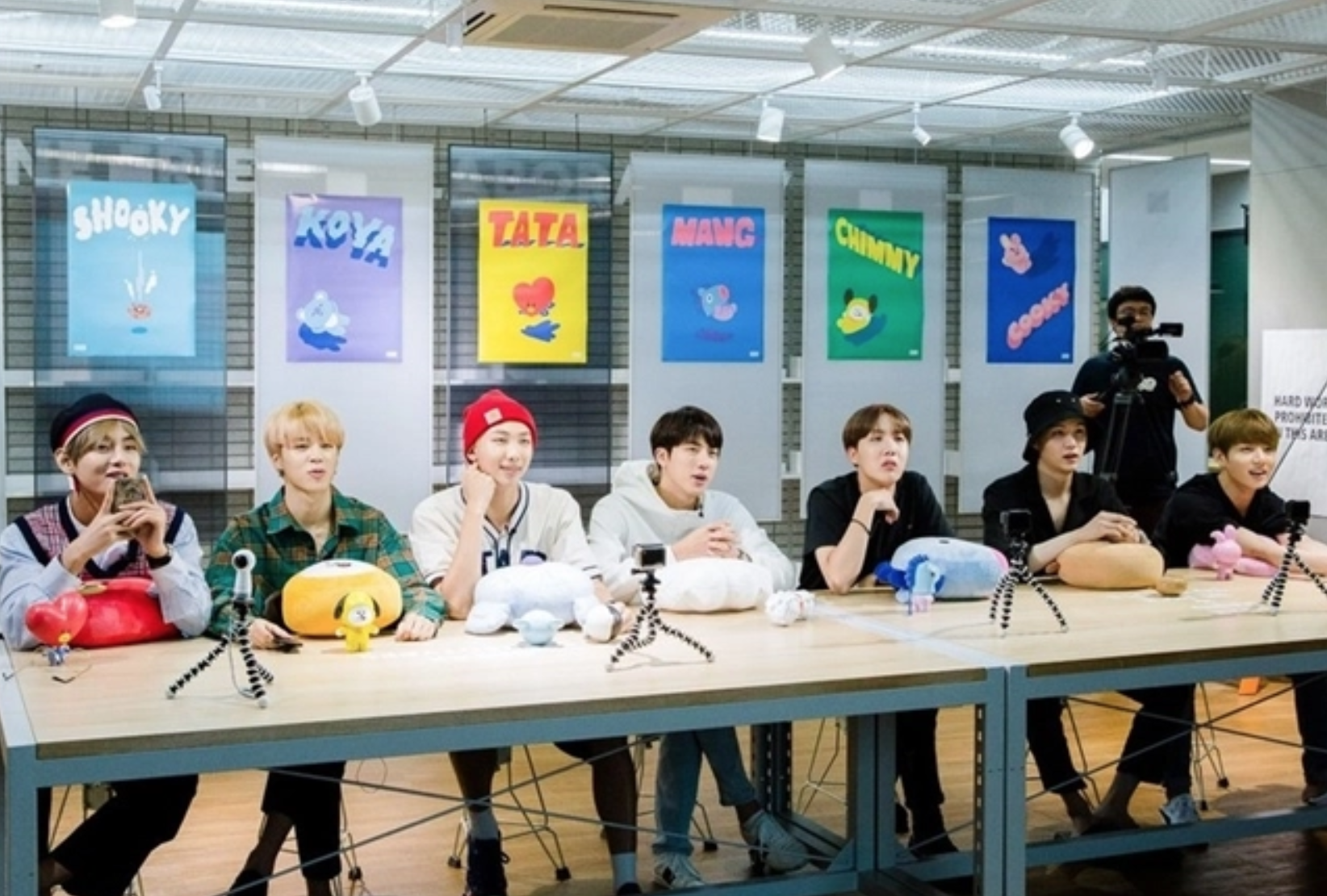
BTS’s hands-on creation of BT21 wasn’t just a fun project—it was a deep dive into creative entrepreneurship. They weren’t just artists collaborating on a cartoon; they became character developers, storytellers, brand strategists, and IP creators.
Here’s a breakdown of the key business lessons BTS learned while developing BT21—lessons most celebrities never even touch.
Intellectual Property (IP) is King
Most celebrities are handed a cute character and asked to approve it. Not BTS. They built BT21 from scratch—designing each character, developing their personalities, relationships, and even their little adventures.
By doing this, they didn’t just slap their name on a brand—they became co-owners of a global intellectual property. That means every plushie, hoodie, sticker, or animation that features BT21 is not just merch—it’s licensed IP that brings long-term value.
Real Business Impact: BTS learned that original ideas can become their own revenue-generating assets, not just marketing tools.


Some ways BTS utilized their IPs. They created their own merch line, and characters like BT21 and Tiny Tan.
Brand Storytelling = Brand Longevity
Lesson: A great product is cool. A great story makes it timeless.
Every BT21 character has a name, a personality, a backstory, and relationships—from Chimmy’s passion to Mang’s mystery. BTS learned that strong branding comes from storytelling, and storytelling creates emotional connection.
They weren’t just building mascots—they were creating a narrative universe. That’s what sets BT21 apart: people don’t just buy the characters because they’re cute—they buy them because they feel something.
Real Business Impact: A well-told story turns a one-time product into a lasting franchise.
Know Your Audience—And Go Deeper
Lesson: Give your fans something meaningful, not just marketable.
BTS knows ARMY better than anyone—and they used that insight to shape BT21 into something playful, emotional, and deeply personal. They weren’t designing for a generic audience—they were designing with fan love and loyalty in mind.
Each character reflected a piece of BTS’s personality, which made fans feel closer to them. That’s emotional branding at its finest.
Real Business Impact: They learned to build with empathy, a skill every great product developer needs.
Building a Universe = Expanding a Brand
Lesson: Characters aren’t just cute—they’re a gateway to new markets.
With BT21, BTS entered the world of:
- Global retail
- Animation/media licensing
- Cross-brand collaborations
- Digital and physical storytelling
They didn’t just create products—they created a multimedia brand that now operates somewhat independently of BTS.
Real Business Impact: They learned how to build a standalone brand that expands their empire without exhausting their image.
They didn’t just create products—they created a multimedia brand that now operates somewhat independently of BTS.
TRANSITION TO INDEPENDENT VOTING RIGHTS FROM DELEGATED VOTING RIGHTS
BTS’s transition from delegating their shareholder voting rights to independently exercising them marks a significant shift in their role within HYBE Corporation.
Delegated Voting Rights
In 2020, as HYBE (formerly Big Hit Entertainment) prepared for its initial public offering (IPO), founder Bang Si Hyuk gifted each BTS member 68,385 shares, acknowledging their pivotal contribution to the company’s success. At that time, the members entered into shareholder agreements with Bang Si Hyuk, delegating their voting rights to him. This arrangement centralized decision-making authority, allowing Bang to represent their collective interests in corporate matters.
Transition to Independent Voting
The special contracts between Bang Si Hyuk and BTS members have ended, enabling the members to exercise their voting rights independently. This change does not involve the sale or alteration of shares but signifies the cessation of the previous delegation arrangement.
Why Were The Voting Rights Delegated In The First Place?
It could have served several strategic, legal, or logistical purposes in a company. Here are the main reasons why shareholder voting rights might be delegated:
- Streamlined Decision-Making: Having one person vote on behalf of multiple shareholders makes it easier to make quick, unified decisions—especially during high-stakes situations like IPOs, mergers, or board elections.
During HYBE’s IPO, delegating voting rights to Bang Si Hyuk ensured that BTS’s shares supported a clear, strategic direction.
- Trust in Leadership: Delegation often reflects trust in the person receiving the rights. If shareholders believe a founder (like Bang) has the company’s and their best interests in mind, they might delegate authority for convenience or confidence.
- Legal or Strategic Agreements: Sometimes delegation is part of a formal agreement—like to stabilize voting power or meet regulatory requirements before or after a public offering.
In IPO situations: Founders often consolidate control temporarily to prevent instability or hostile takeovers.
- Limited Time or Expertise: Shareholders may delegate rights if they don’t have time to stay involved in governance or lack business/legal expertise.
For BTS: As global performers focused on music and touring, handling corporate voting may have been impractical early on.
- Control and Stability: Delegating votes can protect the company’s direction in its early or transitional stages by ensuring the founder retains influence over major decisions.
- Strategic Optics: Centralized voting can reassure investors that the company has stable, aligned leadership, which is especially attractive during IPOs or international expansion.
Implications of the Change
Increased Autonomy: BTS members now have direct influence over corporate decisions at HYBE, reflecting their evolving role from artists to active stakeholders.
Enhanced Corporate Governance: The shift promotes a more diversified decision-making process within HYBE, potentially leading to governance that better reflects the interests of various shareholders.
Symbolic Significance: This development underscores the members’ deepening involvement in the company’s strategic direction, highlighting their commitment to HYBE’s future.
MERCH BY BTS
Product Design
When BTS started designing their own merchandise—like Jungkook’s oversized hoodie with thumbholes, or V’s Boston bag that blends luxury with everyday practicality—they weren’t just thinking: “What would look cool?”
They were thinking: “What would our fans actually use and what about that product are fans aren’t getting anywhere else?”
This is called needs-based design—not just making stuff for profit, but solving a problem or filling a gap in the market.
Take Jimin’s hoodie with a big hood, for example. He specifically said he needs the hood to be big because other hoodies get pulled up when someone wears the hood.
The good day bad day pjs of Seokjin is another one. He didn’t want to create just another pyjama, he wanted to connect the entire day a person just had with the pj.
It’s like saying “I see you, ARMY. You’re tired, you need rest, and you want something that would speak of how you feel at the end of the day.”
It wasn’t just merch. It was an answer to a feeling. Most artists and companies go for generic: T-shirts, phone cases, maybe a keychain. But BTS? They said, “Let’s design things people actually wish existed.”
And in doing so, they tapped into the holy grail of business: Finding unmet needs and answering them better than anyone else.
This is what great companies do. Apple did it with the iPhone. BTS did it with merch.
Product Development
Designing a hoodie isn’t just sketching a cool logo and calling it a day.
When BTS took on the challenge of creating their own merch—they stepped into the world of real product development. And let’s be clear: this is not a plug-and-play process.
They had to think about everything. We’re talking:
- What kind of fabric feels premium but still breathable?
- Should the hoodie be oversized, fitted, cropped?
- What kind of thread should be used so it doesn’t unravel after two washes?
- Should the zipper be metal or plastic?
- Print or embroidery? What kind of ink won’t crack over time?
- What color palette speaks to both BTS’s aesthetic and the fans’ everyday style?
These decisions aren’t random—they affect comfort, durability, price, and vibe. Every choice has a chain reaction: change the fabric, and suddenly your printing technique has to change too. Add a custom zipper? That raises the cost. Want it to glow in the dark? Good luck keeping it under budget.
In short: there’s no readymade template for what they wanted to create.
So they had to deconstruct every product into smaller pieces—the hood, the lining, the stitching, the tags, even the packaging.
And for each of those micro-decisions, they had to answer:
- What’s the best material?
- How do we source it?
- How do we make sure it holds up?
- How do we keep it affordable?
- And… will this feel like BTS?
Because let’s be real—fans weren’t just buying a hoodie.
They were buying a piece of BTS. That means quality couldn’t be compromised. But neither could the price be sky-high.
So they learned to walk that delicate tightrope.
BTS managing their own social media (especially platforms like Twitter, Weverse, and Instagram before enlisting) has been a masterclass in direct-to-fan marketing. By being personally active, they gained insights and experience that many brands pay marketing firms millions to figure out.
Costs vs. Quality vs. Profit
It’s a real business lesson: How do you give the best without going broke?
The end product might look simple—but behind every hoodie, lamp, or bag was dozens of design revisions, material tests, sample failures, and pricing spreadsheets.
This wasn’t just merch. This was a masterclass in product development—and BTS were not just the models, they were the creatives, the critics, and the decision-makers.
TAKE CONTROL OF THEIR OWN SOCIAL MEDIA ACCOUNTS
BTS managing their own social media (especially platforms like Twitter, Weverse, and Instagram before enlisting) has been a masterclass in direct-to-fan marketing. By being personally active, they gained insights and experience that many brands pay marketing firms millions to figure out.
Knowing Your Market Firsthand
Lesson: There’s no better way to understand your audience than to interact with them directly.
By reading comments, seeing which posts go viral, and watching how ARMY responds in real time, BTS didn’t need secondhand reports—they experienced their audience’s preferences daily.
Business impact: They learned exactly what their market values—whether it’s raw vulnerability, aesthetic visuals, humor, or behind-the-scenes moments.
Trend Spotting in Real Time
Lesson: Social media is the front line of trends—and knowing them early is business gold.
From dance challenges to meme culture to the latest slang, BTS stayed plugged into global and regional trends. By being online themselves, they were able to spot what was taking off and often lead or influence trends themselves.
Business impact: They became trendsetters and responders—essential for launching relevant products, concepts, and content at the perfect time.
Immediate Feedback Loop
Lesson: Every post is a test, and the response is your data.
When BTS posted something silly, emotional, or stylish, they could instantly see what resonated or flopped. That gave them insight not just into engagement—but into what kind of storytelling and branding truly connects.
Business impact: This rapid feedback loop helped refine their tone, image, and future creative direction.
Relationship Building = Brand Loyalty
Lesson: Humanizing the brand creates emotional equity.
Jungkook doing late-night karaoke, Jimin dropping selcas, RM posting about his museum visits—all of that creates a parasocial bond that strengthens loyalty. Fans don’t just support BTS—they feel like they know them.
Business impact: BTS learned the power of authenticity in branding—something most companies struggle to manufacture.
Community > Audience
Lesson: Audiences listen. Communities interact, protect, and grow with you.
BTS didn’t just build a following—they nurtured a living, global community that collaborates, campaigns, donates, and defends. They watched community-building dynamics firsthand—how leaders emerge, how narratives spread, and how engagement breeds action.
Business impact: They learned that emotional connection is more valuable than reach.
THE FUTURE THEY’RE ALREADY BUILDING
When the lights go down and the encore fades, BTS will still have something most artists never achieve: ownership—of their ideas, their image, and their impact.
What they’ve built isn’t just a fandom or a discography—it’s an ecosystem. One powered by creativity, intellect, and emotional intelligence. From designing plushies that become billion-won franchises, to shaping governance in one of Korea’s biggest entertainment companies, BTS has already crossed the line between performer and visionary.
And that’s the point. Their legacy won’t depend on how many albums they sell or how many records they break. It will depend on how they transformed what it means to be an artist in the modern era—turning fame into infrastructure, and passion into power.
So when the day comes that they perform less and lead more, it won’t be a retreat. It’ll be evolution.
Because BTS isn’t just preparing for the next comeback—they’re building the blueprint for how artists create empires.
