

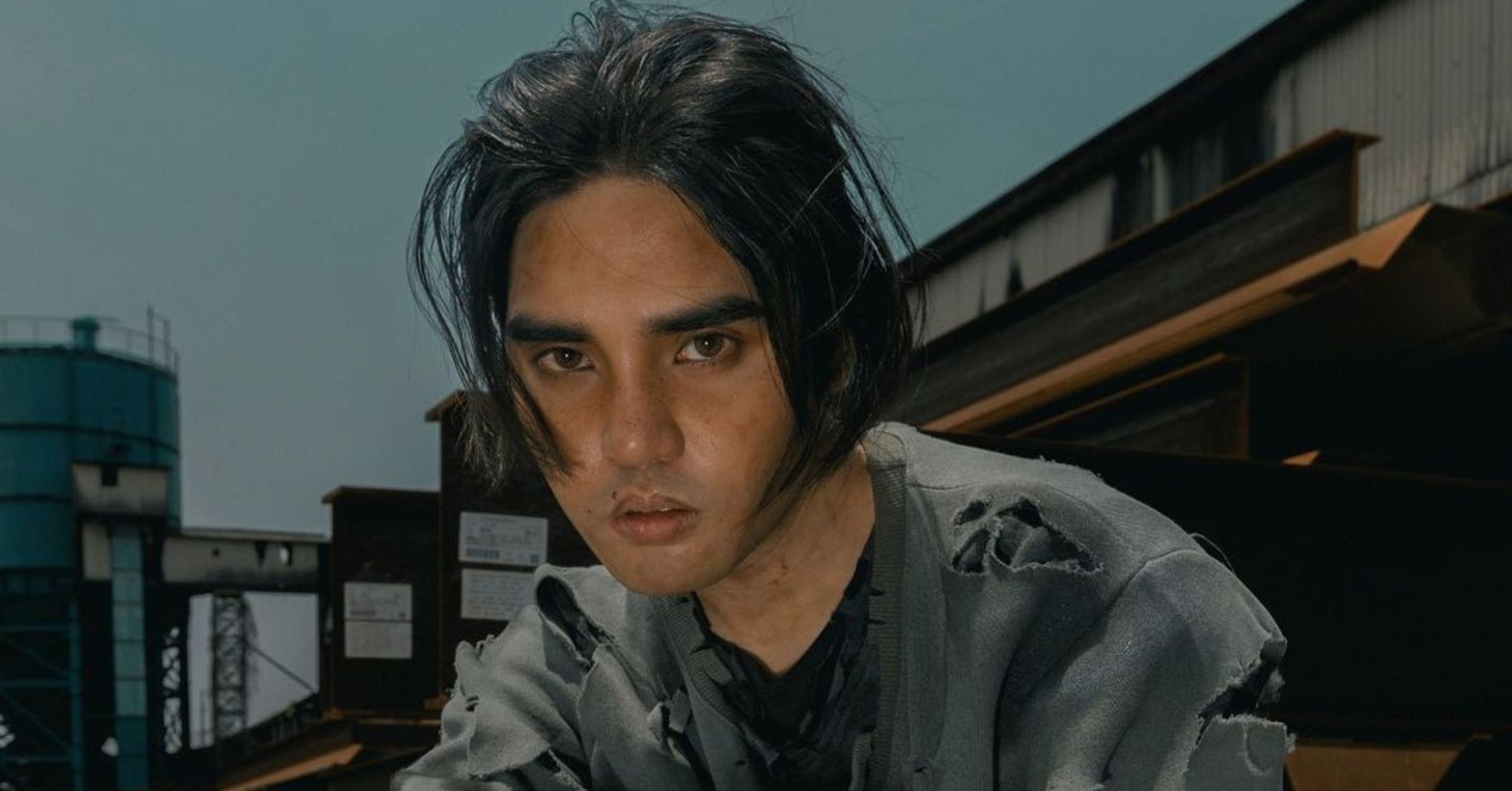
When I first heard Pablo was releasing his debut album, I knew I’d be impressed — I always am. But what I didn’t expect was to feel relieved. Maybe even hopeful.
After everything the local music scene has gone through, it feels like Pablo — and SB19 by extension — is proving that you don’t need much to create something meaningful. You don’t need excess to build an artistic journey that people will not only enjoy but want to be a part of, learn from, and find themselves in.
Listening to ‘ALON’ felt like discovering a piece of the Philippines’ artistic soul — and the future of its sound — all in one record. It’s deeply Filipino, but also timeless, borderless, and unmistakably Pablo.
Here are ten things that stood out to me: the lessons, the layers, and the artistry behind ‘ALON’.
THE INNER MONSTER
There’s a second persona present throughout the entire album, and it’s brilliant. It’s not just Pablo presenting multiple perspectives — it’s Pablo interacting with another version of himself.
He’s said before that Laguna was meant to introduce “Pablo the artist” to the world — to build a distinct world for his public persona. Whether or not he planned it from the beginning, that thread runs through the whole record.
This “monster” — first a shadow, later revealed as something else entirely — appears again and again. In Presyon, the second voice even speaks back: “everyone’s going to pay eventually.” In The Boy Who Cried Wolf, it’s the boy and the wolf. In Wala, it’s him and his reflection. There’s always two.
It’s not just duality of perspective — it’s duality of being. A reminder that each of us carries another self inside: one we contain, ignore, or fear, but that lives and breathes alongside the version we show the world.
THE LYRICAL AND CONCEPTUAL GENIUS OF “THE BOY WHO CRIED WOLF”
When I first heard this track, I thought: “This is a story.”
By the second listen, I realized: “No — this is a movie.”
Now, I think it’s an entire mythology.
Pablo takes a tale we all know — so familiar it’s lost meaning — and flips it on its head. He tells it from the point of view of the wolf, the creature no one bothered to understand.
It’s a perfect metaphor for how society treats misunderstood people — or even artists themselves. We judge without listening, label without learning. Pablo forces us to look again, to see the story differently.
Even more impressive is how he progresses the narrative within one song. He starts with the situation: “Everybody telling the wolf is bad / Ain’t nobody telling the wolf is sad.” Then he shifts the point of view. The wolf speaks. There’s fear, action, movement. Then finally, a plea for understanding.
That kind of narrative development is rare in modern pop songwriting. Pablo doesn’t recycle one emotion; he evolves it.
Pablo takes a tale we all know — so familiar it’s lost meaning — and flips it on its head. He tells it from the point of view of the wolf, the creature no one bothered to understand.
PROLIFIC ARTISTRY
Pablo is versatile beyond measure. His rap flows are dynamic — chosen not for flash, but for emotion. His singing stretches across genres with grace and purpose.
If you’ve heard him perform Ilaw live, you know there’s more to him than rap. Those high notes? Effortless. But he doesn’t lean on them for validation. He knows when to go big and when to hold back.
One thing I’ve always admired is his restraint. Too many singers chase birit moments that don’t serve the song. Pablo shows maturity: if it doesn’t fit the emotion, he doesn’t do it. He communicates, not competes.
That’s artistry — not performance for applause, but precision for meaning.
HE PUTS YOU INSIDE THE SONG
Pablo doesn’t just sing to you — he makes you enter the story.
He uses sonic cues to create a world around you. In Presyon, you feel like you’re stepping into a haunted house — pianos echoing, percussion crawling, ambient sound effects breathing in your ear.
He even shifts his vocal tone when two personas are present, subtly changing resonance. If you’re paying attention, you’ll hear it — but even if you’re not, your subconscious will feel it.
The best example is Kumonoy. In the opening verse, his voice sounds like it’s coming from underground — buried, distant. That’s not just singing. That’s sound design. It shows artistic awareness: he’s not performing a song, he’s creating an experience.
NOT JUST WORDPLAY — THOUGHT PLAY
Pablo doesn’t just play with words. He plays with meaning.
In Kumonoy, he says: “Ako’y nawala, gusto ko nang mawala.” It’s one line, one word repeated — but two entirely different emotions. “I’m lost.” “I want to disappear.” It’s not a pun; it’s a psychological nuance.
And in Kelan: “Naging matalik na kaibigan ang dilim, liwanag ang kanyang lihim.”
In English: “Darkness became a close friend; light is his secret.” But the Filipino phrasing carries more weight — it says that darkness is comfort, and light is the mask we wear. The duality is reversed: truth in shadow, falsehood in brightness.
That’s not clever wordplay — that’s layered thinking.
Listening to ULAN felt like discovering a piece of the Philippines’ artistic soul — and the future of its sound.
THIS IS NOT JUST A COLLECTION OF SONGS
‘ALON’ isn’t an assortment of tracks. It’s an emotional and intellectual journey.
Each song stands strong on its own but connects seamlessly to the next. You can hear the care in how transitions are built, how every part — verse, bridge, chorus — carries purpose.
It’s one of those albums you need to listen to in full to understand the story. Pablo doesn’t just give you songs; he gives you chapters.
A MASTERCLASS IN SONIC MINIMALISM
There’s beauty in restraint, and Pablo knows it.
The production is lean, deliberate, and precise. There are no unnecessary layers, no forced beats, no heavy autotune. Each sound exists to serve the story, not clutter it.
The simplicity recalls the best of The Beatles — straightforward yet full of room for emotion. It’s the kind of clarity that invites reinterpretation while remaining whole. The strength of ‘ALON’ lies in the words, the melodies, and the conviction behind them.
THE ALBUM AS A TEACHER
I hope ‘ALON’ sparks a shift in how artists approach music-making — from chasing trends to crafting substance. This album proves that you can still innovate by being intentional.
It’s not just about catchy hooks or production gimmicks. It’s about storytelling — about connecting ideas, emotion, and identity.
Even when tackling familiar themes like love, loss, or pain, Pablo finds a way to present new thought. That’s what real artistry does: it challenges even as it comforts.
AN INVITATION, NOT A STATEMENT
Pablo doesn’t use ‘ALON’ to prove he’s great. He uses it to invite us in. The humility and sincerity that run through the album make it accessible yet profound.
This is music that asks you to reflect — on yourself, your duality, your own “inner monster.” He doesn’t preach. He presents, and lets you draw your own meaning.
A DECLARATION
‘ALON’ isn’t just Pablo’s debut — it’s a declaration that Filipino artistry is alive, fearless, and intellectually potent.
He’s reminding us that music doesn’t have to scream to make noise. It just has to tell the truth.
For future artists, I hope this album becomes a blueprint — proof that when you pour your heart and mind into your craft, people feel it.
For the rest of us, may it remind us that art still has the power to transform, to heal, and to bring us home.
