

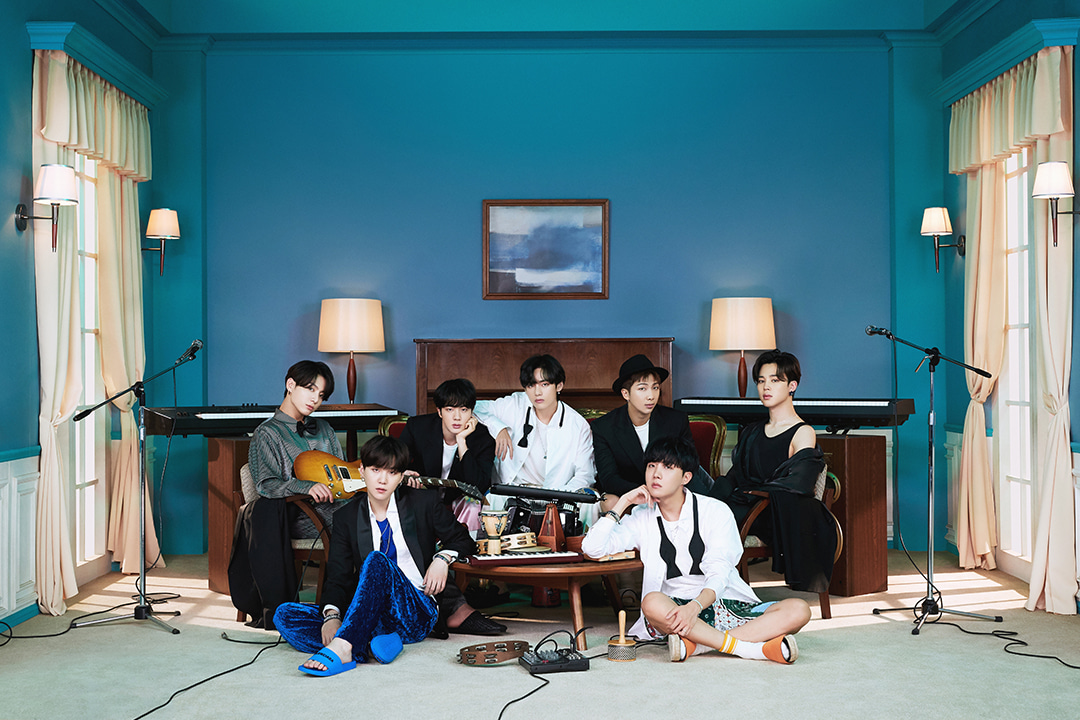
How can anyone prove that BTS has outgrown and transcended Kpop?
Stop arguing scale and start examining structure substance. Look at how their work is made, how audiences participate, how longevity is sustained, and how institutions respond. When those mechanisms no longer resemble the K-pop system that produced them, you’re no longer talking about genre expansion—you’re talking about operating on a different level altogether.
At a certain point, sales, hashtags, brand deals, and awards stop being the relevant. What matters is structure—how the work is made, how it circulates, how audiences engage with it, and how institutions respond. On those terms, BTS has moved beyond the system that produced them.
WHAT IS K-POP
At its simplest, K-pop is Korean popular music. But as Suga once pointed out, it’s never just music. It includes choreography, fashion, image, and the expectations attached to being an idol. K-pop functions as a full ecosystem, not merely a genre.
Music remains the center of that system. It is the utility that drives everything else—albums sell the image, the image sells the endorsements, the choreography sustains the spectacle. Even when concepts change, the structure stays intact.
This system is efficient. It is also finite.
THE BANGTAN UNIVERSE
BTS disrupted that structure when they began The Most Beautiful Moment in Life (Hwa Yang Yeon Hwa).
What emerged was an expansive fictional universe with a narrative distributed across media: songs, music videos, short films, webtoons, books, notes, and performances. Importantly, the story was not locked to a single format. Each medium revealed different fragments, often incomplete on their own.
The audience wasn’t asked to consume a finished product. They were asked to assemble meaning.
Fans could interpret, theorize, and extend the story without destabilizing its core. The narrative was designed to hold contradiction, alternate readings, and personal projection. Over time, this became less a storyline and more a shared narrative space.
BTS created a participatory artwork with multiple points of entry. Serious writers, casual fans, academic readers, and fanfiction communities all engaged with the same material differently, yet coherently.
Anyone can create their own work to extend the universe without affecting the core narrative. That doesn’t mean what fans created are no less important. They are just as valuable but BTS managed to create a narrative that accommodates an infinite number of contribution without affected thei bone of the narrative.
The result was a body of work that kept expanding without collapsing under its own weight.
At that point, BTS stopped functioning primarily as idols and began operating as storytellers working at scale.
LONG-FORM NARRATIVE THINKING
From The Most Beautiful Moment in Life through Wings, Love Yourself, Map of the Soul, and now ARIRANG, BTS does not treat albums as isolated work.
Albums speak to one another across years. Motifs recur—mirrors, time, choice, memory, selfhood— as unresolved questions revisited from different angles.
What they did was closer to how novelists or filmmakers structure long arcs, allowing themes to mature alongside the audience. The work assumes memory. It expects continuity. It rewards long attention.
That approach does not align with standard idol release cycles.
THE PROCESS OF CREATION IS PART OF THE WORK
Idols are designed to be aspirational. Precision, polish, and emotional distance are part of the appeal. The system depends on mystique.
BTS did the opposite. They documented the process—songwriting, rehearsals, mistakes, doubts, revisions. Not selectively, but continuously. Music, concerts, and even large-scale productions were accompanied by visible labor.
Years later, the industry began recognizing that Gen Z and Gen Alpha value seeing how things are made, not just the finished result. BTS had already normalized this. They treated creation itself as content, collapsing the distance between artist and audience without erasing authorship.
That shift changed how fans related to the work. The art wasn’t only what was released. It included the thinking, the effort, and the evolution behind it.
THE SONGS AREN’T POP IN THE WAY POP IS USUALLY MEANT
BTS has pop songs. Dynamite and Butter are obvious examples. But those tracks sit on the surface of a catalog that consistently resists ease.
Much of BTS’s work is dense—lyrically, emotionally, structurally. Songs interrogate fear (Black Swan), social pressure (N.O, Am I Wrong), self-loathing (Reflection), burnout (Burn It), survivor’s guilt (So Far Away), and the cost of ambition (Shadow).
Even when the sound is accessible, the content rarely is. The writing assumes context, contradiction, and emotional accumulation. These are not songs built to disappear after one cycle. They demand interpretation, often over time.
That quality is not typical of mainstream pop production, Korean or Western.
K-POP FANDOMS: DEEP, BUT NOT WIDE
Most K-pop fandoms are built for concentration. They are intensely loyal, highly organized, and willing to buy repeatedly within a compressed time frame. That intensity sustains charts and sales, but it also creates natural limits. Over time, fans age out, priorities shift, and the cycle resets.
BTS does not rely on that model.
Their audience behaves less like a conventional idol fandom and more like a distributed cultural network. ARMY operates across languages and platforms with self-organized translation systems, grassroots promotion that often rivals label-led campaigns, and sustained engagement that does not collapse during hiatuses. Support extends across group releases and solo work without fragmenting attention or loyalty.
This pattern changes the economics of scale. BTS can stage multiple nights in non-major cities, return to the same stadium repeatedly, and expand tours beyond 80 dates without exhausting demand. Their reach is not concentrated in a single market or demographic. It is spread broadly and sustained over time.
That is why BTS tours resemble global legacy acts more than idol groups:
- stadium-first routing
- multi-night city takeovers
- audience in minor cities and stes
- repeat bookings at the same venue
- demand distributed evenly across Asia, North America, Europe, and Latin America
This is not how idol fandoms typically function. It reflects an audience relationship built on continuity rather than urgency.
CHART BEHAVIOR, NOT JUST PEAKS
K-pop success often follows a predictable pattern: debut spike, short peak, rapid decline, next release.
BTS behaves differently. Albums chart long-term. Catalog tracks continue to grow years after release. Korean, English, and mixed-language songs all perform globally. Solo projects reinforce the group’s identity rather than fragmenting it.
This is catalog behavior. It signals sustained listening rather than event-based consumption.
BTS AS CULTURAL THINKERS
K-pop itself is deeply influenced by Western pop, hip-hop, and Motown-era systems. BTS did not reject those influences. They layered something else beneath them.
Korean values shape the structure of their work:
Han: unresolved sorrow, endurance without resolution
Jeong: emotional bonds formed through time, not intensity
Post-IMF realities: insecurity, pressure, survival, collective anxiety
These aren’t surface references. They appear in how songs unfold, how emotion accumulates, and how conflict is often left unresolved rather than triumphantly closed.
While much pop music centers romance, status, or self-assertion, BTS consistently returns to responsibility, relationship, memory, and consequence.
SOLO WORK AS PROOF OF INTENT
If BTS’s depth were accidental, it would dissolve in solo work. Instead, BTS members extended and expanded their creative innovation.
Each member isolates a different dimension of the same inquiry:
- RM examines identity through language and translation, reflecting Korea’s tradition of negotiated selfhood between collective and individual.
- Jin centers endurance, duty, and acceptance of impermanence, echoing Korean values of quiet responsibility and emotional restraint.
- Suga interrogates guilt and accountability within social hierarchies, rooted in Korea’s ethic of collective consequence.
- J-Hope deconstructs performed brightness, aligning with Korea’s awareness of emotional labor beneath public harmony.
- Jimin uses gi–seung–jeon–gyeol pacing and emotional accumulation rather than confrontation.
- V communicates through atmosphere and implication, reflecting Korean aesthetics of suggestion over declaration.
- Jungkook prioritizes sincerity and immediacy, consistent with Korea’s cultural value on emotional authenticity without over-intellectualization.
Different aesthetics. Shared intellectual gravity. That consistency points to artist philosophy, not concept-team coincidence.
INTERDISCIPLINARY THINKING
Pop acts release song. BTS designs creative systems and create different forms of art for public consumption. .
Their work openly engages:
- Carl Jung (Map of the Soul)
- Hermann Hesse (Demian)
- Contemporary visual art and philosophy
- Korean literary and emotional traditions
These references shape structure, not just imagery. Theory informs how emotion is staged, how conflict unfolds, and how identity is examined.
HOW THE INDUSTRY RESPONDS
Institutions respond to behavior.
Museums engage RM, not just brands. Governments consult BTS beyond performance roles, from UN addresses to cultural ambassadorships.
Universities and scholars now treat BTS as a serious subject of study, not a pop anomaly. Harvard Business School developed case materials on BTS’s global strategy and fan engagement that are used in executive education and MBA classrooms, tracking how the band and Big Hit reshaped artist–fan dynamics and global scaling.
Courses at major institutions also examine BTS as a cultural phenomenon. For example, the University of California, Berkeley offers a student-run course called “Next Generation Leaders: BTS” where students analyze the group’s history, global influence, and media practices through academic lenses.
Other research projects, including theses and peer-reviewed studies, look at BTS’s transmedia storytelling, audience engagement, and the semiotics of their universe, showing that scholars across disciplines engage with their work as cultural text, not just chart data.
Media analysis focuses on ideas as much as metrics.
This level of engagement does not occur without sustained intellectual credibility.
NO ONE HAS FOLLOWED THEM YET
Many groups have advanced. None have replicated BTS’s combination of creative depth, commercial scale, and cultural endurance.
It’s possible that, over time, elements of what BTS built will be absorbed into K-pop. If that happens, it won’t mean BTS fit the system better. It will mean the system changed to accommodate the standard they set.
At that point, the direction of influence will be clear.
