

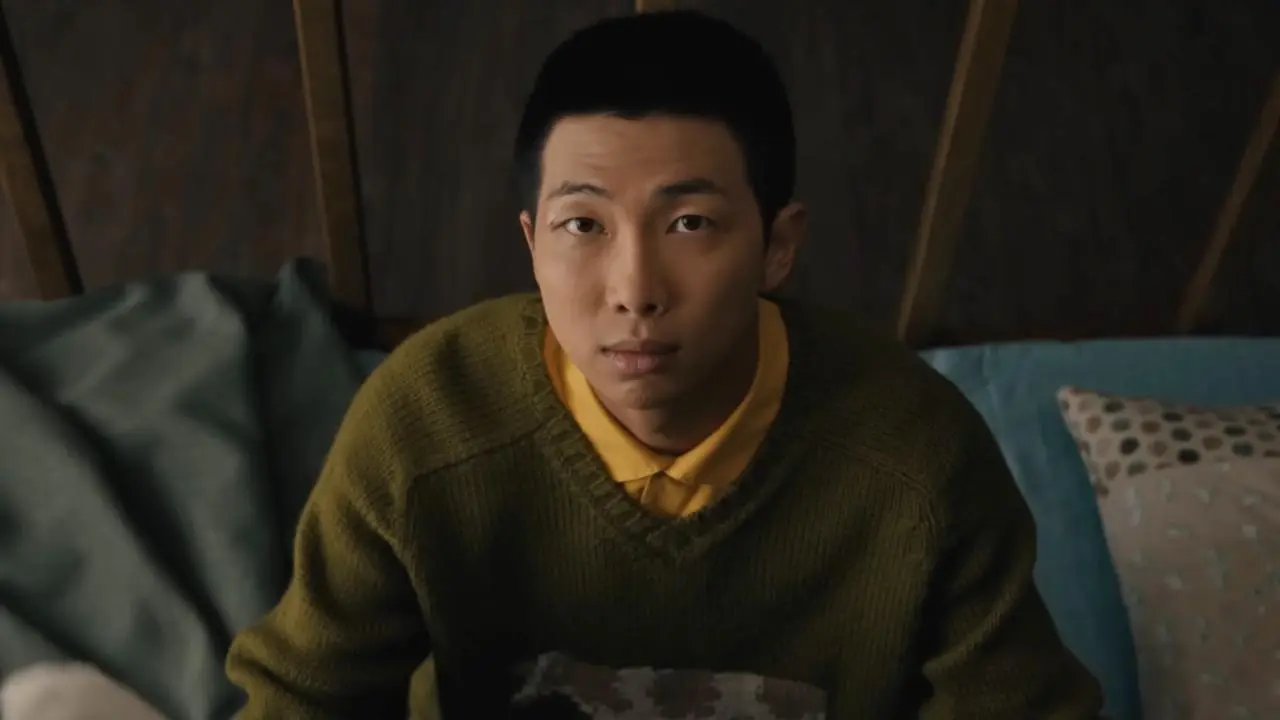
One of the best things about watching a BTS music video is the endless possibilities for interpretation. Each MV is so layered that you could spin a hundred different theories, and many of them would hold water. Come Back To Me is no exception.
So let’s be clear: what follows is just my interpretation. I’m not claiming this is the “right” answer — it’s simply the way it resonated with me.
When possible, I like to start with the artist’s own intentions. For Come Back To Me, RM gave us some clues. He explained that the album explores the theme of right and wrong — the contradictory feelings of wanting to challenge something new while also craving the comfort of reality. About the song itself, he said it’s about everything coming back, but perhaps not everything returning as it once was.
The director added his perspective too:
“It took a lot of conversations where we were sharing stories back and forth, personal things from both of us. We arrived at a strange story about a man trapped in the past, present, and future — unable to leave his own home.”
That immediately reminded me of The Midnight Library, a novel about the choices we make to live well — but never perfectly.
Fragments of Himself
In the video, we see pieces of RM’s past, present, and future coexisting. It’s not clear which is which, but each room and situation feels real. To me, he wasn’t walking down memory lane. He was reliving fragments of himself, scattered across the pockets of his desires — some realized, some not, some yet to come. The timeline is non-linear.
As he moves through these moments, there’s a disconnect in his eyes. Some interpret this as unhappiness. I saw insecurity, even uncertainty. He seems to ask himself: Am I meant to be here? Do I deserve this?
Because what we see are “desirable” lives — a happy family, a joyful relationship, a warm childhood. But wanting and deserving don’t always align. He wasn’t sure he belonged in those moments. It wasn’t that he wasn’t happy; it was that he wasn’t convinced he could handle it.
Where We’re Supposed to Be
This MV takes a different approach compared to BTS’s usual narratives. There’s no life-altering tragedy, no brutal fight, no descent into madness. Instead, it begins in the middle of a party — the ultimate symbol of enjoyment. Yet he isn’t enjoying it. From there, he drifts through intimate rooms: the family bathroom, a partner’s bedroom, his childhood crib.
These are all the “right” places we’re told we should find ourselves in. But being in the right place doesn’t mean we’re the right person for it.
I know I’ve had dreams that came true, only for me to realize I wasn’t yet the version of myself who could hold onto them. They slipped away. Maybe you’ve felt that too.
The Search for Ourselves
There’s an old adage: You’ll always find what you’re looking for. I believe that — except when it comes to finding ourselves. Because we already have ourselves. We always have. What we’re really searching for is acceptance.
In this MV, it’s clear that through broken dreams, harsh realities, and failed relationships, RM never changes. The strongest clue is his consistent physical appearance. There’s no attempt to make him look younger, no stand-ins. He is whole from the start — as we all are.
But until we accept that wholeness, flaws and all, we keep searching outside ourselves. And like RM, we become trapped within the walls we build, unable to see that we already are everything we need.
Everything Comes Back, But Not Everything
After confronting himself, we see him relive those fragments again — but from a lighter perspective. He smiles with his wife and child, laughs with his partner, embraces his parents. These were the same situations as before, but this time he’s present enough to find joy in them.
Still, not everything can be reclaimed. The rooms remain, but the people are gone. Time changes things. Even if we’re finally ready, the world may have moved on.
A Dialogue With Himself
Lyrically, I read this as RM having a conversation with his lost self.
- Verse 1: His present self urges his past to simply be who you should be.
- Pre-chorus: The lost self rebels — “I forgot the hour, I don’t wanna know.” It’s more chaotic, more radical.
- Chorus: The present self responds, gently but firmly, almost like a lullaby: repetitive, soothing, a reminder that rebellion only deepens the hurt. “You are my pain, divine.”
Half Song, Half Poetry
RM’s delivery makes this more powerful. His voice sits somewhere between singing and spoken word. It feels like reciting poetry alone in your room, intimate and unpolished. That makes the lyrics feel like a private conversation — not a message to us, but to himself.
A New Path Forward
Director Lee Sung Jin (of Beef, Emmy-winning fame) said he turned down K-pop’s usual formulas because RM wanted something different. And that’s exactly what we got:
- Adult themes — marriage, parenthood, intimacy.
- Minimal glamor — no heavy makeup, no idol sheen.
- Cinematic lighting — serving the story, not just the visuals.
The result? A music video that looks nothing like standard K-pop fare, and everything like elevated global pop. It’s not about catchy hooks or flashy choreography. It’s about provoking thought, sparking reflection, and connecting emotionally.
BTS has always been about this — elevating music beyond glitz into meaning. RM’s Come Back To Me continues that mission. And what excites me most is his refusal to hide behind perfection. He strips away the illusions of makeup and glam, and in doing so, strips us back to ourselves.
