

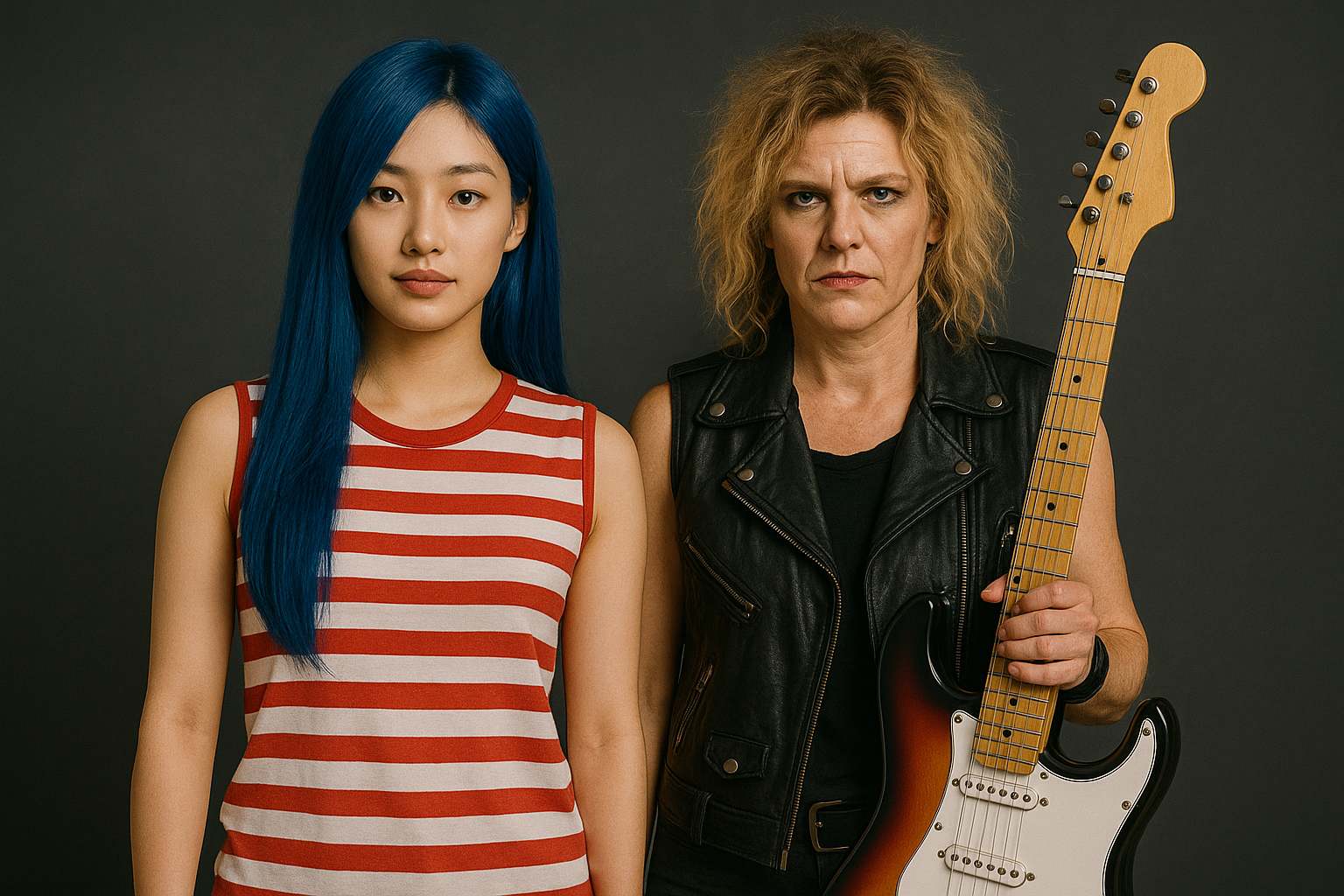
K-pop is often insulted for being “manufactured.” Idols are trained, styled, and molded to fit what the mainstream will buy. That’s why many cultural critics and so-called “music purists” dismiss them as fakes.
But if “manufactured” means being shaped to fit commercial expectations, then almost every pop star in the world — from stadium-filling rock bands to indie darlings on Spotify playlists — is manufactured. The difference isn’t in the practice but in how the narrative is spun. And Western labels have been much better at controlling that narrative through their global dominance of media and cultural storytelling.
What If Pop Is an Artist’s Preference?
Let’s start with the definition. What does manufactured even mean? If it’s “forcing artists to fit mainstream standards,” then nearly every song released goes through some form of shaping. Labels invest in sound engineers, A&R executives, producers, and marketers to polish the raw material into a product. That’s not a flaw unique to K-pop.
And here’s the bigger question: what if an artist genuinely loves pop? What if they embrace glossy production, choreography, or fashion-forward styling not because it sells, but because that’s their authentic preference? Does that still count as being “manufactured”?
The trouble is that anyone who embraces pop automatically risks being labeled a sellout. The assumption is that if it’s catchy, polished, or mainstream, then it must be fake. But what if pop — just like rock, jazz, or hip-hop — is simply the creative language some artists feel most at home in?
What if an artist genuinely loves pop? What if they embrace glossy production, choreography, or fashion-forward styling not because it sells, but because that’s their authentic preference? Does that still count as being “manufactured”?
Historical Continuity: Nothing New Here
People sneering at idols for being manufactured miss the historical point: most of mainstream music has always been manufactured.
- Tin Pan Alley churned out sheet music in the early 1900s for singers who often didn’t write their own material.
- Motown perfected the “assembly line of hits,” where artists were trained in choreography, diction, posture, and style. Berry Gordy literally ran the label like a factory line.
- 1960s girl groups like The Supremes were told how to dress, how to smile, and even how to answer interview questions in ways that would appeal to Middle America.
- 1990s boy bands like Backstreet Boys and NSYNC were built by Lou Pearlman in a system that looks eerily similar to today’s K-pop agencies: talent scouting, training, carefully engineered group dynamics.
The idol system isn’t an anomaly. It’s simply more explicit and transparent about practices that have long existed.
And let’s not pretend this control doesn’t exist in Western music. Western stars have admitted to being molded, pressured, and manipulated by labels and management.
- Demi Lovato shared on The Ellen DeGeneres Show that her team once controlled her food intake, even removing phones from hotel rooms so she couldn’t order food. In her documentary Dancing With the Devil, she described how her entire life was micromanaged. “When they came into the picture,” she said, “everything in my life was controlled.”
- Kesha’s story is infamous. Under Kemosabe/RCA, she was boxed into a “party girl” persona, denied creative freedom, and locked into contracts that limited her growth. Her legal battles revealed just how much control labels can exert over an artist’s image and output.
- Camila Cabello, in a Glamour interview, admitted that while in Fifth Harmony, she felt pressured to sexualize her image.
- Christina Aguilera has spoken about her “Dirrty” era, where the hyper-sexualized rebrand was as much a label-driven strategy as it was her own choice.
- Miley Cyrus, too, has been candid about how her post-Disney transformation was heavily shaped by industry expectations to project rebellion and maturity.
These aren’t isolated cases. They’re evidence of a broader system where artists are told what sells, and then encouraged — or forced — to embody it.
Song Credits Without the Work
Another common criticism of K-pop idols is that they “don’t write their own songs.” But here’s a Western open secret: many pop stars get songwriting credits for work they didn’t do.
Songwriter and activist Tiffany Red has openly criticized big-name singers, including Beyoncé, for receiving undeserved publishing percentages. In 2021, a group of songwriters even launched The Pact, pledging to withhold credit from any artist who didn’t meaningfully contribute to a song’s composition. This was a direct pushback against the long-standing practice of labels demanding credit for their stars as a condition of recording.
Even when Western stars do write, they rarely write alone. Britney Spears, Backstreet Boys, Ariana Grande, and even Olivia Rodrigo have entire teams of writers shaping their material. Yet Western audiences still grant them a halo of authenticity, because the myth of the solo genius is so deeply ingrained.
Selling Desire and Intimacy
At the core, both K-pop and Western pop are selling the same thing: fantasy and intimacy.
K-pop idols are styled as approachable fantasy companions. Social media interactions, V Lives, and fan signs are designed to create parasocial bonds. Fans feel like they “know” their idols.
Western stars sell different flavors of desire. They cultivate mystery, aloofness, “bad boy” and “bad girl” personas, or untouchable glamour. Whether it’s Rihanna’s effortless cool or Harry Styles’s boundary-breaking charm, these are still crafted personas designed to sell.
The difference isn’t that one is authentic and the other isn’t. The difference is simply the packaging.
The Myth of Authenticity
Western critics cling to the idea of the “authentic solo genius”: Bob Dylan, Kurt Cobain, Billie Eilish with her brother Finneas in their bedroom. But authenticity itself is often a marketing strategy.
The “girl with a guitar in her bedroom” has become a label-tested formula, just as much as K-pop’s polished choreography. Fans want to believe their favorite is different or above the machine. But behind every Western superstar is a team of executives, marketers, and stylists pulling the strings.
K-pop is simply more open about the machinery, and that’s why it gets attacked. It shows what Western pop would rather hide.
Western critics cling to the idea of the “authentic solo genius”: Bob Dylan, Kurt Cobain, Billie Eilish with her brother Finneas in their bedroom. But authenticity itself is often a marketing strategy. The “girl with a guitar in her bedroom” has become a label-tested formula, just as much as K-pop’s polished choreography. Behind every Western superstar is a team of executives, marketers, and stylists pulling the strings.
Modern Echoes of Exploitation
The abuses aren’t confined to the past.
- Halsey revealed in a Zane Lowe interview that she wasn’t allowed to release a new album because her previous one didn’t meet expectations.
- Meghan Thee Stallion publicly battled her label just to release collaborations and fought through lawsuits for control of her career.
- JoJo, once a teen star, spent nearly a decade unable to release music because her label shelved her.
If K-pop agencies are guilty of restricting idols, Western labels are guilty of silencing, shelving, and blackballing artists who don’t comply.
A Global Hypocrisy
Here’s the uncomfortable truth: both industries are built on commerce first, art second. The product isn’t just music — it’s identity, intimacy, and image, packaged for consumption.
The only real edge Western labels have is their dominance of global media. They get to control the story, framing their machinery as “artist development” or “marketing brilliance,” while K-pop gets framed as “fake and manufactured.”
But peel back the layers and you’ll find the same system at work. Idols start training young, molded by corporations. Western artists are groomed differently but with the same result: personas crafted to appeal to audiences and maximize profit.
Does this mean idols — or Western pop stars — have no talent? Not at all. Many are extraordinary performers, tireless workers, and genuine artists. But both systems are designed around commerce, not pure artistry.
Both Are Flawed
K-pop isn’t uniquely fake. Western pop isn’t uniquely authentic. Both are products of industries that shape, mold, and market young people into global commodities.
The real difference lies in transparency. K-pop admits the machinery exists, while Western pop hides it behind PR gloss and the myth of authenticity. And because Western labels dominate the global media, they get to control the narrative: painting their own artists as “real” while dismissing K-pop as “manufactured.”
But if we’re honest, all pop music — East or West — has always been manufactured. What changes is the story we’re told about it. And that story, more than the music itself, is what keeps the double standard alive.
