

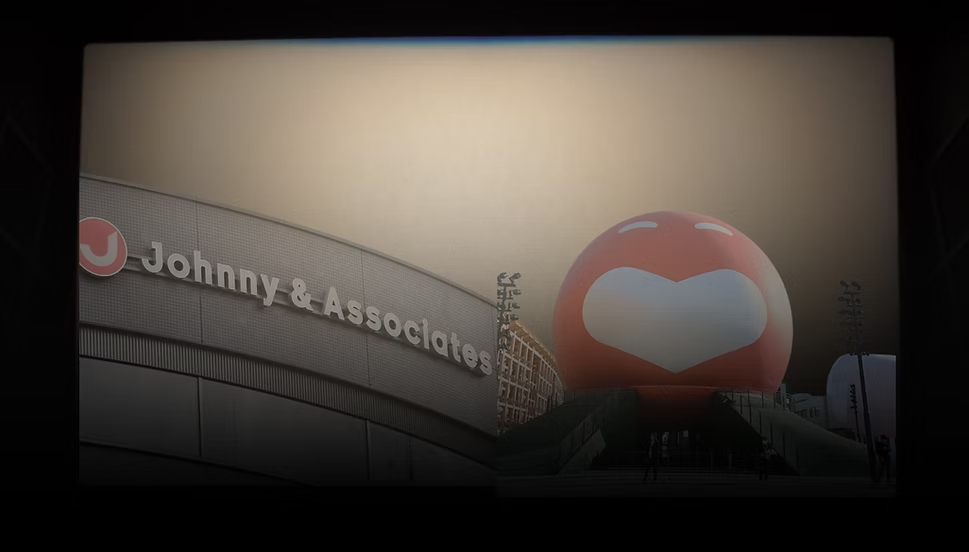
South Korea isn’t the only country whose entertainment industry gets rocked by scandals. Japan has had its fair share too—and some of them involve the biggest names in the business. Let’s talk about the time when Yoshimoto Kogyo, Japan’s comedy powerhouse, and Johnny & Associates, the home of iconic boy bands, got tangled in controversy. And yes, things got messy.
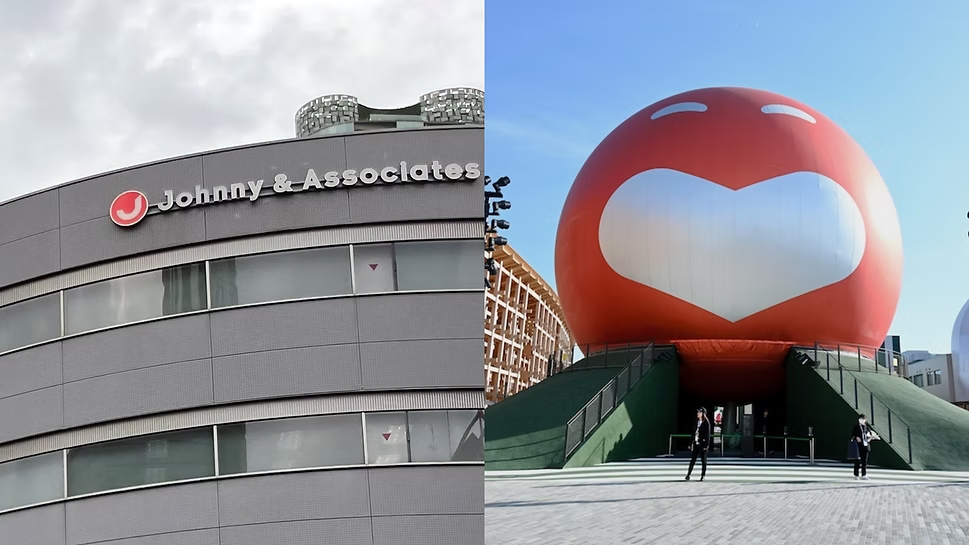
So, What Happened at Yoshimoto?
Let’s start with Yoshimoto Kogyo. They’re kind of like the Disney of comedy in Japan. The company started as a comedy bar and grew into a massive talent agency. If there’s a funny guy on Japanese TV, chances are, he’s under Yoshimoto’s umbrella.
But back in 2019, a journalist dropped a bomb: several of Yoshimoto’s comedians had performed at an event organized by a yakuza-affiliated crime group—and got paid for it. Sounds like a bad movie plot, but it was very real.
Here’s the twist: this happened in 2014, but nobody said a word for years.
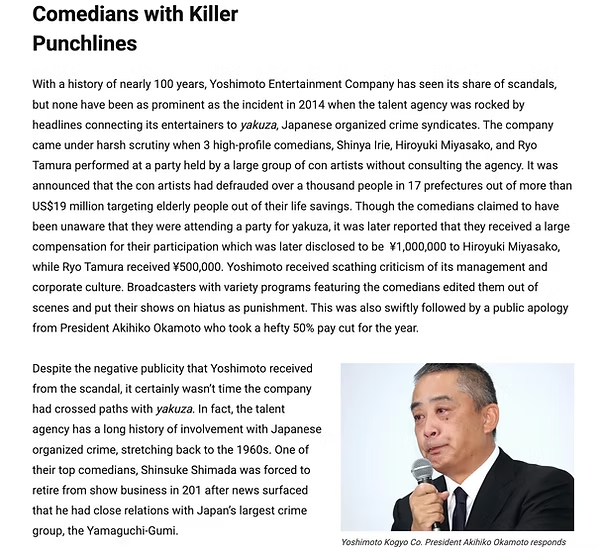
Screenshot from the article titled “Japan’s Most Influential Player in Showbiz: Yoshimoto Entertainment Company – The History.”
Source: osaka.com
When the Truth Came Out
At first, everyone denied it. The comedians involved kept quiet. But things escalated when two comedians stepped forward in a press conference and admitted that yes—they did attend the event, and yes—they were paid.
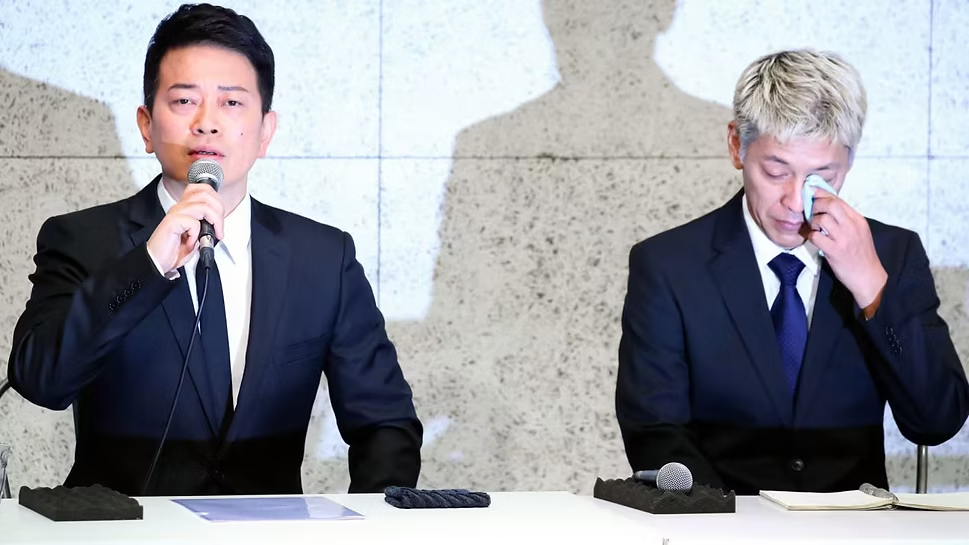
received payment for attending an event hosted by an organized crime group.
© Asahi Shimbun/Getty
Why the delay? Well, according to them, Yoshimoto’s president at the time, Hiroshi Osaki (also known as Okamoto), threatened to fire them if they spoke up. So they kept their mouths shut for five years.
The Apology Tour
After the comedians came clean, Okamoto held his own press conference. He admitted to threatening them, apologized, and said he’d take a 50% pay cut for a year. He also offered to reinstate the contracts of the comedians who had been let go.
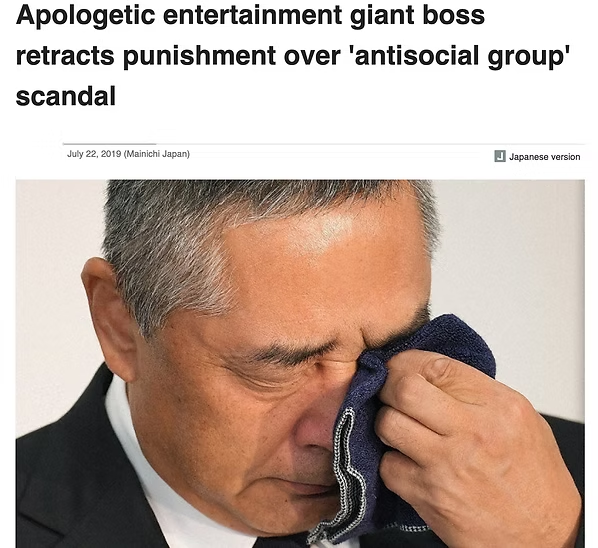
Yoshimoto Kogyo president Hiroshi Osaki bows in apology during a press conference addressing the “antisocial group” scandal involving company comedians. He later retracted punishments and admitted to threatening talent, sparking national debate over agency control.
Source: Mainichi Japan
Not exactly the most feel-good story, but at least there was some accountability. The scandal made a lot of people look twice at how much control talent agencies really have over the lives of their artists.
Meanwhile, Over at Johnny’s…
If Yoshimoto is the king of comedy, then Johnny & Associates is the king of idols. Founded by Johnny Kitagawa, this agency produced some of the most legendary boy bands in Japan, like SMAP, Arashi, and KAT-TUN.
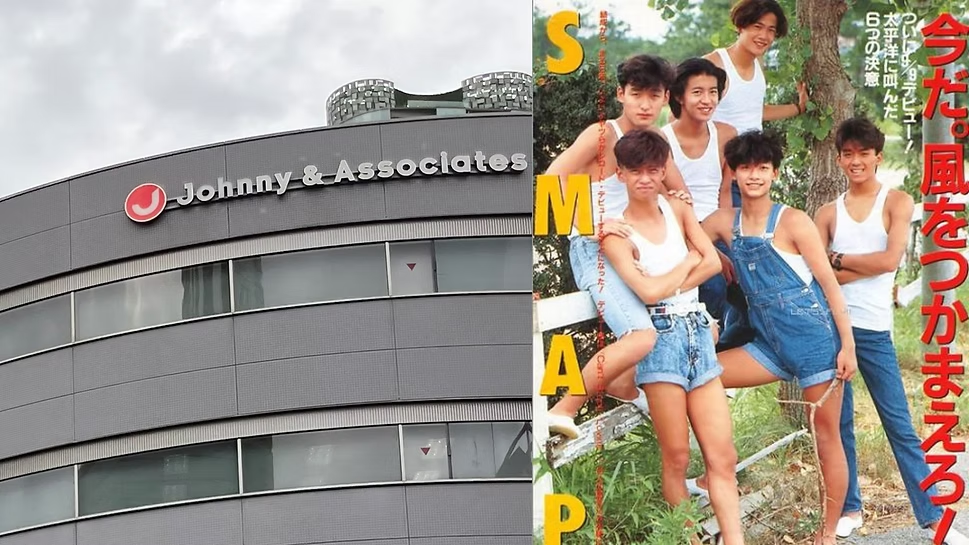
The drama? It centered around SMAP.
After SMAP’s contract ended in 2016, some of the members left the agency. And just like that, they vanished from TV.
No more appearances, no more variety shows, no more jobs. Fans started asking: “What happened?”
Allegedly Blacklisted
Whispers in the industry said that Johnny’s was pressuring TV networks not to hire the former SMAP members. Basically, if you featured them, you risked losing access to all of Johnny’s current stars.
The Japan Fair Trade Commission got involved. They couldn’t prove the accusations, but they issued a warning to Johnny’s anyway. It was the kind of warning that doesn’t happen often in Japan’s entertainment world, so people took notice.
The “Unofficial Rule”
Another issue that came up? Apparently, there was an unspoken agreement between Japan’s biggest agencies. If an artist leaves one company, none of the others will pick them up. So if you quit—or get fired—you’re basically done. It’s like career exile.
It’s never been officially confirmed, but insiders say it’s been going on for a long time. And honestly, the way things unfolded kind of supports that theory.
A Look Behind the Curtain
Between the Yoshimoto gag orders and the Johnny’s post-SMAP freeze-out, a picture started to form. Japan’s entertainment industry, shiny as it seems on the outside, is run by a few powerful companies that control a lot: the careers of stars, the networks, and even the narrative.
There aren’t many major agencies in Japan—just a handful, really. And those few have enough power to decide who gets airtime and who doesn’t. If you’re on the wrong side of the system, it’s incredibly hard to bounce back.
