

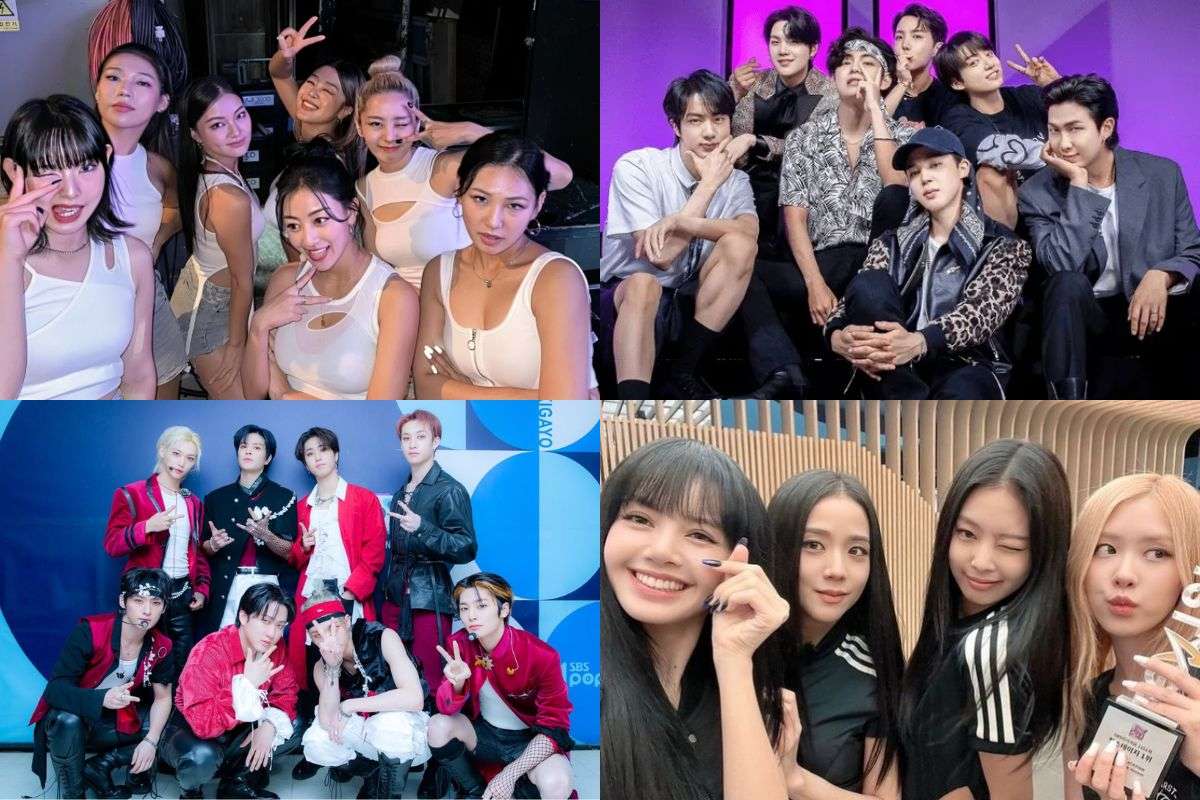
Every year produces moments that dominate conversation—records fall, headlines spike, timelines flood. Most of that noise fades quickly. It creates attention without changing direction.
This list is not about those moments.
The acts and events highlighted here made visible splashes in 2025, but their significance extends into 2026 and beyond. Their impact lies in how they alter conditions: how artists scale globally, how institutions respond, how markets expand, and how legitimacy is earned across borders.
That distinction matters. Some achievements resonate strongly within Korea but do not translate internationally. Others travel briefly without leaving infrastructure behind. This list focuses on developments that reshape pathways—touring strategies that recalibrate economics, IP models that extend careers, and market expansions that widen the global ecosystem rather than concentrate power.
This is not a ranking of who was loudest in 2025. It is a record of who changed the landscape in ways that will continue to affect others long after the noise moves on.
#10 LISA’S ROUTE TO HOLLYWOOD
Lisa’s U.S. presence in 2025 extended across music, film, fashion, and institutional visibility, resulting in one of the most diversified portfolios held by any K-pop artist to date. Following a successful album cycle, she performed at the Academy Awards, won “Best K-pop” at the VMAs for the third time, signed with WME for acting representation, appeared in HBO’s The White Lotus, and was named to the Host Committee for the 2026 Met Gala. Each move placed her deeper inside American cultural systems rather than orbiting them from the outside.
What is its lasting impact?
Rather than leveraging idol popularity as a shortcut, Lisa adopted a traditional industry pathway to Hollywood: agency representation first, prestige television second, committee participation third, and film work with established actors rather than idol-centered vehicles. She is set for a long-term integration into Hollywood’s professional networks.
Her ongoing film project TYGO with Don Lee could reinforces the idea that idols can be cast as actors without novelty framing or narrative cushioning. That shift alters casting risk calculations for Asian pop artists entering Western film spaces.
If this pathway becomes repeatable, it widens the horizon for Asian artists who want longevity without creative exhaustion.
#9 TWICE: BREADTH NOT DEPTH
Ten years into their career, TWICE’s 2025 North American strategy marked a clear escalation. Their This Is For tour sold out initial U.S. dates immediately, expanded to 47 total shows, and is on track to become the largest North American tour by a K-pop act. The group also built the tour around a 360-degree stage design, a production choice typically reserved for elite Western touring acts.
Outside touring, TWICE extended their U.S. chart presence through the KPop Demon Hunters OST. “Strategy” and “Takedown” became the second and third longest-charting songs by a K-pop girl group on U.S.-relevant Billboard charts, reinforcing their reach beyond core fandom spaces.
What is its lasting impact?
The most persistent criticism aimed at TWICE—returning to arenas after stadium success—misses the economic logic behind their approach. Stadium tours maximize peak demand. Arena tours distribute access. TWICE’s 2025 strategy prioritized the latter.
Their touring model is for audience building. By touring more cities rather than fewer mega-venues, TWICE lowered the barrier for casual attendance. This invites the general public into the experience instead of extracting maximum spend from the same concentrated fanbase.
K-pop’s traditional growth model relies on intense fan devotion, which historically peaks early and declines as audiences age. TWICE is testing whether a group can widen reach rather than deepen dependency, trading short-term spectacle for long-term cultural presence. If successful, this model offers veteran groups a way to stabilize relevance without chasing virality or overstretching fandom labor.
#8 LE SSERAFIM’S TAKE OVER
LE SSERAFIM’s is set to perform at Dick Clark’s New Year’s Rockin’ Eve in Times Square following the most successful debut North American tour by a K-pop act and the highest-grossing tour by a fourth-generation girl group. Billboard Boxscore ranked them eighth among the highest-grossing K-pop tours of the year at $34.1 million, with several dates still unreported. They could easily get to $40M.
They placed two entries on the Billboard Hot 100—“Crazy” and “Spaghetti” featuring J-Hope—and performed “Hot” (English version) and “Anti-Fragile” on America’s Got Talent, extending reach to audiences outside K-pop’s traditional consumption funnel.
What is its lasting impact?
LE SSERAFIM is not the first Korean girl group to gain U.S. attention, but the timing and conditions of their expansion are different. They reached this stage earlier in their career and increasingly under their own creative direction. While their debut concept was tightly defined by leadership, Crazy marked a turning point where member involvement in conceptual development became more pronounced.
Creative participation affects not only sound but pacing, risk tolerance, and narrative continuity across releases. With BTS and Stray Kids already established as boy groups with strong creative control in the U.S., LE SSERAFIM’s trajectory suggests that similar autonomy can scale for girl groups without sacrificing commercial viability.
If sustained, this challenges long-standing industry assumptions about who is allowed to steer vision at the global level—and when.
#7 ROSÉ & BRUNO MARS’ “APT.”:
“APT.” emerged as the biggest novelty hit in the U.S. since “Gangnam Style,” earning three Grammy nominations including Song of the Year and Record of the Year. Alongside tracks like “Golden,” it became one of the most frequently cited contenders in major Grammy categories, signaling a shift away from symbolic recognition toward competitive parity.
What is its lasting impact?
“APT.” is significant because of how clearly it reveals Grammy dynamics. The song is highly effective and widely charting. Its melodic familiarity aids recall, and its production aligns cleanly with Western pop conventions, even as the chorus retains Korean language and cultural reference.
Its awards positioning is textbook Grammy Networking campaign executed with precision. If “APT.” wins, it validates a reality long understood within the industry: marketing reach, institutional access, and narrative discipline heavily influence awards outcomes. The consequence is not aesthetic—it is strategic. Korean-linked acts will increasingly understand that Grammy success requires entry into professional ecosystems few artists can access without major label alignment.
#6 JIN REINVENTING CONCERTS AS A LIVING ART FORM
Concerts have historically followed a fixed structure: the artist performs, the audience observes. Even as production scaled, the relationship remained hierarchical. In 2025, Jin challenged that structure by treating audience presence as a compositional element rather than background response.
His shows emphasized participation, responsiveness, and emotional co-creation. The approach resonated commercially. Jin’s tour ranked as the seventh highest-grossing of the year, earning $46.1 million across 18 reported dates, with near-total sell-outs and additional numbers pending.
What is its lasting impact?
Jin evolved concerts into artistic environments. This aligns closely with how Gen Z and Gen Alpha engage with culture and art—participatory, immersive, and emotionally reciprocal.
The implication extends beyond Jin’s tour. As younger audiences grow less interested in passive consumption, live performance models will have to adapt. Jin demonstrated that scale and intimacy can coexist, offering a blueprint for concerts as experiential art rather than noise-driven spectacle.
#5 J-HOPE’S NORTH AMERICAN TOUR: ELITE CONVERSION POWER
J-Hope closed the highest-grossing solo tour by an Asian artist in history, with $79.9 million in gross revenue and 500,000 tickets sold. Many chart-relevant artists struggle to fill theaters. J-Hope sold out arenas consistently, demonstrating exceptional listener-to-ticket conversion.
What is its lasting impact?
Beyond the numbers, the tour’s significance lies in execution. J-Hope delivered vocally, physically, and technically under demanding live conditions without performance lapses. Haters wait for every opportunity to drag an idol for the smallest of mistakes and use social media to amplify errors instantly, the absence of controversy became its own signal.
The tour is a proof-of-concept for solo Asian artists operating at the top tier of U.S. touring economics. The industry values reliability as much as revenue, and J-Hope supplied both.
#4 STRAY KIDS’ DOMINATE TOUR: U.S. TOURING CREDIBILITY AT SCALE
Stray Kids’ dominATE tour closed 2025 with over $185.7 million in reported gross from just over half of its dates. Once fully reported, it is positioned to become the highest-grossing K-pop tour on record. They also became the first act to secure eight No. 1 albums on the Billboard 200.
What is its lasting impact?
What gives the tour weight is context. Stray Kids write and produce their own music, often criticized for prioritizing intensity over melodic simplicity. Rather than adjusting for Western expectations, they doubled down on identity and cultivated a loyal audience that responded to it.
Their success is a validation of artistic consistency. They proved that U.S. touring dominance does not require a conventional radio hit—only a coherent relationship between sound, identity, and audience trust.
#3 HYBE EXPANSION: KOREAN ENTERTAINMENT BUILDING U.S. INFRASTRUCTURE
HYBE entered 2025 as the fourth-largest music company globally and spent the year solidifying its U.S. presence beyond artist management. HYBE Americas expanded into full-stack operations including A&R, training, touring, and IP development, while also anchoring Latin American expansion through U.S.-based leadership.
The company also formalized IP leverage across its roster, extending beyond endorsements toward repeatable brand ecosystems. Institutionally, multiple HYBE-affiliated artists became Recording Academy voting members, alongside executive leadership inclusion.
What is its lasting impact?
While Sony Music Group, Universal Music Group, and Warner Music Group remain structurally dominant, HYBE’s expanding capacity introduces an alternative pipeline that did not previously exist at scale—and that shift matters well beyond Korea.
Historically, Asian artists entering the U.S. market faced entrenched barriers. Radio airplay has operated as a gatekeeping mechanism rather than a reflection of audience demand, overwhelmingly favoring acts embedded within Big Three ecosystems. Chart visibility, awards access, and touring leverage followed the same closed loop: label power dictated exposure, exposure dictated legitimacy, and legitimacy dictated career longevity. Artists outside that loop, even with global audiences, were routinely sidelined.
HYBE disrupts this dynamic by reducing reliance on those bottlenecks. Its model emphasizes direct audience conversion through touring, streaming, IP expansion, and brand ecosystems, allowing artists to establish commercial gravity before institutional validation. This shifts leverage. Artists enter negotiations with measurable demand, diversified revenue, and international proof points rather than dependency on radio or legacy chart privilege.
For Asian artists in particular, this change is consequential. HYBE’s success normalizes the idea that global demand can precede U.S. institutional acceptance, placing pressure on radio and charts to respond rather than dictate.
Geographically, HYBE’s strategy amplifies this effect. Deep roots across Asia and early expansion into Africa position the company within rapidly growing, youth-driven music economies. By scaling artists across these regions first, HYBE broadens the global music market itself rather than forcing entry through Western chokepoints.
HYBE does not dismantle the Big Three, but it complicates their gatekeeping role. That complication expands leverage, optionality, and long-term viability for Asian artists operating within—and beyond—traditional Western systems.
#2 KPOP DEMON HUNTERS: KOREA’S FIRST TRUE U.S. STREAMING BLOCKBUSTER
KPop Demon Hunters became Netflix’s most-watched film ever by total views and crossed directly into U.S. music infrastructure. Its soundtrack ranked as the second-most streamed album globally on Spotify in 2025. Lead track “Golden” reached No. 1 on the Billboard Hot 100 and the project earned five Grammy nominations.
What is its lasting impact?
The project cleared three institutional gates simultaneously: Netflix scale, Billboard relevance, and Grammy legitimacy. That convergence is rare even for U.S.-origin properties.
It proved that IP can sustain franchise logic in the U.S. market. Sequels and spin-offs extend influence beyond music, embedding Korean pop culture deeper into mainstream entertainment pipelines.
#1 BTS FULL REUNION: A PROJECTED BILLION-DOLLAR U.S. CULTURAL EVENT
BTS’s OT7 return is already treated as a macro-level economic event. Billboard projected potential gross exceeding $1.1 billion. U.S. trade media positioned the reunion alongside the most consequential pop moments globally.
Even during enlistment, BTS’s catalog demonstrated unusual durability, with older tracks resurging on Billboard charts and solo releases maintaining dominance without promotional cycles. Individual members continued driving U.S.-visible commercial impact across music, touring, and brand partnerships.
What is its lasting impact?
A- Economic gravity: South Korea and every city on the route
BTS’s previous cycles already demonstrated that a single BTS release or concert window triggers measurable spikes in tourism, hospitality, retail, transportation, and small business revenue, both domestically and abroad. Brand works with them. Airlines, hotels, and city councils quietly create programs for ARMYs, their fans. Local governments plan around them.
Now, that BTS is doing a full-scale stadium tour, efforts of South Korean government, local governments of cities they will visit, brands, and businesses are adjusting their forecasts, and programs to mirror the scale. This means sustained, multi-city economic impact rather than isolated bursts. Each stop becomes a temporary cultural hub with downstream effects that extend far beyond ticket sales. Few acts generate that level of distributed economic activity, and none have done so with the consistency BTS has shown across multiple regions.
This positions BTS as a mobile economic engine rather than just a touring act—something cities compete to host, not simply book.
B- The myth of the peak: deferred scale and unrealized intensity
Despite their global stature, BTS has never experienced an uninterrupted peak. Their first true stadium expansion was canceled by COVID, and the years that followed fragmented momentum into solo releases, enlistment pauses, and uneven promotion cycles. What the industry has witnessed so far represents constrained output, not saturation.
The reunion marks the first moment where demand, scale, and availability align fully. That convergence reveals the real intensity of their popularity. Everyone is watching because while experts know BTS’s position in pop history will history, no one know how exactly. They know that BTS’s has not crested; it has been compressed. When released, that compression has the capacity to reset benchmarks across touring, consumption, and global fan mobilization in ways few contemporary acts can replicate.
C- IP maximization as survival strategy—and future template
BTS became the first act to fully maximize IP not as a luxury extension, but as a necessity. During periods when traditional support mechanisms were unavailable—no touring, limited appearances, interrupted promotion—fans redirected energy into every available form of intellectual property: animated characters, long-form narrative arcs, merchandise ecosystems, webtoons, games, and serialized storytelling.
What emerged was not diversification for its own sake, but an interconnected system where music functioned as the core narrative engine rather than the sole revenue driver. This approach sustained engagement, stabilized income, and expanded the brand without overexposing the artists themselves.
The lasting consequence is structural. BTS has demonstrated that careers can be sustained, scaled, and protected beyond the volatility of release cycles. Future acts will inherit a model where longevity is built through narrative continuity and IP ecosystems that outlive any single era. That framework will transcend BTS because it changes how success is defined and maintained.
D- Attention as a shared resource, not a zero-sum game
The clustering of releases and tours around BTS’s return is not a coincidence. It reflects an industry-wide understanding that BTS draws attention at scale—and that proximity to that attention carries benefits. When BTS is active, media coverage expands, casual audiences re-engage, and the overall visibility of Korean acts increases.
This dynamic has played out before. BTheir activity raises baseline interest in the category itself, creating spillover effects for peers operating in adjacent spaces.
