

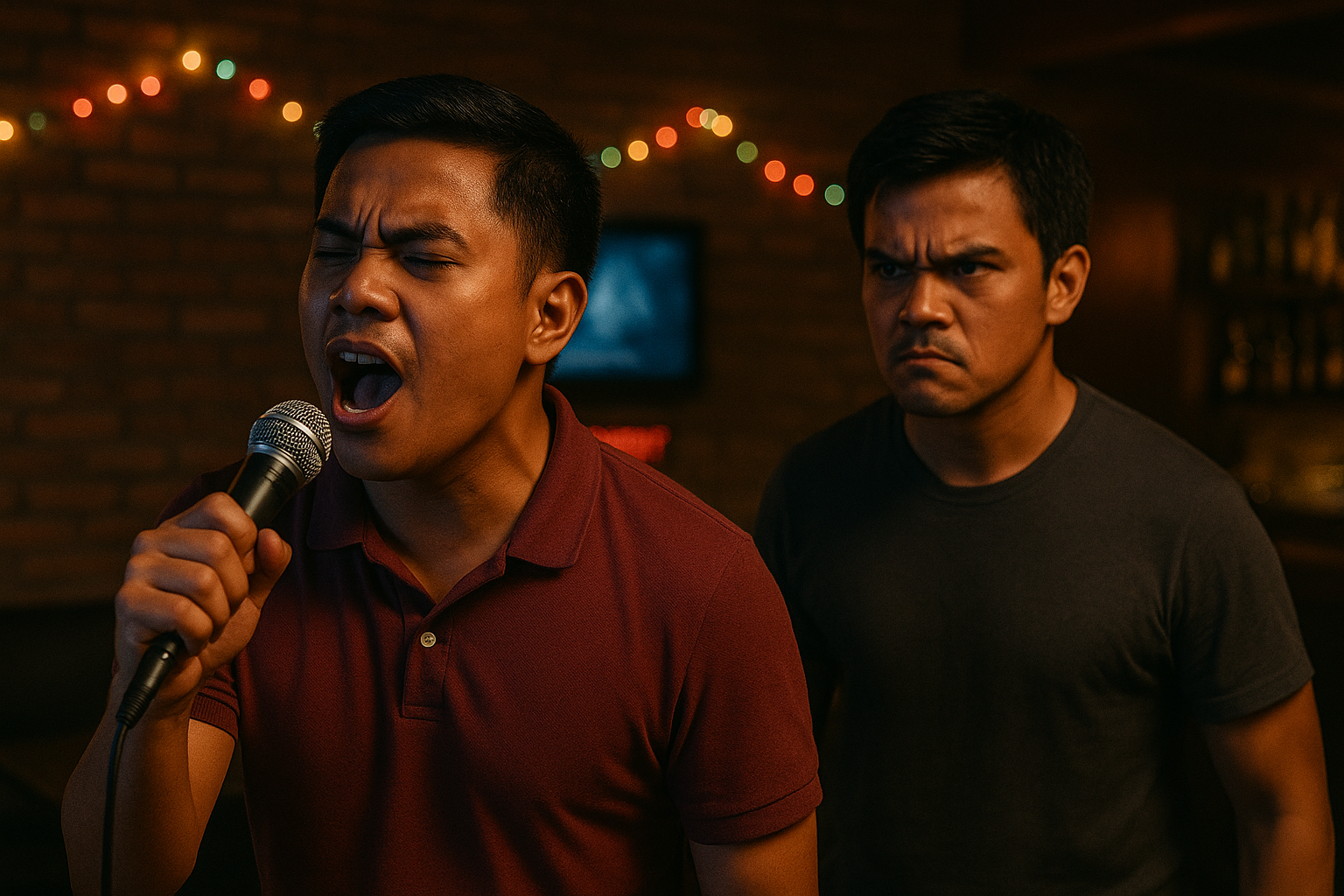
In the Philippines, karaoke — or videoke, as it’s fondly called — is not simply a pastime. It’s a stage where everyday people can perform, if only for a song or two, like the stars they admire. It’s an emotional outlet, a social ritual, and, in many cases, the glue of community life. Birthdays, fiestas, and even wakes often end with voices raised to the hum of a karaoke machine. Singing here is rarely about technical perfection. It’s about participation, pride, and presence.
But one song occupies a uniquely unsettling place in this cultural tradition: Frank Sinatra’s “My Way.”
“And now, the end is near…”
Across the late 1990s and 2000s, a series of violent incidents tied to the song gave rise to what is now called the “My Way” killings. In Pangasinan in 1998, a family dispute in a karaoke bar turned fatal after an argument over who would sing the tune. By 2007, the pattern was unmistakable: a man in Rizal was shot by a security guard for singing “My Way” off-key.
In 2009, when a barangay chairman in Tondo chose it as his Christmas party finale, he was assassinated moments after stepping down from the microphone. Even in 2017, another chairman, Randy “Bong” Reyes, mocked the so-called curse by donning a blond wig and joking about the song’s reputation before performing it. He was gunned down minutes later.
Taken together, these incidents illustrate something more than coincidence. They reveal the deep cultural charge of karaoke in the Philippines. Unlike in many countries, where karaoke is light entertainment, in the Philippines it can be a matter of pride, performance, and ego. To sing in front of others is to assert oneself. To be interrupted, mocked, or outshone can feel like a public humiliation. Add alcohol and the song’s famously defiant lyrics — “I did it my way” — and tensions can quickly escalate.
Scholars have noted this dynamic. Roland Tolentino, a pop-culture expert from the University of the Philippines, points out that the ubiquity of “My Way” makes it a lightning rod in already volatile environments. Its triumphal tone reinforces a sense of bravado in singers who may already feel emboldened by alcohol or group dynamics. Singing coach Butch Albarracin is even more blunt: the song, he says, “evokes feelings of pride and arrogance in the singer, as if you’re somebody when you’re really nobody. That’s why it leads to fights.”
It is important to be clear: “My Way” itself is not cursed. What it exposes is the cultural intensity of karaoke in the Philippines. Singing is not casual here; it is personal. The performance is a claim to dignity and respect within the group, and when that dignity feels threatened, conflicts can turn violent. The myth of the “My Way curse” is, in truth, an anthropology lesson: a story of how music, pride, and community intertwine in powerful — and sometimes dangerous — ways.
This is why some karaoke bars removed the song from their playlists, and why many Filipinos think twice before queuing it up. For all its elegance as a Sinatra anthem, “My Way” has become a mirror reflecting the deeper social meanings of singing in the Philippines — where music is never just music, but an act of identity, belonging, and, occasionally, confrontation.
So when the mic is in your hand and the opening chords of “My Way” beckon, remember: in the Philippines, a karaoke performance is never only a song. It’s a cultural performance. And sometimes, it’s a high-stakes one.
