

The relationship between TikTok and K-pop didn’t happen by accident. It was almost inevitable.
K-pop has always operated as a trend-driven industry—fast cycles, quick turnarounds, and a constant demand for newness. Songs rise quickly, peak quickly, and are often replaced just as fast. SNAPCHAT and then TikTok recognized it.
The thing that TikTok did well for itself is scale it.
What we’re seeing now is a feedback loop where each side reinforces the other. K-pop provides the raw material—highly visual, hook-heavy, performance-ready content. TikTok provides the distribution engine—algorithmic amplification, remix culture, and global reach.
On paper, it’s efficient. On the creative side, the trade-offs are harder to ignore.
FROM FULL SONGS TO 15-SECOND DECISIONS
There was a time when a K-pop song was judged as a complete piece.
Structure mattered. Build mattered. The emotional arc mattered.
That hierarchy has shifted.
Today, a song’s success can hinge on a 15-second segment—the part most likely to circulate on TikTok, Instagram Reels, or YouTube Shorts. That segment becomes the entry point, the marketing hook, and often the identity of the track itself.
Industry observers have been direct about this shift. Cultural critic Kim Heon-sik notes that songs increasingly skip traditional structures altogether, sometimes jumping straight into the chorus because that’s the portion most likely to go viral.
The data backs it up.
- Illit’s “Not Cute Anymore” runs just 2:12
- Jennie’s “Like Jennie” clocks in at 2:04
- TWS’ “Overdrive” sits at 2:40
Even a three-minute runtime is starting to feel long.
If you want a hit, compress and reduce a track to the most shareable fragment.
WHEN VIRALITY PRECEDES MUSIC
Traditionally, a song would gain traction first—through radio, streaming, or word of mouth—and then expand into broader cultural relevance.
Now, virality often comes first.
According to TikTok and Luminate, 84% of songs that entered the Billboard Global 200 initially gained traction on TikTok.
That means discovery is happening before full engagement. Listeners encounter fragments before they encounter songs.
Agencies have adjusted accordingly:
- Challenge videos are released before official song drops
- Artists collaborate across fandoms to amplify reach
- Choreography is designed with replication in mind
This is no longer a promotion layered on top of music. It is shaping the music itself.
A SYSTEM THAT REWARDS PARTICIPATION—NOT NECESSARILY ARTISTRY
TikTok’s core strength is participation.
Users don’t just consume content—they recreate it, remix it, and push it further. That dynamic has turned fans into distributors, accelerating the spread of K-pop globally.
More than 14 million K-pop-related posts were generated on TikTok between October 2024 and October 2025 alone.
From a business standpoint, it’s one of the most efficient marketing systems the industry has ever had.
But participation doesn’t always align with musical depth.
The platform prioritizes:
- Immediate recognizability
- Repeatability
- Visual payoff within seconds
These are not inherently aligned with songwriting complexity or long-form musical development.
THE “VIRAL PIPELINE” HAS LIMITS
If TikTok is such a powerful engine, the obvious question is: does viral success translate into lasting music careers?
So far, the results are mixed at best.
Billboard discreetly discontinued its TikTok chart after just 18 months. That alone signals something important—virality wasn’t translating into sustained industry relevance in a way that justified its own metric.
Even more telling: very few artists who started as TikTok-first viral acts have successfully transitioned into stable, mainstream music careers.=
The pipeline exists. The conversion rate is weak.
Virality can introduce a song. It doesn’t necessarily build an artist.=
K-POP AND TIKTOK: A MUTUAL DEPENDENCY
This is where the relationship becomes more complex.
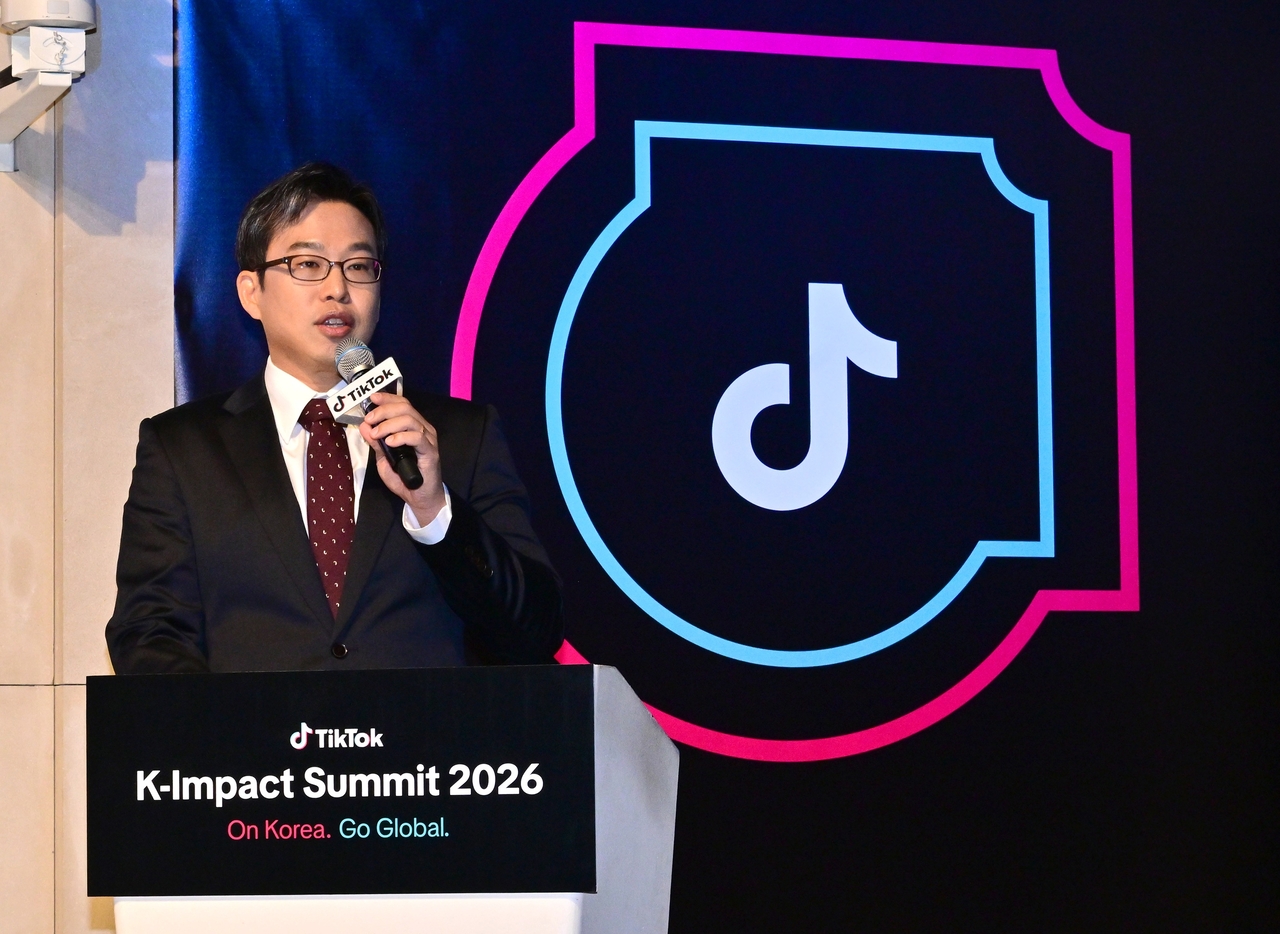
TikTok didn’t just benefit from K-pop—it actively invested in it.
The company recently announced a $50 million investment in South Korea, positioning the country as a global hub for content creation and trend formation.
A significant share of the investment is being directed toward TikTok’s newly launched “Creator Rewards Program: 2X,” which took effect this week and doubles payouts for Korean-language content.
The program sits among the platform’s most aggressive incentive structures globally, targeting creators with at least 10,000 followers, 100,000 views over the past 30 days, and original videos exceeding one minute in length.
Starting May 1, TikTok is layering additional initiatives on top of that base. These include a quality-based rewards program with payouts reaching up to three times higher, a creator growth challenge designed to pull talent from other platforms, and an incubator system aimed at scaling emerging creators into million-follower accounts.
The second half of the strategy moves beyond individual creators and into institutional partnerships. TikTok is expanding collaborations with professional content providers—including legacy media—positioning them as distribution multipliers that can extend the reach of creator-driven trends.
The company is also deepening ties across sports, news, and entertainment to push Korean content further into global circulation.
In sports, TikTok will act as a priority partner for the 2026 FIFA World Cup, with plans to deliver exclusive behind-the-scenes access and live content from the tournament.
The strategy is clear:
- Expand creator incentives
- Build partnerships with professional content providers
- Strengthen Korea’s role as a trend origin market
South Korea offers exactly what TikTok needs: structured production systems, highly engaged fandoms, and content that is inherently remixable.
K-pop, in turn, gains access to a distribution model that bypasses traditional gatekeepers.
Each side is now embedded in the other’s growth.
BTS: RESISTING THE COMPRESSION MODEL
Against this backdrop, BTS stands as a notable outlier.
They use TikTok. They understand the platform. Their content performs well on it.
But their music doesn’t appear to be built for it.
Even in the ARIRANG era, BTS continues to operate on a different scale:
- Full-length albums with thematic cohesion
- Tracks that function as complete narratives
- Rollouts that prioritize identity and message over quick-hit virality
This challenges the assumption that success now requires compression.
BTS proves that scale, depth, and longevity can still coexist—even in a system optimized for speed.
They are not rejecting TikTok. They are simply not allowing it to dictate the structure of their music.
VIRAL HEAVEN, CREATIVE TRADE-OFFS
The partnership between TikTok and K-pop is undeniably effective.
It accelerates discovery. It globalizes trends. It turns fans into active participants in a way that traditional media never could.
But efficiency doesn’t automatically translate into artistic growth.
What emerges instead is a system that rewards immediacy:
- Songs designed around fragments
- Structures optimized for replayability
- Careers that can spike quickly—but struggle to sustain
K-pop and TikTok are now deeply intertwined, each amplifying the other’s strengths.
The open question is whether that loop can sustain artistry over time—or whether it will continue to prioritize the moment over the whole.
So far, the answer depends on who you look at.
And BTS remains one of the clearest examples that another path still exists.
