

China’s traditional TV drama industry is in trouble. At a recent high-level forum attended by the National Radio and Television Administration (NRTA) and executives from iQIYI and Tencent Video, the numbers painted a worrying picture: long-form series are bleeding viewers. iQIYI senior executive Liu Huangfu pointed to three big culprits — widespread piracy, toxic online public opinion that can kill a show overnight, and most importantly, shifting audience habits. Modern viewers simply don’t have the patience for 40–60 episode sagas anymore. They want stories that move fast, fit in their pocket, and deliver instant dopamine.
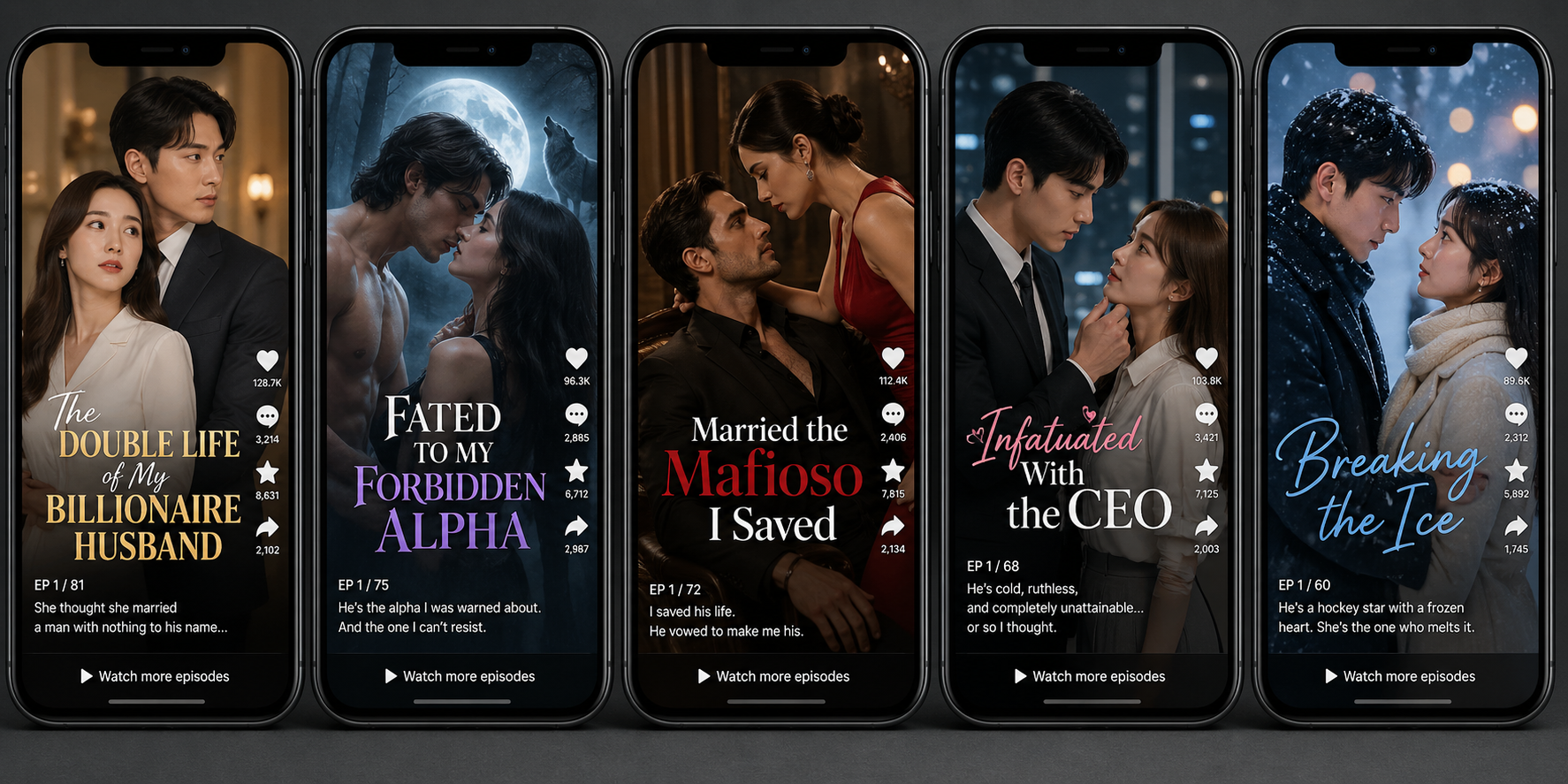
Enter vertical dramas — short, vertical-screen (9:16) micro-series designed for phones. Each episode is 1–2 minutes long, with cliffhangers every single time. You swipe, you watch, you get hooked. And right now, they are absolutely exploding.
The Explosive Rise of Vertical Dramas
What started as a niche format on Douyin and Kuaishou has become a full-blown industry. In 2024 alone, China’s short-drama market generated $7 billion — surpassing the entire domestic film box office. By 2025 it was projected to hit $9.4 billion, and analysts forecast $16.2 billion by 2030. Over 660 million Chinese viewers are already hooked, with more than 830 million having tried the format at some point.
The appeal is brutally simple: it’s built for the TikTok generation. Attention spans are short, commutes are long, and phones are always in hand. Vertical dramas let you binge an entire “season” during a lunch break or while doom-scrolling in bed. The fast-paced editing, constant cliffhangers, and mobile-first design feel like native content for Gen Z and younger millennials — quick, addictive, and perfectly bite-sized.
This Storytelling Style Was Born on YouTube, Reoriented by X
The addictive format of vertical dramas didn’t appear out of nowhere — it’s the professional version of what everyday creators have been doing for years on YouTube.
Short-form storytelling didn’t start with vertical videos. It began on YouTube in the late 2000s, where creators like Ryan Higa (nigahiga), Smosh, and Jenna Marbles popularized horizontal short sketches and multi-part comedy series. These were short (3–10 minutes) but still felt like mini-TV episodes designed for laptops and bigger screens.
The big shift happened when smartphones took over.
Snapchat and Vine (2013–2017) popularized vertical video because that’s how people naturally hold their phones, 6-second looping vertical videos. This trained audiences to consume very short, vertical content.
Then Musical.ly → TikTok / Douyin (2016–2018) exploded in 2018, turning vertical video into the default format for short content.
Suddenly, creators started telling serialized stories vertically — short clips with strong cliffhangers that made people swipe for the next part. The most famous example is Reesa Teesa’s “Who TF Did I Marry?” series in 2024. In 50+ short TikTok videos, she told the jaw-dropping true story of how she met a charming man she called “Legion,” fell hard, married him quickly, and then slowly discovered he had lied about literally everything — his military career, finances, family, past relationships, even his name. Each 1–3 minute clip ended on a brutal cliffhanger (“Wait until you hear what he told my mother…”) and the internet lost its mind. The series racked up hundreds of millions of views, spawned countless reaction videos, and became a cultural moment that proved raw, serialized personal storytelling could dominate the algorithm.

Other viral TikTok examples include multi-part “Roommate from Hell” sagas, “My Ex Tried to Ruin My Life” revenge stories, and true-crime mini-series where creators drop one shocking detail per video. The formula is always the same: short, emotional, and engineered for maximum swipe retention.
On X (formerly Twitter), the same thing happens through thread storytelling. Creators post long personal stories or fictional tales one tweet at a time, ending each post with a hook like “Thread 🧵 1/18… but wait until you hear what happened next.” The cliffhanger at the end of every tweet keeps people refreshing and hitting “Show replies” for the next part. These threads regularly go mega-viral, sometimes reaching tens of millions of impressions.
Ten Of The Most Talked-About Vertical Dramas
| Rank | Title (English) | Platform(s) | Why It Blew Up | Key Hook / Vibes |
| 1 | The Double Life of My Billionaire Husband | ReelShort / DramaBox | Over 500 million views — the ultimate “secret billionaire” fantasy | Fake marriage → real CEO reveal |
| 2 | Breaking the Ice | ReelShort | 350+ million views. Wild plot twists and non-stop drama | Ice-skating revenge + romance |
| 3 | Infatuated With the CEO | ReelShort | Massive female audience obsession | Office + obsessive love |
| 4 | Fated to My Forbidden Alpha | ReelShort | Went mega-viral on TikTok for its ridiculous werewolf CGI and drama | Werewolf forbidden romance |
| 5 | Married the Mafioso I Saved | ReelShort | Extremely popular “I saved a mafia boss” trope done perfectly | Mafia + damsel-turned-queen |
| 6 | The Secret of My Billion-Dollar Marriage | DramaBox / ReelShort | Classic billionaire contract marriage with heavy revenge plot | Revenge + rich husband |
| 7 | Can’t Get Enough of You | DramaBox | Super addictive “hate-to-love” office romance | Intense chemistry + obsession |
| 8 | Daughter of Zeus | Various | Mythology-meets-modern with big production value | Greek gods in modern world |
| 9 | My Stepbrother’s Dirty Secret | ReelShort | Taboo family drama that everyone loved to hate-watch | Forbidden step-sibling tension |
| 10 | The 100-Day Wife Conquest | Chinese platforms | One of the highest-performing Chinese originals — pure chaotic romance | 100-day marriage contract |
Cliché Stories, Addictive Format: Content vs. Form
Here’s the interesting part: many vertical dramas are still pretty cliché. Billionaire CEOs falling for poor but feisty heroines, revenge plots, time-travel romances, evil stepmothers — you’ve seen it all before. The narratives haven’t evolved much. Yet they’re massive hits.
This tells us something powerful about modern audiences: form is currently beating content.
In an era of endless choice and shrinking attention, the way a story is delivered matters more than the story itself. Vertical dramas understand the psychology of the swipe. They give instant emotional payoff, non-stop escalation, and zero filler. Traditional long-form dramas often feel slow and bloated by comparison. Young viewers aren’t necessarily demanding deeper stories — they’re demanding faster, more convenient ones. The success of vertical dramas proves that when the format perfectly matches how people actually consume media today, even familiar tropes feel fresh and irresistible.
How Big Are Vertical Dramas in the West?
Very big — and growing fast. Platforms like ReelShort and DramaBox have become surprise hits in the US and Europe. DramaBox averaged 44 million monthly active users in the first half of 2025, outpacing Hulu and Paramount+ in some metrics. The global short-drama market hit $1.4 billion in 2024 and is forecast to reach $9.5 billion by 2030. Many of these Western hits are actually Chinese-produced stories localized with Western actors and settings — revenge romances, billionaire fantasies, and small-town secrets translated for international tastes.
TikTok itself is now testing dedicated vertical drama feeds, and YouTube Shorts is jumping in too. The format is no longer just a Chinese phenomenon — it’s becoming a global mobile entertainment staple.
AI Is About to Supercharge Everything
The next big leap is already here: AI. Since late 2025, AI-generated animated and even live-action micro-dramas have exploded. Platforms are pumping out over 10,000 new AI titles every month. Production costs can drop to one-tenth of traditional shoots, and turnaround time shrinks from weeks to days.
This is perfect for vertical dramas. The format’s short length and simple visuals make it an ideal testing ground for AI tools. Companies can now experiment with hundreds of concepts quickly, iterate based on real-time data, and flood the market with fresh content. The combination of AI + vertical format could make short dramas even cheaper and more abundant — potentially flooding phones with personalized, algorithm-driven stories.
The Bigger Picture: When Was the Last Real Long-Form Hit?
It’s telling that China hasn’t had a true long-form cultural phenomenon in years — nothing on the level of The Untamed, Eternal Love, or Nirvana in Fire that dominated water-cooler conversations across generations. While a few 2026 titles like Swords Into Plowshares or The First Frost have gained attention, none have achieved that rare mainstream breakout status.
That vacuum is being filled by vertical dramas. Audiences aren’t necessarily watching less — they’re just watching differently. The industry’s shift toward mid-length dramas and better creator revenue shares is a smart response, but the real future may lie in fully embracing the short, vertical, mobile-first model.
In the end, vertical dramas aren’t just a trend. They’re a symptom of how entertainment is evolving in the smartphone age: faster, more accessible, and ruthlessly optimized for attention. Whether that’s a good thing or a worrying one depends on your perspective — but one thing is clear: the phone screen is winning.
What do you think — are you team long-form or team vertical drama? Drop your thoughts below!
