

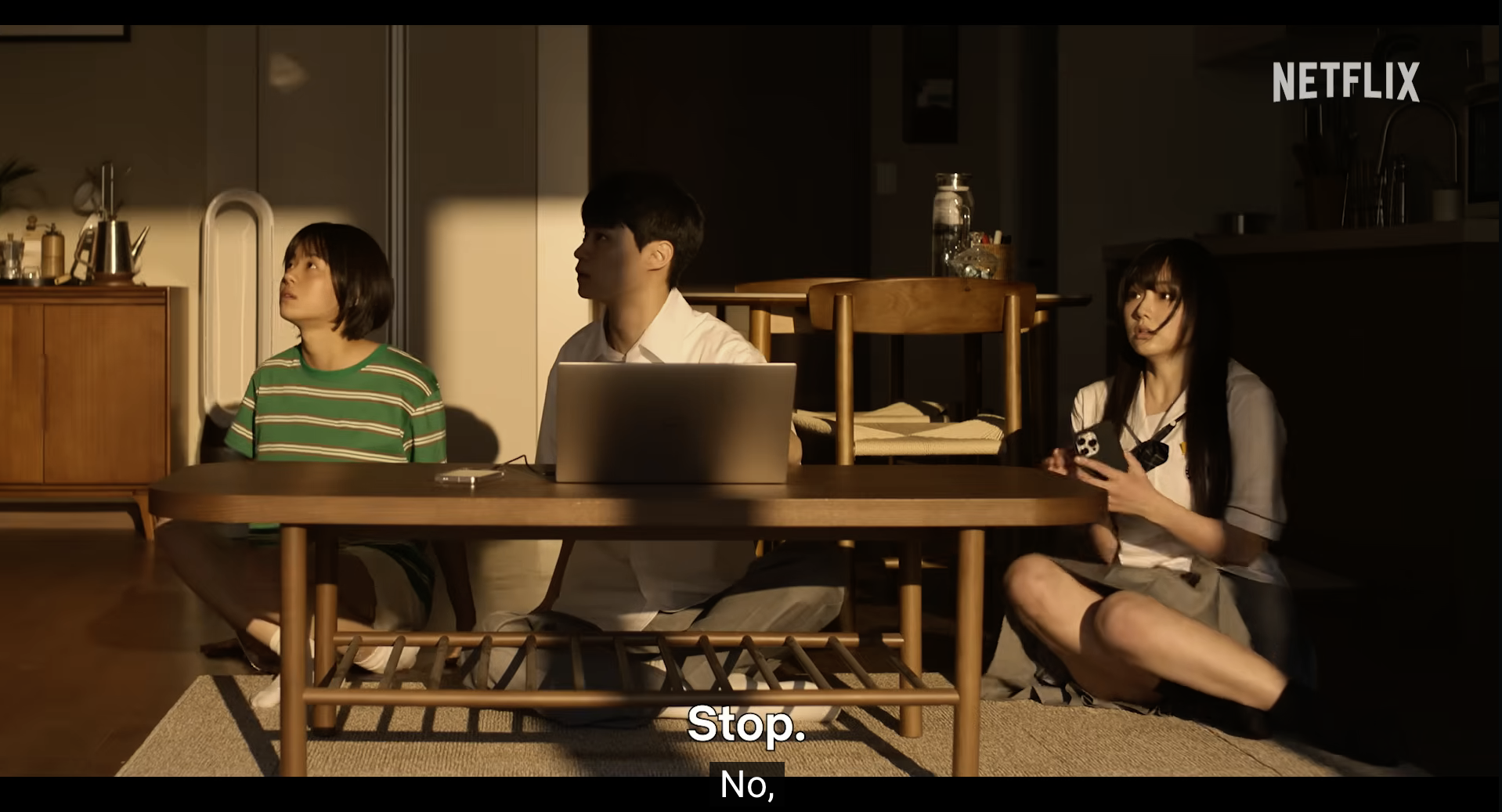
If you’re looking for a bingeable horror series that feels fast, addictive, and just chaotic enough to keep you clicking “next episode,” check out Netflix Korea’s new hit If Wishes Could Kill.
The premise is simple in the best way possible: a group of high school students discovers a mysterious app called Girigo that grants any wish they want. Popularity, revenge, money, love — whatever they ask for becomes real.
There’s just one catch.
Anyone who makes a wish dies within 24 hours.
And the show really leans into the psychological mess that comes with that setup. Some characters become greedy. Some try to outsmart the app. Others convince themselves they can beat the curse. The tension comes from watching ordinary teenagers slowly unravel once they realize every desire has a cost.
What also helps is that the cast feels fresh. Instead of relying heavily on established stars, the series uses a younger lineup including Jeon So-young, Lee Hyo-je, and Kang Mi-na, which makes the characters feel more believable and unpredictable.
What makes the series work is how naturally it combines old-school urban legend storytelling with modern technology anxiety. At its core, the premise feels almost ancient: be careful what you wish for. It’s the kind of cautionary tale that exists across cultures and generations. But instead of a cursed object, haunted well, or mysterious spirit, the story updates that fear for the smartphone era through an app called Girigo.
The setup is brutally simple. A group of high school students discovers an app that grants any wish they desire — popularity, revenge, money, love, success. The catch is that anyone who makes a wish dies within 24 hours.


Old and New
That combination is probably why the show resonated with both younger viewers and older audiences. Younger viewers immediately understand the language of the series because it mirrors the psychology of modern app culture: instant gratification, algorithmic temptation, and the fantasy that technology can solve emotional emptiness with a single click. Older audiences, meanwhile, recognize the deeper structure beneath it — the classic moral horror story where desire itself becomes the monster.
The series understands that the real horror isn’t the app. It’s human behavior once consequences become negotiable. Every character reacts differently. Some become addicted to the power. Some rationalize their choices. Some try to game the system. Others spiral emotionally once they realize there may be no way to escape the cost.
Visually, the show moves fast without feeling shallow. Episodes are tightly paced, full of escalating paranoia and emotional collapse, which makes it dangerously easy to keep hitting “next episode.” The younger cast — including Jeon So-young, Lee Hyo-je, and Kang Mi-na — also helps ground the series. Instead of feeling overly polished or celebrity-driven, the characters feel unstable in a believable way, which matters for a story built around impulsive decisions and emotional vulnerability.
The Director
Another reason the series stands out is its director, Kim Yong-wan, who has built a reputation for blending psychological tension with emotionally heavy storytelling. He previously directed projects like The Cursed and If You Wish Upon Me, both of which explored how desperation, trauma, and human desire can push people toward morally dangerous territory. You can feel traces of those themes here too, except this time filtered through teenage social pressure and digital culture.
The audience response has been massive. The series climbed to Netflix’s global No. 1 non-English TV spot with 7.5 million views in its second week, proving once again how Korean genre storytelling continues to travel internationally.
What’s especially interesting is how Korean entertainment keeps expanding the narrative possibilities available to Western audiences. Korean creators are often willing to combine genres, emotional tones, and social commentary in ways Hollywood traditionally separates. Horror becomes social critique. Teen drama becomes existential tragedy. Technology becomes folklore.
That creative flexibility is part of why Korean content continues to feel fresh globally. Shows like If Wishes Could Kill don’t simply imitate Western horror trends. They remix familiar fears through distinctly Korean cultural sensibilities — collective pressure, academic anxiety, social hierarchy, digital obsession, and emotional extremity — then package them into stories that still feel universally human.
