

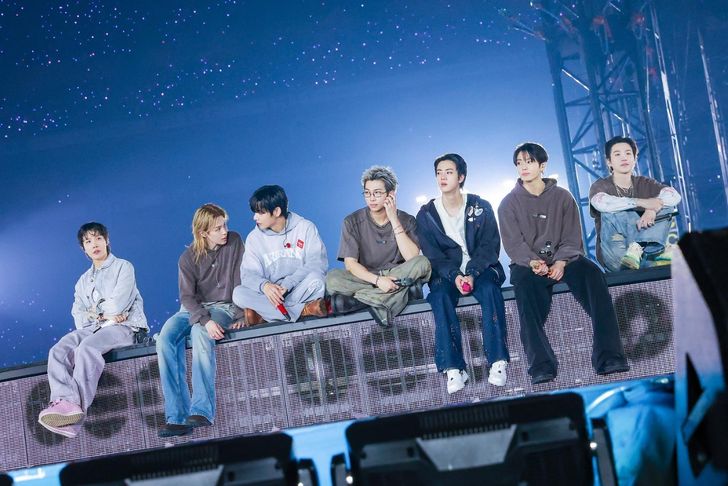
Once again, BTS has managed to break the internet without even trying. ARMYs are celebrating, haters are speedrunning the five stages of grief, and sections of the media are once again bouncing between ragebait headlines and shamelessly clinging to the traffic generated by seven men who are far too busy preparing for stadiums, music, and the World Cup to care about any of it.
For the first time in World Cup history, FIFA is officially introducing a halftime show to the World Cup Final, bringing together three acts that each represent different eras and regions of global pop culture: BTS, Shakira, and Madonna.
This is much bigger than a celebrity performance announcement. It signals a major shift in how FIFA sees the future of sports, entertainment, and global audiences.
Here are 10 things that make this historic.
1. FIFA HAS NEVER DONE THIS BEFORE
Unlike the Super Bowl, the World Cup Final never needed a halftime concert to hold attention.
Football itself was always the product.
The World Cup Final already commanded massive global audiences without additional spectacle.
However, FIFA President Gianni Infantino recognizes the missed opportunities. Wanting to to attract new, younger fans (Gen Z/Alpha, social media users), he saw the model used by the World Cup and ralized that with FIFA being bigger, they can create new sponsorship opportunities, extra broadcast value, and social buzz beyond the match itself.
More importantly, the entertainment factor will provide their project with Global Citizen more funding. They are raising funds (aiming for $100 million) for the FIFA Global Citizen Education Fund. The goal is improving access to quality education and sport for children worldwide.
2. THIS COULD BECOME THE BIGGEST MUSIC PERFORMANCE PLATFORM IN THE WORLD
The Super Bowl halftime show became one of the most coveted performance slots in entertainment because it combines
- massive live audiences
- viral social media circulation
- streaming boosts
- cultural prestige
But globally, the World Cup Final audience is significantly larger.
The 2022 FIFA World Cup Final (Argentina vs France) reached an estimated 1.5 billion viewers worldwide and around 5 billion people engaged with the tournament overall across platforms and broadcasts.
The 2018 FIFA World Cup Final between France and Croatia reached an estimated 1.12 billion viewers
For context, the 2024 Summer Olympics opening ceremony in Paris drew about 28.6 million viewers across NBC and Peacock in the US and 23.2–24.4 million viewers in France.
It reached close to 5 billion people worldwide across the duration of the Games, as per IOC.
Super Bowl LIX in February 2025 (Kansas City Chiefs vs Philadelphia Eagles) — drew approximately 127.7 million average viewers in the United States across Fox, streaming platforms, and Spanish-language broadcasts.
3. BTS MAKES PERFECT SENSE FOR FIFA’S GLOBAL STRATEGY
BTS is one of the few acts on earth capable of mobilizing truly global audiences simultaneously across:
- Asia
- North America
- Latin America
- Europe
- the Middle East
Many Western acts don’t exercise the same pull in Asian countries.
BTS, on the other hand, is one of the few that has proven their global influence across all measures. They have topped all major charts across different regions, from BILLBOARD in the US, to Official Chart in the UK, to Oricon in Japan, to MENA in the Middle East.
They have also sold out all their shows they’ve made available with a still overwhelming demand for an extension.
They have launched and grown brands from a local status to a globally demanded products. Even brands they never endorsed but were seen on or being used by them benefit from their brand power.
FIFA is clearly choosing artists capable of activating worldwide engagement, not just domestic ratings.
4. JUNGKOOK ALREADY HAS FIFA HISTORY
Jungkook was already part of FIFA history in 2022 when he became the first Asian act ever to perform at a FIFA World Cup opening ceremony. He joins Shakira in making history as the only artists to perform at more than one FIFA World Cup ceremony.
He co-wrote the anthem, Dreamers and co-choreographed the routine and helped in creative direction, all in a matter of two days. He performed alongside Fahad Al Kubaisi during the Qatar opening ceremony.
Dreamers made history as the first World Cup song to debut at #1 on Billboard Digital Song Sales. It broke records as the fastest #FIFA soundtrack to hit #1 on US iTunes (2 hours 11 minutes) and topped iTunes in 102 countries in 13 hours.
Jungkook was handpicked to perform. That performance became one of the defining pop culture moments of the 2022 World Cup. It also informally kicked off the promotion of his solo career.
5. SHAKIRA IS BASICALLY WORLD CUP ROYALTY
At this point, Shakira and the World Cup are almost inseparable culturally.
Songs like Waka Waka (This Time for Africa) and La La La (Brazil 2014) became deeply tied to the World Cup identity itself.
“Waka Waka” in particular transcended sports and became one of the defining global songs of the 2010s.
Shakira brings familiarity and nostalgia to the lineup in a way very few artists can.
6. THE LOGISTICS FOR BTS ARE GOING TO BE INSANE
One of the wildest parts of this entire story is the timing.
BTS is expected to perform concerts in Paris shortly before the World Cup Final. July 17 and 18 to be exact. If the concert ends at 10:00 PM in Paris on July 18, that would be 4:00 PM in New York on July 18.
If kickoff is 6pm, as it was in Qatar, they will have just a little over 24 hours to:
- leave Europe
- arrive in New York/New Jersey
- rehearse
- coordinate production
- and perform live at MetLife Stadium
That almost certainly means private jet travel and extremely tight production coordination.
And halftime performances are uniquely difficult because they happen inside live sports infrastructure. Stage setups, sound checks, camera blocking, and removal all have to happen within strict time limitations.
That means BTS and the production crew will be rehearsin in Munich and Paris.
It’s closer to a military-level live broadcast operation.
7. THE COMMERCIAL POTENTIAL OF THE EVENT
For the most recent Super Bowl broadcasts, a 30-second commercial spot generally cost around $7 million to $8 million USD. That is with 127.7 million average viewers in the United States across Fox, streaming platforms, and Spanish-language broadcasts.
The halftime portion itself is among the most expensive advertising windows because viewership spikes during the halftime show. That’s one reason the halftime show became such a major business asset for the NFL. It also became a coveted spot because of the concentration of viewership.
FIFA World cup has an average viewership of over a billion and it is watched globally. BTS commands a very different audience and is expected to sell over 500 million tickets in their current tour. The combined viewership could effectively launch FIFA to a stature no other event, sporting or otherwise, has ever reached before.
The commercial potential could break global records and will potentially become the most expensive commercial spots in the world.
8. GLOBAL CITIZEN’S INVOLVEMENT CHANGES THE TONE OF THE EVENT
The halftime show is tied to initiatives involving Global Citizen and FIFA’s education-focused fundraising efforts. This suggests FIFA wants the halftime show to feel larger than commercial entertainment alone.
Global Citizen specializes in turning large-scale entertainment events into advocacy and fundraising platforms through:
- livestream campaigns
- donation integrations
- interactive fan participation
- global awareness initiatives
It isn’t far-fetched for the organizers to add additional viewing and streaming options and support the event with extended ways people can engage. This will increase the commercial value of the halftime show and prime it for future events.
So this is shaping up less like a traditional concert and more like a worldwide entertainment-and-advocacy event.
9. FIFA COULD ADOPT THE “BTS MODEL”
One reason BTS also makes sense for a project like FIFA’s first-ever World Cup Final halftime show is that the group has spent years operating beyond the traditional idea of music promotion. BTS doesn’t simply release albums and perform concerts anymore. They build layered experiences around their music, narratives, and fandom culture.
Over the years, BTS and HYBE have experimented with almost every kind of audience engagement model imaginable:
- offline events connected to digital experiences
- concerts extended through livestreaming ecosystems
- gaming collaborations tied to fictional storylines
- online and offline scavenger hunts
- interactive fan events
- physical and digital collectibles
- AR and city-scale activations
- documentary storytelling that becomes part of the artistic narrative itself
And what makes this important is that fans didn’t just consume those experiences passively. They expanded them themselves.
ARMYs translated content, created theories, built online communities, turned songs into social trends, connected narratives across albums and videos, and effectively helped extend
Fans participate in the world BTS creates.
One reason football fans historically resisted overt commercialization is because clubs and national teams are deeply tied to local identity, family history, regional pride
Fans often tolerate sponsorships only when they do not feel exploitative or emotionally disconnected from the sport itself. This is another area where BTS’s model becomes interesting. BTS partnerships often work because fans feel incorporated into the experience rather than simply marketed to.
And if FIFA successfully expands how football is experienced digitally and socially, the World Cup could evolve into something much larger than a tournament people simply watch every four years.
They can develop it into a year-round engagementIt which includes behind the scenes content, personality driven narratives, documentaries, live streams, and draft season spectacle.
10. THIS IS PROBABLY THE BEGINNING OF A NEW ERA FOR GLOBAL SPORTS
The reaction to the halftime show announcement has already been divided. Some football fans love the idea. Others argue FIFA is “Americanizing” football culture and turning the World Cup into an entertainment spectacle.
But regardless of opinion, this feels like part of a much larger shift happening globally:
- sports becoming media events
- entertainment merging with athletics
- livestream culture changing audience expectations
- global events becoming increasingly multi-platform experiences
FIFA probably knows younger audiences consume culture differently now. People don’t just watch games anymore. They watch moments, clips, performances, and they participate through social media while the event is happening.
The halftime show fits perfectly into that environment.
