

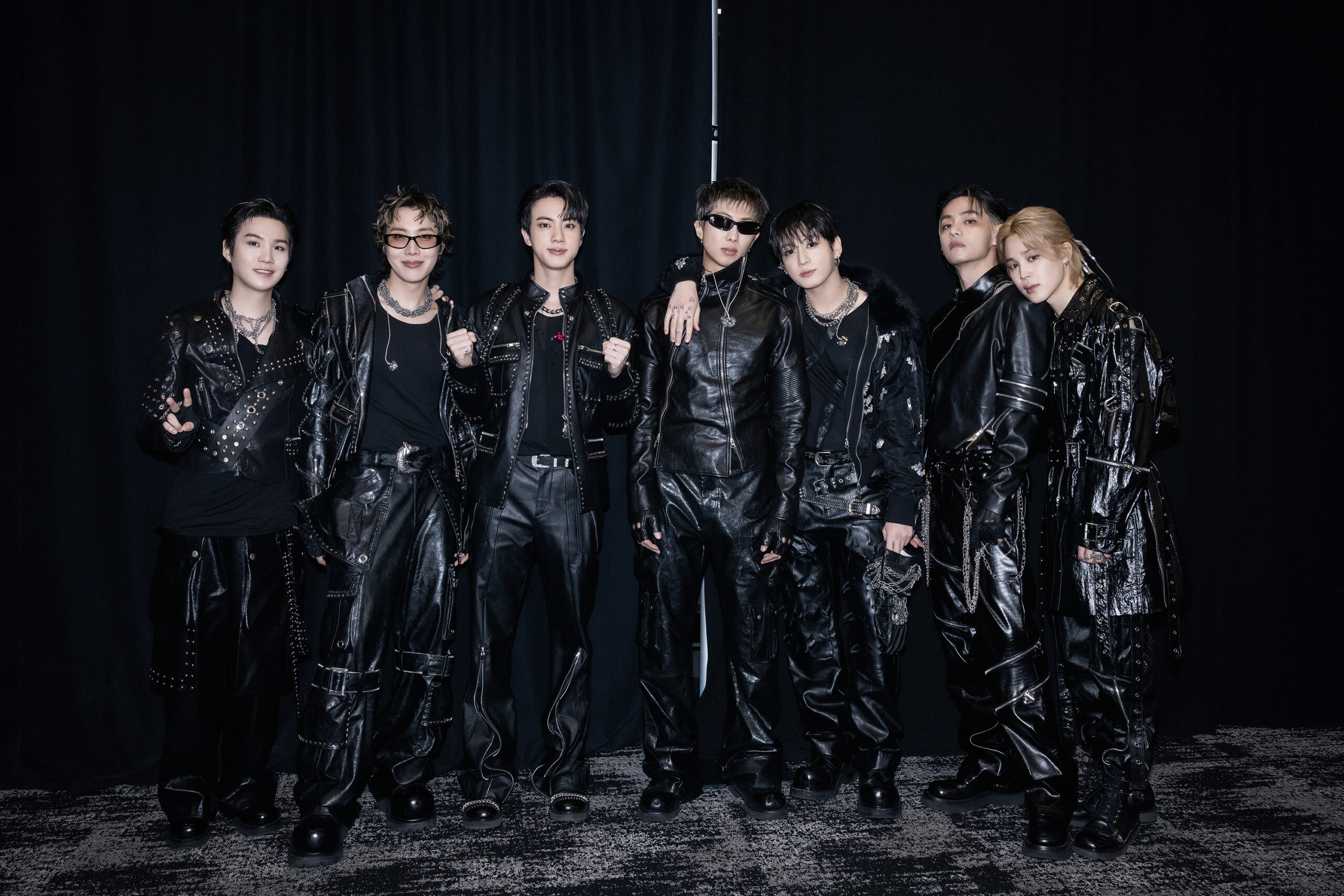
BTS has spent more than a decade breaking records in music. What is becoming increasingly clear is that the group’s influence extends far beyond streaming charts, album sales, or stadium attendance.
As the first North American leg of the ARIRANG World Tour came to a close, BTS announced that approximately 840,000 fans attended the tour’s North American dates across Tampa, El Paso, Mexico City, Stanford, and Las Vegas. Every show sold out.
The figure reflects attendance reported by BigHit Music and includes additional production-release tickets that become available after stage configurations are finalized. Industry tracking services such as Pollstar often report lower attendance totals because they generally count the original ticket inventory and may not include every production-release allocation that is later sold. As a result, both figures can be accurate while reflecting different methods of counting tickets.
Either way, the scale remains extraordinary.
The North American run consisted of 15 stadium concerts across five cities. Demand was so strong that BTS added additional shows in Tampa, Stanford, and Las Vegas, all of which sold out immediately.
For many artists, a sold-out stadium tour is the culmination of a career. For BTS, it increasingly looks like the foundation of something much larger.
The Tour That Dominated Billboard
The ARIRANG World Tour also claimed the No. 1 position on Billboard’s monthly Top Tours chart.
During April alone, BTS generated approximately $76.2 million in revenue from just eight concerts held across Goyang, Tokyo, and Tampa. Those shows sold a combined 417,000 tickets and produced roughly ₩114.5 billion in revenue.
Tampa emerged as one of the most remarkable stops of the tour. The three-night engagement became the highest-grossing and most-attended concert engagement at a single venue during the month of April.
According to Billboard’s reporting, the average gross from the Tampa and El Paso shows reached approximately $12.1 million per concert, representing a roughly 64 percent increase over BTS’s previous stadium tours, including Love Yourself and Permission to Dance.


The numbers are impressive on their own. Yet they tell only part of the story.
What has distinguished the ARIRANG Tour is the degree to which attendance extends beyond the ticketed audience.
Throughout the tour, fans traveled across state and national borders to gather around stadiums even when they could not secure tickets. In Mexico City, thousands filled surrounding areas outside the venue, turning the neighborhood into an unofficial festival. Across multiple cities, proximity itself became a form of participation.
That behavior points to something economists are increasingly beginning to study: BTS is no longer simply generating concert revenue. The group is creating a long-term cultural ecosystem that influences tourism, consumer spending, and international interest in South Korea.
A Different Kind of Economic Engine
A new report from NH Investment & Securities suggests that the full economic impact of BTS may not even arrive for another decade or more.
According to the report, BTS and their global fanbase, ARMY, could eventually contribute as much as 0.35 percentage points to South Korea’s GDP by 2040.
The reasoning behind the projection is surprisingly straightforward.
Approximately 84 percent of BTS fans worldwide are currently in their teens and twenties. Many have not yet entered their highest earning years. As those fans move into their thirties and forties, researchers expect their purchasing power to expand significantly.
The report describes fandom as an economic journey that evolves over time.
It often begins with music, streaming subscriptions, albums, and merchandise. From there, fans become interested in broader aspects of Korean culture, purchasing Korean cosmetics, food products, fashion, and entertainment. Eventually, many decide to visit South Korea itself.
Researchers estimate that this process could generate an additional 4.3 million visitors to South Korea annually, producing between $3.3 billion and $13.4 billion in tourism revenue each year.
In effect, BTS may be helping create a pipeline that transforms cultural interest into long-term tourism demand.
The Pokémon Effect
One of the most interesting observations in the report comes from a comparison with Japan.
For decades, Japanese cultural exports such as Pokémon, One Piece, and Slam Dunk built passionate fan communities across Asia. Many young people who grew up consuming those stories eventually became tourists once they reached adulthood and had the financial ability to travel.
Researchers believe BTS could produce a similar effect, but on a global scale.
Millions of fans who discovered BTS as teenagers may one day travel to South Korea not simply because they enjoy the music, but because the group served as their introduction to Korean culture itself.
That possibility helps explain why governments, tourism agencies, and economists increasingly view cultural exports as strategic national assets rather than entertainment products.
The value isn’t limited to today’s ticket sales.
It can continue generating economic activity for decades.
More Than a Concert Tour
After completing their North American dates, BTS briefly returned to South Korea before resuming the tour in Busan.
The timing is particularly meaningful. June 13 marks the anniversary of the group’s debut, making the Busan concerts the first BTS anniversary celebration since all seven members reunited following military service.
For fans, it represents a milestone.
For the music industry, it represents something else entirely.
The ARIRANG World Tour is demonstrating that BTS remains one of the most powerful live acts in the world. At the same time, new economic research suggests the group’s influence may be expanding far beyond the music business.
The immediate story is 840,000 people filling stadiums and singing “Arirang” across North America.
The longer story may be millions of people carrying that connection into adulthood, turning fandom into travel, commerce, and cultural exchange for years to come.
If the projections prove correct, the biggest economic contribution BTS ever makes to South Korea may not be the one happening today.
It may be the one that unfolds over the next twenty years.
