

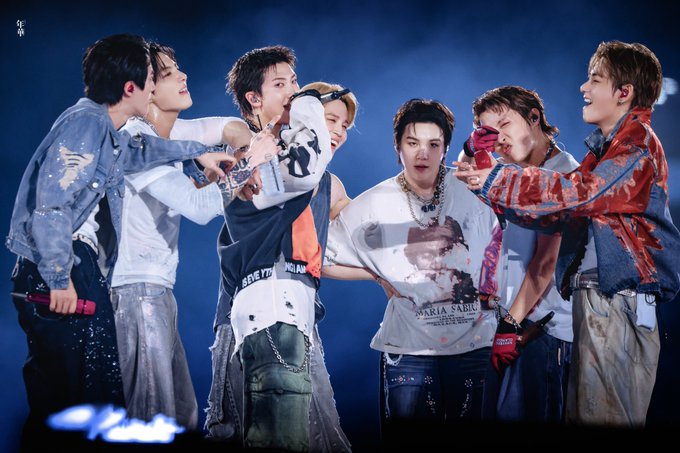
When BTS revealed that they would publish a book, BTS Lyrics Inside, exploring their lyrics and songwriting process, many fans understandably saw it as a gift.
But the project may end up becoming something bigger, maybe even critical. At a time when music is increasingly consumed through 15-second clips, algorithm-driven discovery, and endless scrolling, BTS is doing something unusual:
They are asking people to slow down.
They are asking people to consume art that asks you to think and challenges you. They are offering art that teaches you to appreciate complexity, layers, and multiple interpretations. They are creating art that reveals something different the second, third, or even tenth time you encounter it.
They are trying to help people to rediscover the beauty of poetry. They are still creating art that reminds you that confusion isn’t always something to avoid, but sometimes the beginning of understanding. Art that allows room for questions, for uncertainty, for being wrong, and for the conversations that emerge from trying to make sense of it all.
And in today’s culture, that is becoming surprisingly rare and mother friggin’ ambitious.
A Terrifying Question
In their latest BTS FESTA dinner, they asked a terrifying question, “Is there still a place for artists like us?”
They aren’t just talking about songwriting but also world building. They are asking if there is still a place for artists who write songs that are meant to be explored, not simply consumed.
Artists who craft poetry, translate human complexity into ink, and use rhymes and melodies to help us understand emotions, behaviors, and personal evolution.
For a group that has built one of the most dedicated fanbases through lyrical depth, narrative richness, and aesthetic beauty, the answer from ARMY has always been a resounding yes. But the bigger battle lies ahead, as music culture shifts rapidly toward hooks, simplicity, and background accompaniment for everyday life. BTS’s forthcoming book—BTS Lyrics Inside, where the members explain their tracks and creative processes—arrives at a pivotal moment. It’s more than a fan souvenir; it’s a deliberate act of preservation and invitation into layered artistry.
The Changing Culture
That concern isn’t unique to BTS. Years earlier, Epik High’s Tablo spoke about receiving feedback from industry professionals that essentially read like a checklist for modern music: keep the song under three minutes, place the hook as early as possible, simplify the lyrics, avoid ideas that require too much interpretation, and create something that can easily serve as the soundtrack to a lifestyle video, dance challenge, or other user-generated content.
Whether intentional or not, many of those trends have become increasingly visible across the industry. Songs have gotten shorter. Hooks are in the beginning of a song. Choruses are more repetitive. Lyrics are often designed to be instantly understood rather than gradually unpacked.
None of this means the music is inherently worse. Music evolves alongside culture, technology, and the ways people consume it.
But it does represent a fundamental shift in how songs are experienced.
Music as a Wallpaper
For much of modern history, listening to music was an event.
You bought an album.
You sat with it.
You studied the lyrics.
You replayed songs until you understood them.
Today, music often serves a different function.
It has become the accompaniment—the background to another piece of content, another activity, another scroll. The challenge for artists like BTS is figuring out how to continue creating expansive stories, layered themes, and artistic worlds in a culture that increasingly rewards immediacy.
The concern isn’t moral. It’s structural.
Researchers have increasingly found links between heavy short-form video consumption and reduced sustained attention, weaker attentional control, and increased inattentive behavior.
The issue isn’t that short-form content is evil.
A funny cat video is fine.
A 30-sec dance challenge is fine.
A sneezing panda is fine.
The problem comes when an entire media ecosystem becomes optimized around delivering tiny bursts of stimulation without requiring reflection.
BTS is not criticizing the audience. They are wrestling with the same environment as everyone else. They are neither questioning nor opposting the dominance of short-form content. They are questioning depth can survive alongside it.
A study by the National Library of Medicine links heavy short-form video consumption (TikTok, Reels, etc.) to reduced sustained attention, increased procrastination, and difficulties with attentional control among younger users. For instance, one analysis of over 1,000 undergraduates found short-form video addiction correlated with academic procrastination via weakened attentional control.
Other research highlights Gen Z’s famously short attention spans (often cited around 8 seconds in older data, with broader media consumption trends showing quick drop-off even in short content) and notes correlations between frequent short-form exposure and challenges in maintaining focus or processing deeper material.
BTS And ARMY: A Lifelong Storytelling and Discovery
As a fan since 2013, I’ve witnessed how BTS built something rare: an interconnected web of art spanning albums, music videos, short films, books, and photos. Their narratives unfold across eras—layered, multi-media stories with cliffhangers resolved in lyrics, visuals, or later works. Fans don’t just consume; we participate, decoding symbols, building characters alongside them, and layering the members’ real journeys onto fictional ones.
Songs connected to music videos. Music videos connected to short films. Short films connected to books. Books connected to fictional characters.
Fictional characters connected back to the members’ own experiences.
The BTS Universe trained fans to participate, interpret, debate, read, listen, question, discuss, and revisit.
This creates a “lifelong journey” bond, where music is the core but not the sole medium. It demands time, reflection, and repeated engagement—qualities at odds with 90-second TikToks lacking depth.
This approach echoes broader artistic traditions where complexity fosters deeper emotional resonance and personal growth. BTS’s work has consistently tackled identity, mental health, resilience, and human connection in ways that reward close listening and rewatching. In an era where much of the Hot 100 (and K-pop output) recycles familiar themes with limited variation—“500 ways of calling an apple red” — their expansiveness stands out, even if they acknowledge other substantive artists exist.
Creating Space for Substance
As BTS enters the Arirang era and beyond—a new chapter with potential stylistic shifts—the book offers a bridge and anchor. By having RM, Jin, SUGA, j-hope, Jimin, V, and Jung Kook directly explain tracks like “Boy With Luv” or “Spring Day,” alongside their creative processes, it demystifies the poetry and intent for newer fans while deepening appreciation for veterans.
It won’t single-handedly “save” a generation from superficial trends—nor should that burden fall solely on them. But it will carve out and legitimize space for complexity. Books invite the slow, thoughtful engagement that short-form often bypasses. They encourage conversation, misinterpretation, discovery, and the beauty of being challenged or wrong—elements that foster growth, empathy, and appreciation for layered art.
BTS has already proven their power to reshape pop culture. From pioneering global tours and economic impact to normalizing mental health discourse and cross-cultural storytelling, they’ve shifted industry norms. This book continues that legacy by modeling transparency in artistry and inviting fans (and potentially other creators) to value depth.
Bridging Worlds: Hooks That Lead to Epics
It’s not impossible to connect short-form addiction with deeper work. BTS could (and likely will) slice their epic narratives into digestible, entertaining hooks—quick choreography teases, symbolic snippets, or process glimpses—that lure audiences toward the full experience: the 7-minute short film, the interconnected albums, the 200-page conceptual universe.
Short-form becomes the entry point, not the destination.
This hybrid approach respects modern habits while preserving what makes their art enduring. Research on music and short-form shows potential for this: behind-the-scenes content and process shares can build genuine connection and appreciation, turning passive scrollers into engaged participants.
There are signs that audiences still want substance.
Recent industry analysis has found that song lengths are actually increasing again after years of shrinking runtimes, with several successful hits embracing longer structures and more expansive storytelling.
At the same time, music industry researchers have warned that social-media discovery often fails to convert listeners into long-term fans, creating concerns about the decline of deep artist engagement.
The appetite for depth never disappeared. The challenge is helping people find it.
A Reason for Optimism
Witnessing BTS question their place was scary—especially for longtime fans who fell in love with their expansive messaging.
The fear isn’t that BTS will stop making good music. I think you can give them the sound of a barking dog and they’ll still produce something good. The fear is that artists may eventually decide depth is no longer worth the effort.
That creating a seven-minute short film connected to a novel connected to multiple albums simply isn’t viable in an ecosystem optimized for instant gratification.
That would be a loss not just for BTS. It would be a loss for culture.
But their response—releasing this book amid FESTA celebrations—feels like a quiet defiance and an act of hope. It signals they’re not giving up on substance; they’re doubling down and sharing the map.
In a world flooded with temporary highs, BTS Lyrics Inside offers something lasting: insight into how poetry meets melody, how personal complexity becomes universal resonance. It won’t obliterate superficiality, but it will nurture a space where depth is welcomed, celebrated, and passed on. If anyone can ignite that spark while navigating both worlds, it’s BTS. I’m excited to dive in—and I believe many others will follow.
