

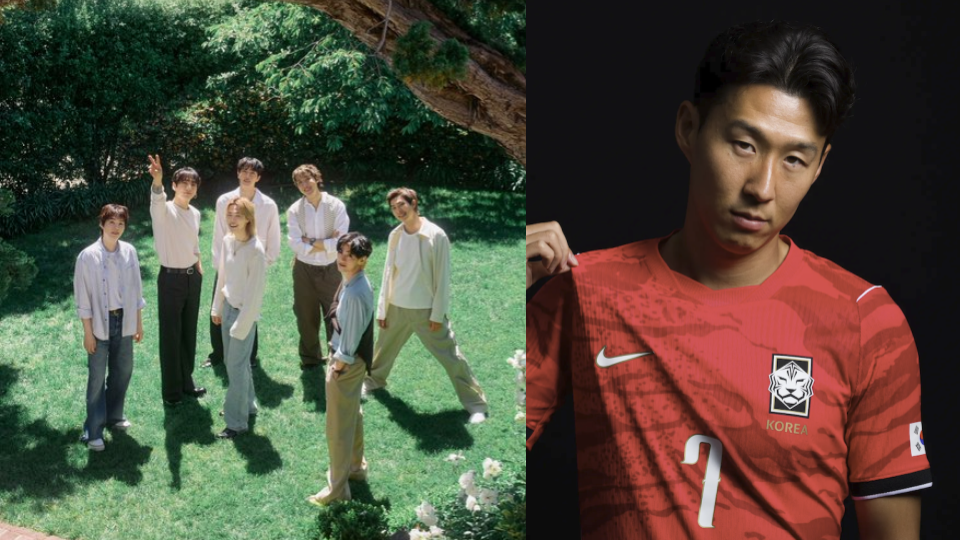
A voice recording of two Korean reporters mocking Son Heung-min training style and military exemption leaked. The team decided to pass on all media interviews.
Epik High’s Tablo was branded a national liar for degreet that his school, professors, classmates and class records proved to be true.
BTS quietly stepped away from traditional Korean media circuits for their Arirang era promotions, favoring global platforms instead.
These three cases—spanning sports, film, and music—highlight a tension at the heart of South Korea’s global excellence: a culture built on extraordinary discipline and high standards can sometimes tip into relentless scrutiny that targets its own icons.
South Korea transformed itself in a few generations through the Miracle on the Han River. The country produced Samsung, Hyundai, K-pop dominating the world, Oscar-winning films, and Premier League stars. RM himself talked about how the intense and fast rise of Korea involved continuous sacrifices, intense work ethic, and impossible standards.
The question is: What happens when those same strengths become excessive? When a media ecosystem increasingly dependent on outrage, controversy, and engagement turns national pride into a target?
Case 1: Son Heung-Min and the World Cup Hot Mic
During preparations for the 2026 FIFA World Cup, journalists covering the national team were caught on a hot mic mocking captain Son Heung-min. As he led intense drills, one reporter quipped about him running “like a military commander.” Another mocked his military service, despite Son legally earning an exemption through the Asian Games while completing basic training and public service obligations.
This wasn’t a critique of on-field performance. Son has delivered at the highest level: Premier League Golden Boot winner, Tottenham captain, and a global ambassador who’s elevated Korean football’s profile. The backlash was swift—the team halted media interactions, interviews were canceled, the federation issued reprimands, and a media chief resigned.
Son is not merely a football player.
He is arguably the most successful footballer in South Korean history.
A Premier League Golden Boot winner.
Captain of Tottenham Hotspur.
One of the most recognizable Asian athletes in the world.
Yet despite years of representing South Korea on the global stage, criticism persisted.
When he moved from Tottenham to LAFC in 2025, some media outlets framed the decision as him “wasting his twilight years” rather than celebrating a career that had already exceeded anything previously achieved by a Korean footballer.
For many fans, the World Cup incident revealed something deeper.
The incident highlighted a deeper pattern: even when an athlete has given everything, the conversation can shift to nitpicking personal sacrifices rather than celebrating achievements. In a culture that prizes national representation, the demand for perfection leaves little room for grace.
If Son Heung-min is not enough, who is?
Case 2: The Man Who Had To Prove He Went To Stanford
Long before social media outrage became a daily occurrence, South Korea witnessed one of the most bizarre public controversies in its modern entertainment history.
Tablo, leader of Epik High, graduated from Stanford University with both a bachelor’s and master’s degree in English Literature.
Instead of being celebrated, he became the target of a conspiracy theory.
A group known as “TaJinYo” — short for “We Demand the Truth from Tablo” — became convinced that his academic credentials were fabricated.
What made the controversy extraordinary was not the accusation itself.
It was what happened after.
- Stanford University confirmed his graduation.
- School officials confirmed his records.
- Former professors confirmed his attendance.
- Classmates confirmed he studied there.
- Official documents confirmed his degrees.
- Even police investigations ultimately determined that the allegations were false.
Yet for years, the conspiracy persisted.
At one point, Tablo was forced to publicly defend facts that had already been independently verified multiple times.
At the height of the TaJinYo conspiracy:
- Hundreds of thousands of people joined anti-Tablo communities.
- His family became targets.
- His wife, actress Kang Hye-jung, was targeted.
- His father reportedly suffered severe stress during the controversy.
- Tablo has spoken about receiving threats and living under enormous pressure.
The issue became so large that it moved beyond entertainment news and into national news.
The group didn’t officially disband, but there was a clear interruption. Around 2010-2011:
- Tablo largely disappeared from public activities.
- Epik High’s momentum was severely disrupted.
- Their future became uncertain.
One of the biggest turning points came when Tablo signed with YG Entertainment.
The case became a landmark example of how rumors, online communities, and media attention can create an alternative reality that survives even after overwhelming evidence emerges.
The question was no longer whether Tablo attended Stanford. The question became why so many people refused to believe it.
Case 3: BTS and Strategic Silence
Since the Arirang comeback, BTS has largely stepped back from traditional Korean media promotional circuits. No major interviews with domestic outlets, limited appearances on conventional TV shows. Instead, promotions flowed through YouTube creators, their own channels, Rolling Stone, NME, Spotify, Netflix, and other global platforms.
BTS has never explained why they have not done any local interviews with traditional TV guestings or Korean journalists since coming back.
What can’t be debated is how the media has berated them for years about issues that never existed. One of the most glaring examples is their military service. Talks about BTS seeking military exemption after allegedly executives from different entertainment agencies met with government officials to discuss exemptions. Big Hit apparently didn’t join the discussion and yet it was BTS who was accused of seeking exemption, this despite them repeatedly stating they will serve. They even put it on their songs.
JTBC aired an unverified footage of a man speeding on his scooter and claimed it was Suga. And yet, when Taeil, a former idol, was convicted of sexual assault, the media barely covered it. Yang Hyun Suk was convicted of harassing a trainee and the media barely covered it.
It is obviously not about the truth.
BTS achievements are also constantly invalidated. Korea Herald, for example, credited their awards to Kpop, instead of BTS.
The Real Problem May Not Be the Media Alone
But why is there such an outrage with such small things? What’s the cultural influence that makes South Korea overly critical?
This is actually the most important question in this whole thing. Media doesn’t operate in a vacuum. What we have to understand is why does sensationalism work so well in South Korea?
The answer is probably a combination of history, economics, education, collectivism, and digital culture.
Not because Koreans are uniquely critical. Every country has outrage. But South Korea has some unique conditions that can intensify it.
1. The Miracle on the Han River Created a Culture of Relentless Evaluation
South Korea went from one of the poorest countries in the world to one of the richest in less than two generations. That required:
- intense competition
- long working hours
- educational pressure
- social discipline
The culture became highly focused on excelling and then excelling more than everyone else. Those attitudes helped build modern Korea.
But they also create an environment where public figures are constantly evaluated. Everyone is assumed to be working. If you are getting more then you better earn it. Everyone, especially celebrities, examined. You have to continuously justify people’s admiration.
2. Confucian Influence and Public Responsibility
Confucian traditions do place strong emphasis on:
- duty
- hierarchy
- responsibility
- proper conduct
Public figures are often viewed not merely as individuals but as representatives. That’s why debates around:
- military service
- patriotism
- public behavior
become so intense.
3. The Country’s Success Creates Higher Standards
Ironically, success raises expectations.
If you’re a small country struggling to gain international recognition, every achievement feels extraordinary. Once you become a global powerhouse, the standard changes. Winning once is not enough, you need to win twice. After winning twice, you need to win three times.
A generation ago, merely playing in Europe would have been historic. Now people ask why he didn’t win more trophies?
Instead of celebrating the global success of BTS, discussions often shift toward other things they should do and other records they should establish and proving continuously that they are still relevant.
4. Hyper-Connected Digital Culture
South Korea is one of the most connected societies in the world. News, rumors, and reactions travel instantly. And because online communities are so active, outrage can become self-reinforcing. One trigger is all it takes to get thousands to react.
5. Collective Reputation Matters More
In many Western cultures, people tend to separate the individual from the group.
In Korea, the connection is often stronger. Even if your job is to kick the ball, people think you should embody all Korean values.
But there’s another side and this is important.
The same cultural traits that create these controversies also helped produce:
- Samsung
- Hyundai
- Oscar-winning cinema
- Olympic champions
- BTS
- Son Heung-min
We all know the work ethic of BTS and Son Heung-Min. Had they not been raised in the values of Korea, would they have the same drive that allowed them to rise above everyone else?
It’s one reason South Korea has achieved so much in such a short period of time.
The problem is not criticism itself. The problem arises when criticism becomes detached from proportion.
When:
- a Stanford graduate must repeatedly prove he graduated,
- a football legend is mocked during World Cup preparation,
- a global music group spends years defending military service they ultimately performed,
you just have to ask what’s the point.
That may be the real tension in modern South Korea: the same mindset that helped create excellence is still searching for a way to celebrate excellence without immediately questioning it.
There are more cases. Lee Sun-Kyun, the Parasite actor, took his own life after he was repeatedly investigated for drug use. All tests came out negative and yet the media amplified continuous accusations against him.
Kim Sae-Ron was relentlessly pursued by the media after her DUI. Sulli was criticised for provocative photos. First gen idol Park Joon-Hyung was castigated by the media for dating. An San, a 3-time gold medalist in the 2020 Olympic was scrutinized for having a short hair
Outrage drives engagement, which drives revenue. Media outlets respond to what performs. But the cycle involves the entire country—netizens who amplify rumors, reward sensational takes, and fuel the fire before facts settle.
Recent coverage around actor Kim Soo-hyun offers a clear example. Allegations exploded across platforms and media long before legal processes advanced. The pattern is familiar: rumor goes viral, media amplifies, more outrage follows, more coverage ensues. It’s a self-reinforcing ecosystem.
South Korea’s strengths—discipline, competitiveness, high standards—built its cultural and economic miracles. But when those qualities manifest as unforgiving scrutiny of public figures who already operate under immense pressure, accountability can blur into something more corrosive.
Lee Sun-kyun is gone. Son Heung-min’s team chose silence. BTS appears to have outgrown the traditional domestic media route. Three different paths. The shared thread? A society quick to demand perfection from its brightest stars.
The question isn’t whether criticism has a place—it absolutely does. The real one is: When does accountability cross into something else? And what kind of culture are we building when national pride becomes a weapon rather than a celebration?
South Korea’s miracle didn’t happen by lowering standards. Protecting its greatest assets might require raising them in the right direction—toward context, and humanity.
