

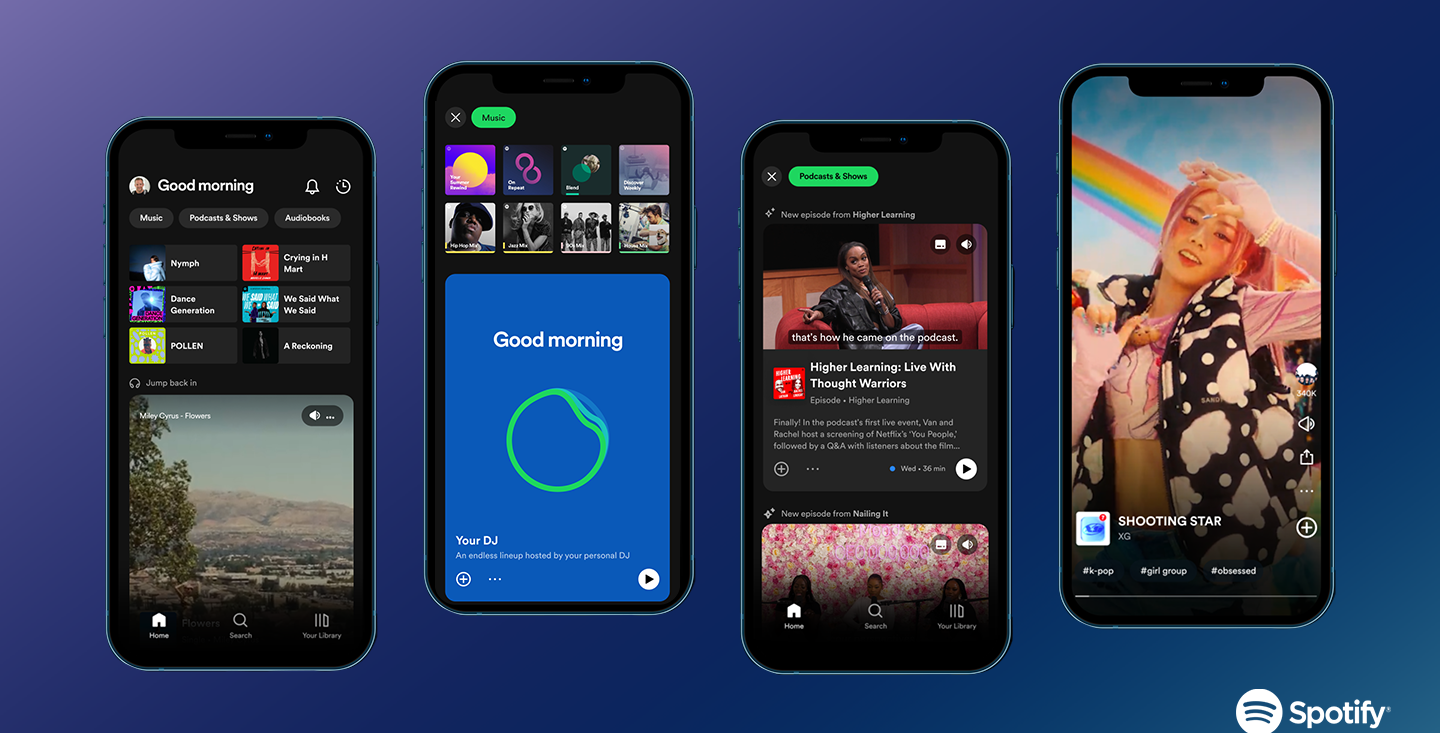
In a significant escalation of its push into video, Spotify began allowing select artists on June 17 to upload full-length music videos, live performances, studio sessions, and covers directly through the Spotify for Artists dashboard. The videos are royalty-bearing and potentially chart-eligible, marking a clear attempt to embed richer visual storytelling into the platform’s core music experience — and to chip away at YouTube’s longstanding dominance of music video streaming.
Until now, official videos reached Spotify primarily through labels and distributors. This beta rollout, initially available to “tens of thousands” of artists with gradual expansion planned throughout the year, gives creators more direct control while keeping distributor delivery as the main pathway. Spotify is also phasing out new uploads to its short-form Clips feature (existing Clips will remain, with the tab eventually becoming a broader Video tab).
The move arrives as music consumption has evolved far beyond sound alone. What began as an inseparable live union of rhythm, movement, and spectacle was later fragmented by recording technology into audio-first formats. The MTV era reintroduced visuals as essential promotion. Then YouTube and social platforms made video the primary discovery and engagement layer for entire generations — especially in visually driven genres.
Today, high-speed mobile internet, sophisticated compression, and algorithmic personalization have made high-quality video a seamless companion to audio streaming. Visuals now do more than decorate tracks: they supply narrative context, emotional texture, and instant branding that help songs cut through infinite choice and short attention spans. Strong visuals turn abstract feelings into concrete worlds through color, movement, symbolism, and performance, making tracks more memorable, shareable, and “sticky.” In an era of algorithmic discovery, a compelling video or performance clip can be the difference between a skipped song and a saved, playlist-added favorite.
This is especially true in Asian entertainment. K-pop’s global rise has always been as much about meticulously crafted music videos, synchronized choreography, cinematic concepts, and visual aesthetics as about the songs themselves. Fans don’t just stream — they analyze frames, learn dances, and immerse in the full artistic package. Spotify’s earlier K-Pop performance video series (featuring groups like TWS and ENHYPEN with choreography-focused clips for Premium users) already signaled recognition of this reality. The new direct-upload capability could make it easier for more Asian artists and labels to bring that same visual depth directly into fans’ everyday listening flows.
The Data Spotify Is Betting On
Spotify says its own data from the past year of full-length videos shows clear downstream benefits: after watching a video, listeners stream the featured song 64% more over the following three weeks on average. They become 1.4 times more likely to save, share, or add it to a playlist, and stream the rest of the artist’s catalog 57% more during the same period. “Super listeners” (an artist’s biggest monthly fans) increase their listening by 62% — the equivalent of more than an hour and 40 minutes of additional playtime. Artists earn from the video streams themselves plus the amplified audio consumption that follows.
Videos surface in a new personalized “Videos For You” playlist, editorial collections like Today’s Top Videos, Live Performances, and Video Covers, as well as on artist profiles, release pages, the Now Playing screen, and via push notifications. Spotify automatically generates short-form previews to aid discovery. Uploads must be in landscape 16:9 format; visualizers, lyric videos, multi-song concerts, and non-music videos are not currently supported.
YouTube Still Sets the Standard — But Spotify Is Playing a Different Game
YouTube remains the undisputed leader in music video consumption globally, with its massive free tier, deeply optimized recommendation engine, social features (comments, community), and seamless blend of official MVs, live performances, fan content, and lyric videos. YouTube Music and YouTube Premium together surpassed 125 million paid subscribers by early 2025 (up roughly 25 million in a year), with continued strong growth reported into 2026. Music videos consistently rank among the platform’s most-viewed content.
Spotify’s strategy is not to replicate YouTube’s open video ecosystem but to integrate video inside its music-first environment. The goal is to deepen engagement within an app where users already come to listen, discover playlists, and follow artists — rather than treating video as a separate destination. By proving that video consumption drives significantly more audio listening, Spotify hopes to make the combined experience habit-forming for its hundreds of millions of users.
Advantages and Friction Points for Building a “Watch on Spotify” Habit
Advantages working in Spotify’s favor:
- Seamless ecosystem stickiness: Fans can move from audio to video (and back) without leaving the app or switching platforms. Personalized video recommendations based on listening history feel native rather than bolted-on.
- Measurable artist and fan upside: The engagement lift data gives artists a concrete reason to upload. Royalties on video plus boosted catalog streams create a virtuous cycle.
- Premium positioning: For subscribers, video can feel like an elevated, ad-light layer on top of their existing music service.
- Artist accessibility: Direct uploads (even in beta) lower barriers for independent and mid-tier artists who previously relied on label/distributor pipelines. This could be particularly useful for Asian indie acts or smaller agencies wanting faster global reach.
- Future expansion potential: Spotify has held talks about carrying live festival concert video — a logical next step that could further blur lines between audio streaming and live visual experiences.
Hindrances and headwinds:
- Behavioral inertia is real: For many fans — especially those seeking high-production MVs, lyrics, or community discussion — YouTube is still the reflexive first stop. Decades of habit and a vastly larger video library are not erased overnight.
- Discovery and social gaps: YouTube’s algorithm and comment culture remain superior for pure video discovery and fan interaction around visuals. Spotify’s video discovery is still maturing.
- Current limitations: The beta is gradual, format-restricted (landscape only, specific content types), and video functionality is newer and narrower than YouTube’s mature offering. Much of Spotify’s video push has been Premium-focused, while YouTube’s free tier fuels massive casual viewing.
- Platform identity: Spotify’s core strength and user expectation is still audio excellence and playlist curation. Video risks feeling secondary until the integration and library feel as robust as the audio side.
In short, Spotify is not trying to win the “watch music videos” war on YouTube’s terms. It is trying to win the “deeper music experience” war by making video a natural enhancer of listening — and using data to show it works.
What This Means for Asian Entertainment Creators and Fans
For K-pop, J-pop, C-pop, and other visually rich Asian genres, this development is another tool in an increasingly competitive global landscape. Artists who already invest heavily in performance videos and conceptual visuals now have a direct path to place that content where many fans are already streaming audio daily. It could accelerate discovery among Spotify’s user base, boost overall engagement metrics, and create new royalty streams — all while giving fans a more complete artistic experience in one place.
It also reflects a broader industry truth: the most successful modern music acts treat sound and vision as intertwined creative disciplines rather than separate marketing afterthoughts. As platforms compete to own more of the fan journey, the winners will be those that make the full sensory experience feel effortless and rewarding.
Spotify’s latest move is a clear signal that the era of music as audio-only (or video-only) is ending. The future belongs to platforms that can deliver both — intelligently, personally, and in ways that demonstrably deepen the connection between artist and listener. For fans of Asian entertainment and culture, that future just got a little more immersive.
