

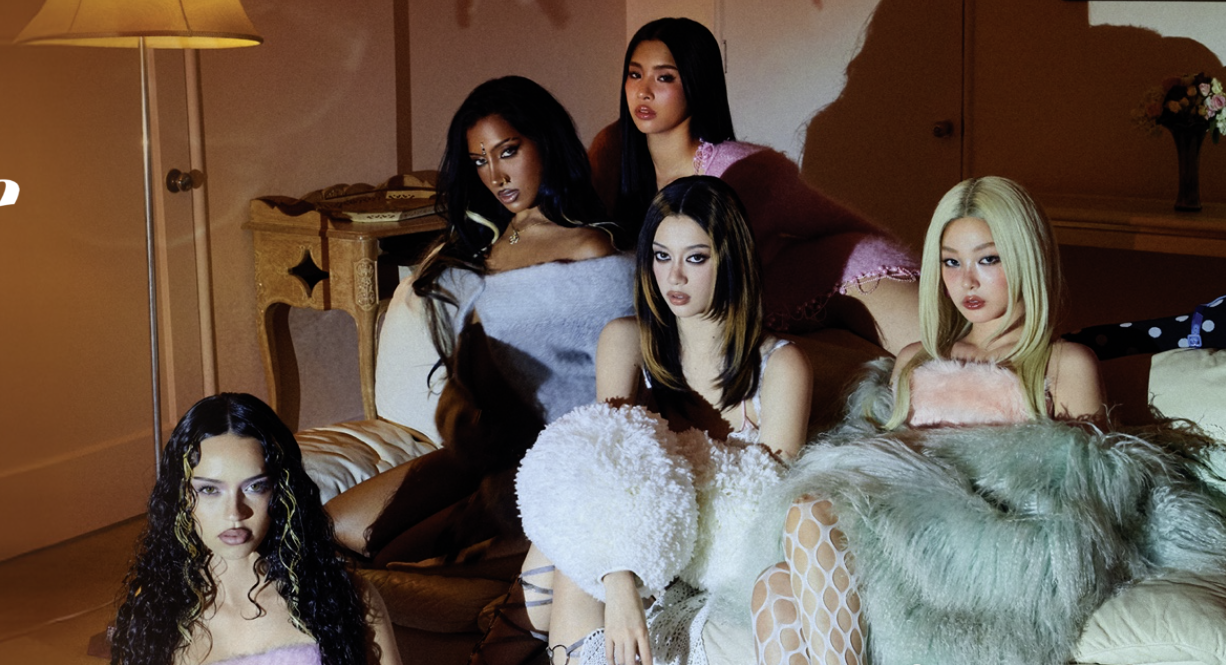
On July 8, KATSEYE announced that their story is heading to cinemas worldwide. KATSEYE: WILD HEARTS, a feature-length documentary directed by Nadia Hallgren, arrives in limited theatrical release starting August 12, just two days before the group drops their third EP, WILD. Tickets go on sale July 15.
The film promises never-before-seen footage, intimate member interviews, and — crucially — EYEKONS fan videos woven throughout. It traces the arc from the brutal intensity of The Debut: Dream Academy survival show to chart-topping viral success, the sacrifices, breakthroughs, and the electric bond between six young women and the global fandom that helped build them. Produced by Interscope Films and Boardwalk Pictures in partnership with HYBE X GEFFEN (the same team behind the Netflix docuseries Pop Star Academy: KATSEYE), it’s positioned explicitly as “a love letter to the EYEKONS.”
This isn’t just another behind-the-scenes cash-in. It’s a deliberate cinematic statement at a moment when more and more artists are choosing to let fans watch the messy, exhilarating process of becoming.
The Growing Trend: Artists Are Sharing Their Journeys Like Never Before
It used to be rare for pop acts to pull back the curtain in any sustained, high-production way. A quick MTV “Making the Video” or a 30-minute behind-the-scenes DVD extra was about as deep as it got. Today, the opposite feels true. From BTS’s sprawling Run BTS series, Break the Silence documentary, and constant Weverse glimpses, to BLACKPINK’s Light Up the Sky, Taylor Swift’s Miss Americana and the record-breaking Eras Tour concert film, to newer global acts documenting their rises in real time — the journey itself has become essential content.
KATSEYE fits squarely into this wave, but with a twist. As a true global girl group (members from the Philippines, South Korea, Switzerland, and the United States) forged through HYBE’s K-pop-style training system in Los Angeles, their origin story was already partially told in Pop Star Academy. WILD HEARTS picks up the thread and expands it outward — not just showing the group, but centering the fans who co-created the momentum. That inclusion of EYEKONS footage is telling. The film isn’t treating the audience as passive observers; it’s framing them as co-authors.
This shift isn’t accidental. In a music landscape flooded with algorithmically generated tracks and one-hit virality, the artists who endure are the ones who turn their process into part of the mythology.
Why the Process of Creation Has Become Part of the Art
Here’s the deeper cultural shift: in this generation, the making of the thing is increasingly experienced as the thing itself.
We live in an era of radical transparency and content oversupply. Anyone with a laptop can release a song that sounds professional. What cuts through the noise isn’t just the final polished track or the perfectly lit performance — it’s the human story of how it came to exist. Fans want to feel the late nights, the creative arguments, the self-doubt, the breakthrough moments when everything clicks. That emotional texture makes the finished song or performance hit harder. It transforms listening from consumption into participation.
KATSEYE’s story — six strangers from different continents thrown into an intense, K-pop-modeled training crucible, whittled down from over 120,000 applicants, then thrust into the global spotlight with breakout hits like “Touch” and later “Gabriela” — is inherently dramatic. But the film’s power comes from refusing to treat that drama as finished. By showing the ongoing evolution (the “bold new era” ahead of WILD), it keeps the narrative alive. The process doesn’t end when the debut happens or the first awards come in. It keeps unfolding, and fans get to walk alongside it.
This approach also builds something rarer than streams: deep loyalty. When fans see the sacrifices and the genuine camaraderie (or the real tensions), the parasocial relationship evolves. It stops being purely one-sided admiration and becomes something more reciprocal — what some researchers now call “trans-parasocial” interaction. Fans feel seen in the story, and that recognition fuels everything from streaming numbers to sold-out tours to the kind of organic advocacy that no marketing budget can buy.
What the Research Tells Us
Fan studies and media research back this up powerfully.
Media scholar Henry Jenkins has written for years about transmedia storytelling — the idea that a cohesive narrative world becomes richer and more immersive when its pieces are deliberately spread across multiple platforms and formats (songs, music videos, social media, documentaries, live events, and now theatrical films). K-pop groups, and now global acts like KATSEYE operating in that ecosystem, have turned this into an art form. The “making of” isn’t bonus material; it’s a core chapter that deepens every other chapter.
Recent academic work on K-pop fandoms reinforces the emotional payoff. A 2025 study examining parasocial and trans-parasocial interactions in BTS fan communities found that when artists share more of their inner world and process through content and direct channels, the relationship shifts from distant idealization toward something more mutual and meaningful. Fans move from simply admiring to actively participating in meaning-making. Other research on K-pop fans has linked these connections to increased feelings of belonging and even “zest for life” — real psychological benefits that come from feeling part of something larger.
Industry analysts at MIDiA Research have noted that in a discovery environment dominated by short-form video and fleeting virality, the artists who build lasting careers are those who use transmedia strategies to establish a clear artistic identity from the start. The process becomes the differentiator. It’s no longer enough to drop great music; you have to invite people into why it matters and how it was made.
KATSEYE’s theatrical move is a high-stakes bet on exactly this logic. By giving the journey the big-screen treatment — complete with fan voices included — they’re not just promoting an EP. They’re reinforcing the idea that their story, and the community around it, is worth gathering for in real life.
What to Expect
Expect the film to balance glossy performance footage with rawer moments: the pressure of Dream Academy, the adjustments of sudden global attention, the personal growth, and the unmistakable electricity of six distinct personalities learning to move as one. The inclusion of EYEKONS videos suggests it will feel less like a traditional “star vehicle” and more like a shared document of a movement still in its early chapters.
That timing — theatrical drop on August 12, WILD EP on August 14 — is smart cross-media orchestration. The film primes emotional investment; the music then delivers the next chapter of the sound. It’s the same transmedia muscle K-pop has refined for years, now applied to a truly global act.
For fans who have followed KATSEYE since the survival show days (or discovered them through “Touch,” the later Grammy-nominated work, or their acclaimed live shows), WILD HEARTS offers something rare: a chance to experience the scale of their journey communally, on a big screen, before the next sonic evolution drops.
In 2026, that feels less like a bonus and more like the point. The polished final product will always matter. But the artists who understand that the process is part of the art — and who trust their fans enough to share it — are the ones building the fandoms that actually last.
KATSEYE’s hearts might be wild, but they’re also wide open. And right now, that openness feels like one of the smartest moves in pop.
Tickets for KATSEYE: WILD HEARTS go on sale July 15 at the official site. The limited theatrical run begins August 12 in cinemas worldwide (dates may vary by region). Their third EP WILD arrives August 14. Keep an eye on Weverse and official channels for updates on the upcoming KATSEYE: THE WILDWORLD TOUR.
This is more than a film drop. It’s an invitation to keep walking the story together.
