

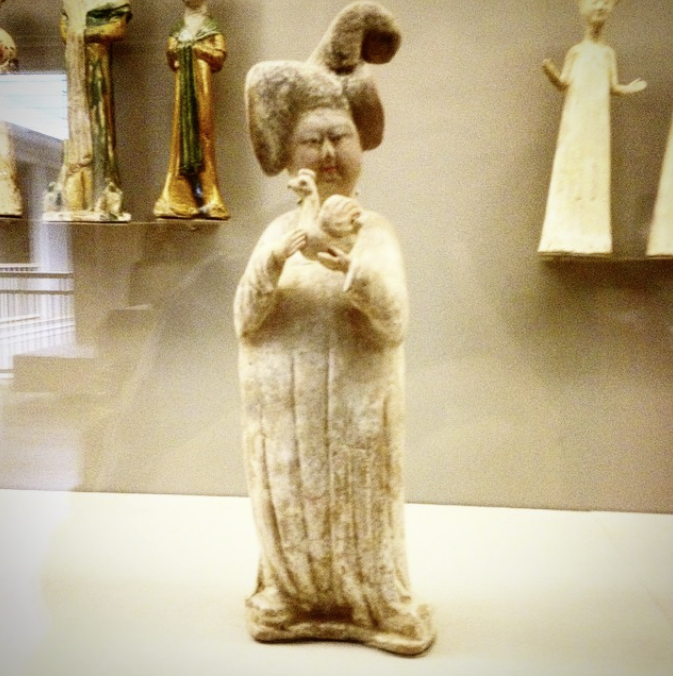
Hold onto your dumpling-filled plates, history buffs — we’re time-traveling back to ancient China’s Tang Dynasty (618–907 CE), when the beauty standard wasn’t about thigh gaps or snatched waists. It was all about soft curves, round cheeks, and that enviable “I’ve been enjoying life’s finest banquets” glow. In this golden age of poetry, art, and cultural swagger, a fuller figure wasn’t just accepted. It was straight-up idolized. And ruling the beauty game like the Beyoncé of the Imperial Court? None other than Yang Guifei, one of China’s legendary Four Great Beauties and the ultimate Tang-era icon.
Emperor Xuanzong didn’t just have a crush — he was obsessed. Poets couldn’t stop composing odes to her “fleshy charm,” artists immortalized her voluptuous form in sculptures and scrolls, and the court basically rewrote the fashion rules to celebrate those generous proportions.
Flowing robes? Check. Elaborate hairstyles that turned a horseback hair fail into a trend? Absolutely. Yang Guifei’s influence was so legendary that the idiom huanfei yanshou (“Plump Yang, Slender Zhao”) still gets trotted out today to compare her with earlier slim ideals.
Plump = Prestige (With Extra Sauce)
Here’s the witty part that makes perfect sense: In a prosperous era of abundant food and courtly leisure, those soft curves signaled success. You weren’t out sweating in the fields under the harsh sun — you were living large, literally. Access to good eats, downtime, health, and fertility? That little extra padding was the ultimate status symbol. Think of it as the ancient Chinese version of pulling up in a luxury ride with a trunk full of snacks. Tang art loved it, society celebrated it, and for a glorious stretch of history, chubby cheeks and rounded figures ran the imperial show.
But as every trend eventually discovers, nothing lasts forever. Enter the Song Dynasty (10th century onward), where Confucian vibes cranked up the conservatism dial. Suddenly, the ideal shifted to delicate, slender, demure elegance — fragile like a flower in a gentle breeze rather than a sun-kissed goddess mid-feast. By the Qing Dynasty, the porcelain-doll aesthetic was fully in charge: small, refined, perfectly poised, with nary a hint of a snack drawer in sight. Beauty standards, much like imperial dynasties, love a plot twist.
Global Glow-Ups and Skin Tone Shenanigans
This flip-flopping isn’t just an ancient China thing. Beauty ideals are cultural chameleons. In the Philippines, generations grew up amid a booming market for skin-lightening products, reflecting local histories and media influences favoring fairer tones. Cross the ocean to the US, and the script flips dramatically — folks shell out serious money for tanning beds and bronzers to chase that sun-kissed look. Same planet, wildly different beauty playlists.
The hilarious truth? Different cultures, different upbringings, different “ideals.” And that’s not a bug — it’s a feature. The real win comes from appreciating the variety without turning it into a judgment fest. Celebrate what speaks to you, give everyone equal shots at the spotlight, and keep kindness as the universal filter.
Why Yang Guifei’s Legacy Still Slaps
From Tang scrolls to today’s K-pop stages and global Asian entertainment, beauty standards keep evolving with the times — sometimes gloriously, sometimes dramatically. Yang Guifei’s story serves as a fun, respectful reminder that today’s “must-have” look is tomorrow’s quirky historical footnote. What endures? Confidence, cultural appreciation, and the ability to laugh at how seriously we sometimes take these trends.
So next time you catch yourself scrolling endless “perfect body” content, channel your inner Tang Dynasty energy. Grab a snack, embrace your vibe, and remember: The imperial court once crowned curves as queen. History has excellent taste.
What’s the wildest beauty standard you’ve encountered in Asian culture or beyond? Drop it in the comments, share this with friends who need a witty history lesson, and stay tuned for more fun, fact-filled adventures at Asian Entertainment and Culture.
