

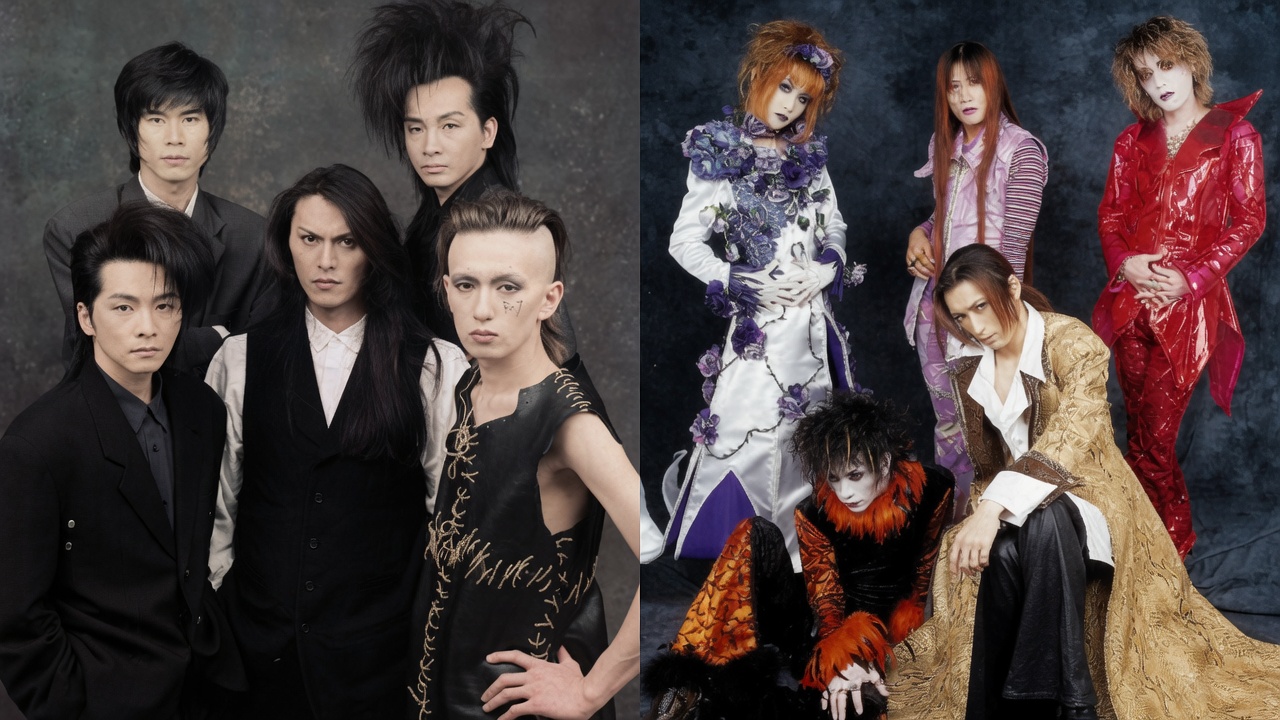
How did a movement this theatrical become one of Japan’s biggest music phenomena?
Visual Kei wasn’t some tiny underground scene where a few bands played to twenty people in smoky clubs. At its peak, it filled arenas, topped charts, and its musicians appeared on magazine covers.
Teenagers copied the hairstyles. Fashion designers borrowed the aesthetics. Major record labels rushed to sign the next big act. Entire magazines existed just to cover the scene.
For a while, Japan didn’t simply tolerate people dressed like gothic royalty. It made them stars.
Welcome to the 1990s
The timing couldn’t have been better or perhaps, depending on how you look at history, it couldn’t have been stranger.
The late 1980s had transformed Japan into one of the richest countries on Earth. The Bubble Economy was in full swing. Land prices soared so high that people joked the grounds of the Imperial Palace were worth more than all of California. Luxury spending exploded. Fashion became increasingly experimental. Designers, musicians, and artists suddenly had an audience willing to embrace extravagance.
Then, almost overnight, the bubble burst.
Japan entered what would later be called the Lost Decade—a prolonged period of economic stagnation that challenged the country’s confidence and future.
Oddly enough, this is exactly when Visual Kei flourished.
That isn’t to say economic hardship created Visual Kei. The movement had already begun. But difficult times often produce bold art. The disappearance of comfort pushed artists to be louder, bolder… stranger. Visual Kei’s music became darker. More introspective. More emotionally raw.
It’s one of the reasons many Visual Kei songs explore loneliness, identity, grief, obsession, mortality, and alienation. The makeup might have looked theatrical, but the feelings were often painfully real.
There Was No “Visual Kei Sound”
This is where many newcomers get confused.
Someone recommends X Japan. You love them. Then another fan says, “Try Malice Mizer.” You press play and wonder if they’ve accidentally sent you the wrong band. That’s because Visual Kei was never about the sound, it was about the essence.
X Japan: The Revolutionaries


If Visual Kei had founding parents, X Japan would almost certainly be among them.
Led by drummer, pianist, composer, and producer Yoshiki, alongside the endlessly charismatic guitarist hide, X Japan built a sound that fused speed metal with classical piano, soaring ballads, and theatrical spectacle. They proved that technical musicianship and emotional vulnerability could coexist.
Then they added enough hairspray to create their own weather system.
Hide, in particular, became a fashion icon. Neon hair. Patchwork clothing. Bright colors. Mismatched patterns. His style looked chaotic, yet somehow perfectly balanced. Even decades after his passing in 1998, you’ll still find musicians citing him as an inspiration—not just for his music, but for giving them permission to look however they wanted.
Yoshiki, meanwhile, became the movement’s architect. His perfectionism, compositions, and relentless ambition elevated Japanese rock onto a global stage.
Together, they helped convince an entire generation that a rock band could be a complete work of art.
BUCK-TICK: Beauty in Darkness


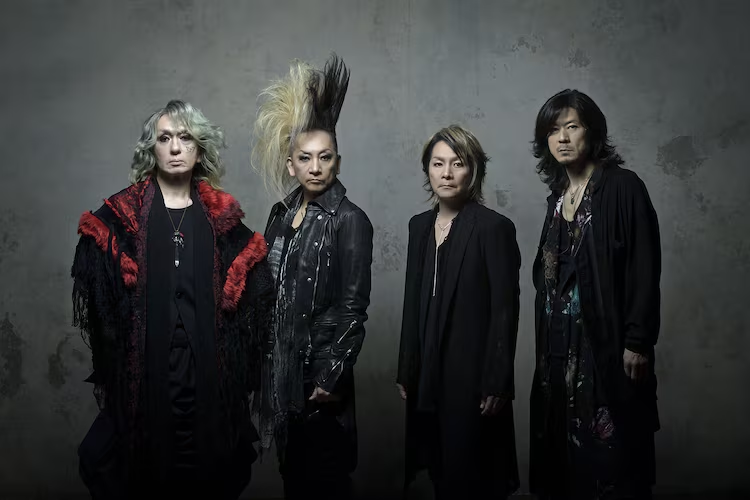
Where X Japan exploded with color and intensity, BUCK-TICK embraced elegance. They leaned dark but refined.
Frontman Atsushi Sakurai carried himself like an aristocratic vampire who somehow wandered onto a concert stage. The band incorporated gothic aesthetics, post-punk influences, industrial sounds, and electronic experimentation long before many of their peers.
Their influence stretches far beyond Visual Kei. Countless gothic musicians, anime creators, and fashion designers still cite them today.
Malice Mizer: The Band That Built a Fantasy World


Imagine Marie Antoinette joining a gothic opera. Now add electric guitars. You’re getting close.
Malice Mizer transformed concerts into theatrical productions. Members appeared in elaborate Victorian costumes inspired by French aristocracy, gothic cathedrals, classical paintings, and fantasy literature.
The mastermind behind much of the band’s visual identity was guitarist Mana.
Mana’s influence extends far beyond music. He later founded Moi-même-Moitié, one of Japan’s most influential Gothic Lolita fashion brands, helping define an entire style that continues to inspire designers worldwide.
Did Fashion Inspire the Bands or Did the Bands Inspire Fashion?
Yes and yes. Visual Kei and Japanese street fashion evolved almost like dance partners. Bands introduced dramatic looks. Fans copied them. Designers refined them. Bands adopted those refinements. Fans pushed them further.
Repeat.
Eventually, it became impossible to tell where one ended and the other began.
Walk through Harajuku during the movement’s peak and you’d encounter Gothic Lolitas, Elegant Gothic Aristocrats, cyberpunk enthusiasts, punk kids, military-inspired fashion, lace, velvet, leather, corsets, platform boots, lace parasols, crosses, top hats, and hairstyles that probably required industrial engineering.
Visual Kei helped normalize the idea that clothing could become performance art.
Harajuku Wasn’t Created by Visual Kei
Many people assume Harajuku and Visual Kei are the same thing. Harajuku is a neighborhood. More specifically, it’s a creative ecosystem. Visual Kei is one branch of that ecosystem. Others are Gothic Lolita. Decora. Fairy Kei. Punk. Cosplay. Avant-garde fashion.
They all coexisted, borrowed ideas from one another, and evolved together.
The Fans Were Performers Too
One of the joys of Visual Kei is realizing the stage didn’t end where the audience began. Fans dressed up too. They learned choreography and memorized synchronized hand movements called furitsuke. They followed the band and collected merchandise with astonishing dedication. Some even developed reputations within the community, becoming recognizable fixtures at concerts. These devoted fans became known as bangya.
While the term originally referred mainly to female fans, the community has always welcomed people from many backgrounds. Attending a Visual Kei concert often feels less like watching a performance and more like participating in a ritual.
Everyone knows when to jump, headbang, and raise their arms. It looked choreographed.
The Freedom to Become Someone Else
Visual Kei has always embraced androgyny. Long hair, flowing clothing, makeup, lace, corsets, jewelry, and others.
These challenged conventional ideas of masculinity long before many Western artists began having similar conversations.
Japan already had centuries of artistic traditions where appearance could be transformed through performance. Kabuki actors, Takarazuka performers, and bishōnen characters had long blurred visual expectations. Visual Kei inherited that tradition and translated it into rock music.
That shift in perspective made the movement feel remarkably liberating.
More Than Music
Perhaps the greatest achievement of Visual Kei is that it escaped its original purpose.
It started as rock music. Then it quietly seeped into everything else.
Anime borrowed its dramatic aesthetics. Video games embraced its elaborate costumes. Fashion designers referenced its silhouettes. Cosplayers carried its theatrical spirit to conventions around the world.
Visual Kei’s ideas became part of the global creative vocabulary that, even today, you’ll occasionally spot traces of Visual Kei in K-pop styling, high-fashion editorials, fantasy films, and avant-garde runway collections.
Coming in Part Three
- Visual Kei eventually changed.
- Some bands moved away from the aesthetic.
- Others became heavier.
- Some disappeared.
- A new generation reinvented the movement all over again.
In Part Three, we’ll explore the rise of neo-Visual Kei, why bands like DIR EN GREY, The GazettE, and Versailles pushed the scene in dramatically different directions, how Visual Kei quietly influenced global pop culture, and whether the movement is truly fading—or simply evolving into its next act.
To be published on July 24
