

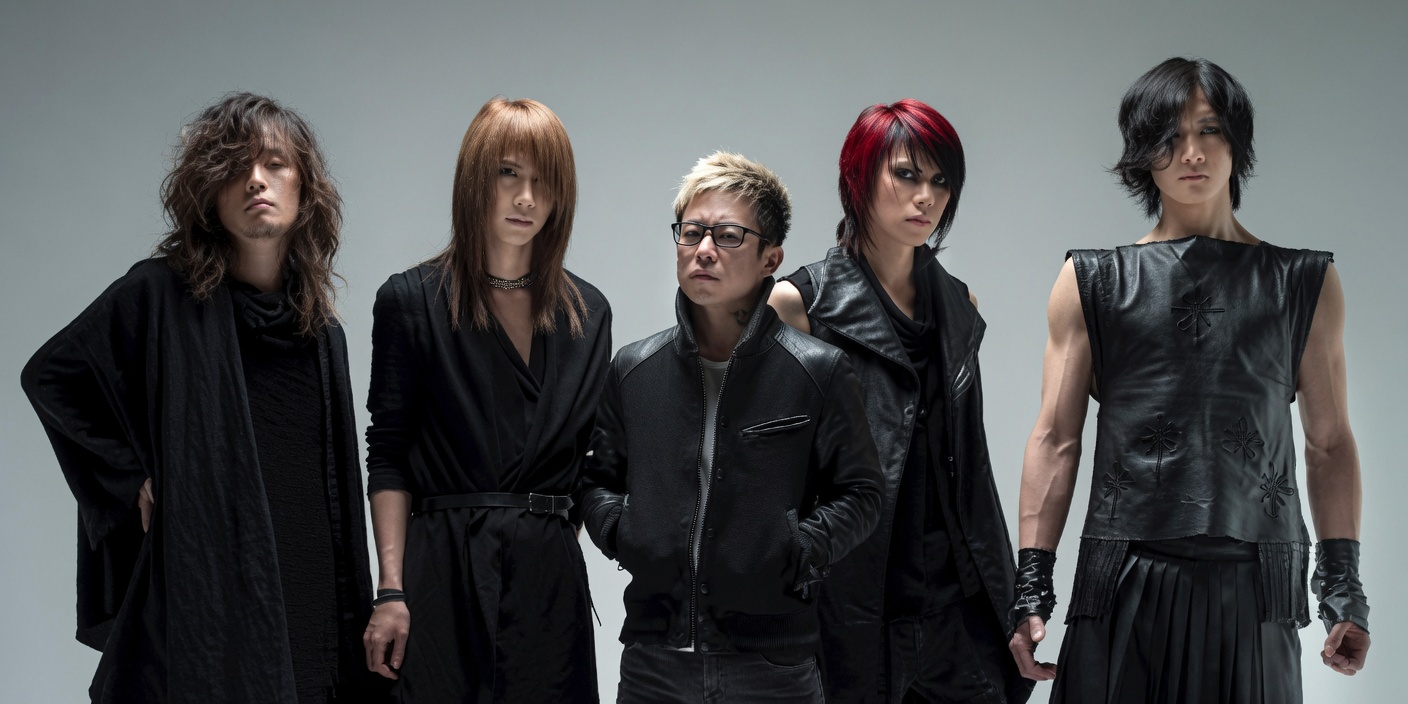
By the early 2000s, many of the bands that helped build Visual Kei began evolving beyond those visual conventions. Some toned down the makeup. Others abandoned the extravagant costumes almost entirely.
Ironically, the movement that insisted artists shouldn’t be boxed into one identity refused to box itself into one look. The music remained adventurous but the aesthetics simply became more fluid.
The Movement That Refused to Stand Still
Unlike punk, which settled into a recognizable style, or goth, whose visual language remained relatively consistent, Visual Kei has always treated reinvention as part of the experience.
You aren’t expected to look the same forever. In fact, fans almost expect you to change consistently. One album might lean into gothic elegance. The next might embrace military uniforms. Then Victorian aristocracy.
It might feel like it’s a branding nightmare but this is the nature of Virtual Kei. Visual Kei was never about preserving an image. It was about creating one and then creating another.
Enter Neo-Visual Kei
Around the late 1990s and early 2000s, fans began using another term – Neo-Visual Kei.
It was simply a convenient way to describe a new generation of bands inspired by the pioneers while taking the movement in fresh directions.
Some embraced heavier musi others leaned further into theatrical elegance. Some became almost cinematic. Others stripped things back.
The Bands That Solidified the Era
If the first generation built the house, the next generation remodeled every room.
DIR EN GREY


Perhaps no band represents Visual Kei’s refusal to stand still better than DIR EN GREY.
They began with obvious Visual Kei aesthetics before gradually abandoning much of the elaborate styling in favor of something darker and more understated.
The music, however, became even more extreme.
Albums like Uroboros, Dum Spiro Spero, and The Insulated World pushed into progressive metal, avant-garde composition, and emotional territory that few bands—Japanese or otherwise—were willing to explore.
The GazettE


The GazettE became one of the defining bands for an entire generation of international fans. Heavy riffs., memorable melodies, and dark aesthetics.
They proved Visual Kei could thrive in the internet era, introducing countless overseas listeners to Japanese rock through YouTube, forums, and early social media.
Versailles
If Malice Mizer resembled gothic nobility, Versailles looked as though French royalty had formed a symphonic metal band. Every performance felt regal and their costumes looked hand-crafted for an opera.
They leaned unapologetically into fantasy—and fans loved them for it.
Plastic Tree
Then there was the Plastic Tree. They were dreamlike, melancholic and emotional.
Proof that subtlety could be just as powerful as spectacle.
Visual Kei Quietly Took Over the World
Most people influenced by Visual Kei probably don’t realize they were influenced by Visual Kei. Its fingerprints are everywhere, from Japanese video games to pop stars to comic book characters.
It’s difficult to look at franchises like Final Fantasy without noticing how comfortably they exist alongside the broader aesthetic culture that Visual Kei helped popularize.
Then Came the Internet
Visual Kei experienced something many Japanese music scenes never did. It found fans long before streaming made international music easy to discover. In the early 2000s, overseas fans traded CDs by mail.
Fans downloaded grainy concert clips and scanned magazine pages. They learned Japanese lyrics phonetically because translations barely existed.
For many Western fans, discovering Visual Kei felt like joining a secret club. It required effort which created incredibly loyal communities.
Did Visual Kei Influence K-pop?
Undeniably but indirectly.
Early K-pop drew inspiration from many places: American hip-hop, R&B, dance music, Japanese idol culture, and J-pop. Visual Kei wasn’t its blueprint.
However, the broader Japanese entertainment industry demonstrated that visual identity could become just as recognizable as music itself.
That idea wasn’t invented by Visual Kei, but the movement became one of their most striking expressions.
Even today, certain K-pop concepts occasionally echo Visual Kei’s love of theatrical storytelling, gothic imagery, fantasy worlds, and dramatic costume design. It’s all coming from the same creative DNA.
Is Visual Kei Dying?
People have been asking this question for nearly twenty years. Usually right before another generation discovers it.
Visual Kei no longer dominates Japanese music the way it once did. Music consumption and the industry changed.
But measuring Visual Kei solely by the number of charting bands misses the point. Movements don’t always disappear. Sometimes they dissolve into culture.
Today, you can find traces of Visual Kei in cosplay conventions in Brazil, anime festivals in France, fashion editorials in London, TikTok makeup tutorials, avant-garde runway collections, and musicians who may have never even used the term.
It’s tempting to reduce Visual Kei to its appearance.
The Final Encore
Somewhere in Japan tonight, a young guitarist is standing in front of a mirror. They’re teasing their hair higher than seems physically possible. Applying eyeliner with painstaking precision. Adjusting a jacket covered in buckles, lace, and chains.
They’re probably listening to a band that inspired them to pick up an instrument in the first place. Maybe it’s X Japan or DIR EN GREY.
And that’s the beautiful thing about Visual Kei. It was never meant to be frozen in time. It was always about evolution.
It was meant to inspire the next transformation. After all, if the movement has taught us anything over the past four decades, it’s that rock music doesn’t have to choose between sounding unforgettable and looking unforgettable.
In Japan, it decided to do both.
Before You Go: 10 Essential Visual Kei Bands
If this article has sparked your curiosity, here’s a listening guide to begin your journey:
X Japan — The architects of modern Visual Kei.
BUCK-TICK — Gothic elegance meets post-punk sophistication.
Malice Mizer — The theatrical masters of fantasy and French-inspired grandeur.
LUNA SEA — Melodic, emotional, and enormously influential.
DIR EN GREY — Fearless experimentation and some of the most intense performances in modern metal.
The GazettE — One of the defining bands of the 21st-century Visual Kei scene.
Versailles — Symphonic metal wrapped in aristocratic splendor.
Plastic Tree — Dreamlike alternative rock with poetic melancholy.
Alice Nine. — A gateway band blending accessibility with classic Visual Kei aesthetics.
NIGHTMARE — Dark, melodic rock known worldwide for themes tied to Death Note.
