

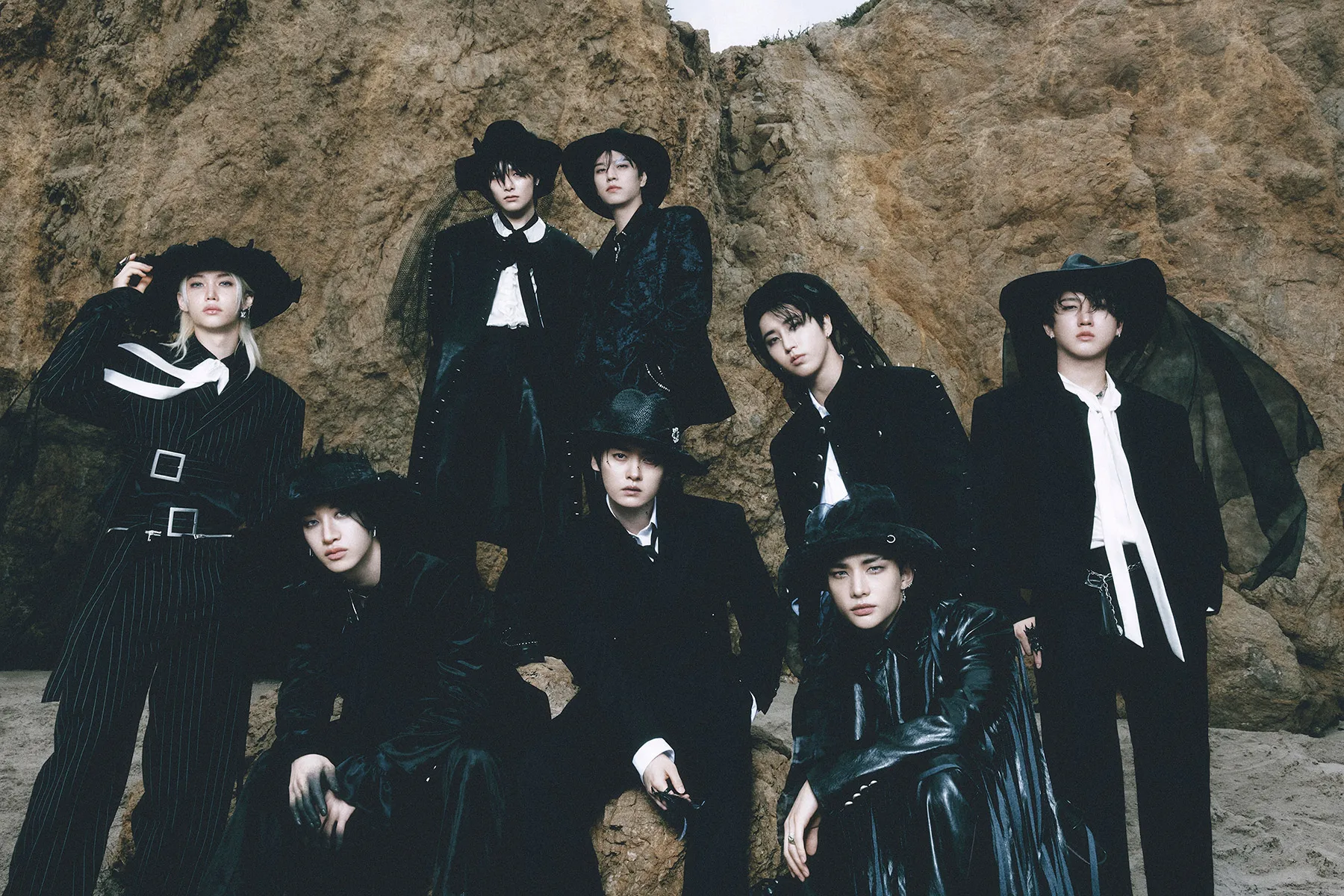
Stray Kids has finally said the words STAYs knew were coming: military service.
At the press conference for THIS & THAT, Lee Know, the group’s oldest Korean member, addressed his eventual enlistment directly. No dates have been announced. The members say they haven’t finalized exactly how Stray Kids will operate during this period. But Lee Know made one thing very clear: when called, he will serve, and Stray Kids will reunite. Seungmin offered the healthiest take of all — don’t ruin what they’re doing now by constantly worrying about what comes next.
From an industry perspective, though, what comes next is genuinely fascinating. Military service no longer has to mean a K-pop group disappears.
BTS and SEVENTEEN Already Wrote the Playbooks
BTS provided the most aggressive blueprint. Before and during enlistment, the seven members released so much solo music and prerecorded content that calling the period a hiatus sometimes felt like false advertising. Albums, singles, documentaries, variety shows, and collaborations kept appearing while members served. Because their enlistments overlapped, the actual stretch between the last member entering and the group becoming fully available again stayed relatively short.
SEVENTEEN is demonstrating another version in real time. As enlistments roll through the group, PLEDIS has continued using available members, units, solo activities, and content prepared before anyone left. Even the latest enlistment announcements specifically tell fans that prerecorded material will keep dropping while members serve.
Stray Kids is unusually well positioned to experiment with both models at once.
Why Stray Kids Has Options Other Groups Didn’t
They already maintain a strong culture of individual and unit music through SKZ-RECORD and SKZ-PLAYER. Solo releases have become a normal part of the group’s ecosystem rather than a crisis response. With eight members, there are plenty of workable combinations even when the complete lineup is temporarily unavailable.
Most importantly, Bang Chan and Felix are Australian citizens and are not expected to undergo South Korea’s mandatory military service. That gives Stray Kids something extremely useful: members who can remain continuously active on the international stage while Korean members cycle through service.
So the interesting question isn’t really, “What happens when Stray Kids disappears?”
It is: Does Stray Kids actually have to disappear at all?
Maybe Bang Chan keeps producing. Maybe 3RACHA becomes more active whenever its full lineup is available. Maybe we get more solo albums, collaborations, unit projects, and carefully timed prerecorded releases. Maybe Felix becomes especially important for international promotions. Maybe JYP decides to overlap enlistments aggressively and accept a shorter stretch of full-group activity in exchange for getting OT8 back together faster.
We don’t know yet.
But BTS and SEVENTEEN have already shown the industry that military service can be planned almost like a content strategy. You stock the shelves before members leave, develop solo careers, use units intelligently, and keep enough activity flowing that the group’s name never really leaves the market.
3RACHA Just Opened Another Door on Spotify
Right as the military conversation starts, 3RACHA has launched its own series. 3RACHA Session dropped on August 3 — a six-episode video podcast hosted by Bang Chan, Changbin, and Han on Spotify. New episodes land every Monday at 8 p.m. KST.
The first episode already leans into exactly the kind of creative talk that could become more valuable once group schedules shift. They’re walking through their history as a unit, listening back to early tracks, and answering what 3RACHA actually means to them. Bang Chan called it the heart that keeps Stray Kids moving. Changbin compared it to the eyes that look ahead. Han said Stray Kids is the dream and 3RACHA is the path.
In a military era, that kind of ongoing platform matters. It keeps the group’s main producers visible, gives STAYs consistent access to the creative core, and creates space for conversation that doesn’t require all eight members in the same room. Combined with the existing SKZ-RECORD and SKZ-PLAYER culture, it adds another layer to how Stray Kids can stay present even when the full lineup isn’t available.
This Is About Protecting Momentum, Not Just Surviving
That approach may be especially important for Stray Kids because they’re approaching enlistment from an extraordinarily strong global position. This isn’t a group trying to survive until everybody comes home. It’s a group trying to protect momentum.
And judging by how much music these men already make, JYP could probably confiscate their recording equipment tomorrow and still have enough unreleased Stray Kids songs sitting on hard drives to get us through several military enlistments and a minor natural disaster.
Yes, the military era is coming.
But STAYs probably shouldn’t interpret that as Stray Kids shutting down.
The much more interesting question is how Stray Kids intends to stay Stray Kids while eight temporarily becomes seven, six, five, or whatever configuration comes next.
BTS gave us one blueprint. SEVENTEEN is giving us another.
Now we get to see what Stray Kids does with theirs.
