

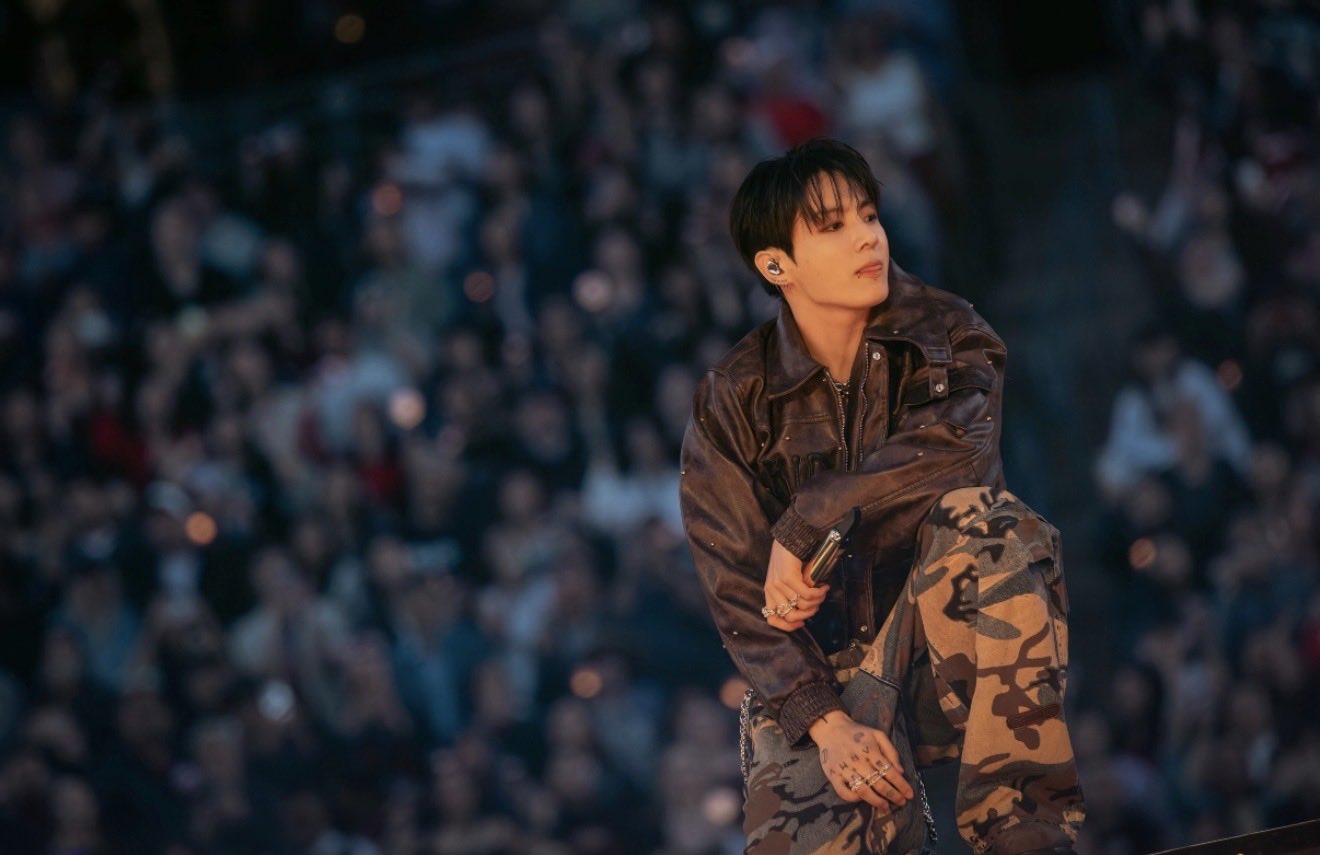
Jeon Jungkook turned 29 on September 1. Most birthday coverage will do what birthday coverage always does: restack the talent. He can sing, dance, box, and carry a solo era without the group standing next to him. That is already on the record.
This is a different inventory. These are twenty-nine things he has actually said about his own life — childhood in Busan, the trainee years, the first dorm, how he files memory, and the stretch after 2020 when rest arrived and music briefly stopped sounding like something he wanted to do. Some of it is familiar. Some of it only shows up if you stay with the old interviews instead of the highlights.
Read it as a map, not a recap. The line that holds is simple. Before he was an idol, he wanted to turn into a dragon. In 2014, while he was still the youngest member of BTS, he already said the job he wanted was musician. In 2023, after more than a decade of almost no pause, one song had to remind him he still wanted the work.
Before He Was Anyone
1. The First-Grade Dream Was Haku
In an interview, Jungkook said that when he was in first grade, his ambition was to to be Haku, the boy from Spirited Away, because Haku was handsome and could turn into a dragon. The industry arrives later in the story. The first ambition on record is a Studio Ghibli character with flight privileges.
2. The Earliest Memory Is a Dog
His earliest memory is from around age three or four, at someone else’s house: a white puppy, breed unknown. At the time he was sure the dog was about his size. He remembers wrestling with it and never getting hurt. Looking back as an adult, he realized the dog was almost certainly larger than he thought. The memory survived. The sense of scale did not.
3. Night Workouts With His Mom
As a child he used to exercise with his mother in the schoolyard after dark. The detail stayed small until years later, when he was shooting hoops alone at night and the same memory came back uninvited. He has described it as something that still lives in the body — not a story he tells for effect, just a loop the later version of him still recognizes.
4. He Called Himself a Hallway Menace
By his own account he sprinted through school corridors, ate lunch as fast as possible, and went outside the second he could. Studying, he said, was the enemy. Trouble with his mother was regular. He has told the story of cheating on a spelling test, getting caught, and receiving a spanking he still remembers. He told it on a live broadcast and immediately regretted saying it out loud. The regret is part of the record too.
5. Grandma Kept the Chicks Alive
He once bought two chicks as pets. His grandmother was the one who kept them alive. He told stylists that story while getting ready, not from a stage. A lot of the useful Jungkook material lives in that register: off-mic, unperformed, said to whoever is standing next to him with a brush in their hand.
6. A Santa Suit Ended Christmas
His father put on a Santa suit. The fake beard brushed Jungkook’s face. That single scrape of synthetic hair collapsed the Santa story for him. He has been clear about it since. The mythology did not fade over years. It ended on contact.
7. Badminton Lasted Until the Computer Arrived
He said that in elementary school he wanted to be a badminton player, until his parents got him a computer and that plan ended.
8. The Pillow Felt Bigger Than He Was
There was a pillow he hugged to sleep. It felt larger than he was, which may have been true only because he was small. He kept it until the family was in Manduk, Busan. He wondered, looking back, whether the pillow was actually huge or whether he was just tiny. Both can be true. The object stays the same size. The child does not.
9. He Says He Comes Last in a Family of Drawers
Drawing runs in the family. His father once made a picture called “Let’s Go, Baby” that looked, to Jungkook, exactly like Park Shin-yang; he thought a professional had done it. His brother and mother can draw too. He says he comes last because he never learned properly and cannot get what is in his head onto paper. When he does sketch, it is often the members’ faces. The easiest subject, early on, was RM in sunglasses with wavy hair.


How He Actually Got Here
10. The B-Boy Circle Came Before BIGBANG
In seventh grade, friends pulled him into a b-boy circle. He has said he was not good. He entered a contest anyway. Searching for dance clips after that is how he found BIGBANG — not the other way around. The usual talent-show version of this story starts with the industry spotting him. His version starts with a middle-school boy who was bad at freezing and curious enough to keep watching.
11. A Field-Trip Joke Became the Audition Song
On a middle-school field trip he sang 2AM’s “This Song.” That is the same song that later got him noticed on Superstar K3. The audition clip did not come out of a grand plan. It started as something he did on a school trip, then became the door into the rest of the career.
12. Audition Halls Taught Him to Shrink
He has said he was not born withdrawn. Crowded audition rooms are what made him start shrinking around strangers. In his telling, shyness is not a personality type. It is a reaction to rooms that were too loud, too early.
13. His Father Pointed at Bang PD on Television
Bang Si-hyuk was appearing on a rival program, Star Audition, when Jungkook’s father made the practical suggestion: that man is famous, try his company. Jungkook searched the trainees online and found RM. The chain is ordinary on purpose — a parent watching TV, a search bar, a kid in Busan looking at a rapper in Seoul and deciding the room looked possible.
A Second Family, Built in a Kitchen
14. J-Hope Fed Him Midnight Leftovers
When J-Hope came home late, he would take food from the fridge and ask the youngest if he wanted some. Jungkook still talks about those nights the way people talk about first-family memories, because that is what they were. Not a variety bit. A fridge light after midnight, and an older member who did not let the maknae go to sleep hungry.
15. He Met RM in Underwear
His first impression of Kim Namjoon is not a handshake. He walked into a dressing room and found him in briefs. He has said he still remembers the shock. The future leader of BTS enters the story as laundry.
16. He Microwaved the String Cheese Anyway
A convenience-store clerk told him to microwave string cheese for ten seconds. Jungkook asked Jihoon — Brightoon — whether thirty seconds would be fine. Jihoon said no. Jungkook did thirty seconds anyway. The cheese liquefied and he yelled for hyung. The sequence is still the clearest picture of him as a teenager: he asked, he heard no, and he ran the experiment.
17. The Members Noticed the Glow-Up and Got Nervous
Asked what people tell him most often, he relayed the members’ version: Jungkook is an adult now, and they are all going to be beaten to death. It is affection, a threat, and a status report in one line. They helped raise him. They also know what that produced.
18. He Read Icm+ Before Bed
A fan gave him a book. He read it when he had free time, or right before sleep, because he thought it would help him become a better speaker. Even at the height of the golden-maknae era, he was doing homework on how to talk to people. Performance was not the same problem as fluency, and he treated the gap as work.
19. Love, Rosie Got Through
In a 2018 Nonno Magazine interview, asked what work had touched him recently, he named the romance film Love, Rosie. He called it sweet and heartrending, and said love stories move him. The public image around that time was cooler than the answer. The answer is the useful part: he has always been easy to move. He does not advertise it.
Memories He Did Not Package
20. A 200-Day Relationship With No Meetings
During American Hustle Life he described an elementary-school relationship that began with “let’s go out.” He did not meet her for two hundred days. Then they broke up. His later verdict was that it was not real love, and that he still had no real-love experience. It is a childhood anecdote, not a romance. The length of the attachment is what makes it stick; the absence of actual meetings is what defines it.
21. Tickling Is the Stated Weakness
He has said it directly: being tickled will destroy him. Not every detail in the archive needs a larger reading. Some of them are just documented pressure points.
22. A Miserable Desert Day Became a Beautiful One
He has talked about a Dubai desert shoot that involved two hours of driving, air let out of the tires, sand in his mouth, rolling, falling — a long, physically ugly production day. He still enjoyed it, because he assumed he would never come back. There was a sunset at the end. His note to himself was that being with BTS was fun no matter what they were doing, and that he would remember the day. He did. The memory is useful because it is not glamorous. It explains why the group still functions, in his telling, as the condition that makes the hard days keep.
23. He Has Dreamed of Flying Three Times
He remembers all three flying dreams. In the first, he was flying in the real world, then clipped through a wall like a video-game glitch and woke up. In the second, he said out loud, inside the dream, that it seemed like a dream — and that was enough to end it. The third is the one he kept. He knew it was a dream. A friend had taught him a spell so he would not wake up even after realizing that. He repeated the spell, a sky opened, and he flew for a while. He has said flying in a dream is more fun than amusement-park rides. The gamer logic is not a flourish. It is how he described staying in the dream.
How He Files a Life
24. The Past Is a Drawer
Asked what the word “past” means to him, he said a drawer. You take something out when you want to look at it. Some things you just want to get rid of. He did not present this as a lyric. It is a filing system: pull, look, close, or throw the thing away. It also explains why he often refuses to narrate old wounds on cue. If the drawer is closed, the interview does not open it.
25. The First Dorm Is the Place That Counts
The meaningful residence, for him, is not the later dorm. It is the first one. He has mentioned mosquito blood stains on the wall, and a ghost story he tells without dressing it up. He was washing his hair alone when he saw a very pale ankle walk in from the shoe-cabinet side of the front door. There was no sound after that. He thought it was SUGA, because of the skin tone. He finished washing and went to say hello. Nobody was there. Nobody else was in the dorm. First home in Seoul, in his account: stains, silence, and a possible ghost.
26. For a Long Time He Thought He Was Still Fifteen
Fifteen was the age he came to Seoul. For a long stretch he believed he had stayed there. That was when his social life started — except it was not ordinary society. It was a trainee society. He did not study the way other teenagers study, and he did not collect the background knowledge you get just by growing up in a normal city, so the number in his head froze. In a later interview, at twenty-six, he said he finally thought he was his age. It was a different twenty-six than the version who went to college. His test was narrower: if he could talk to the people around him, if he could communicate, was that not twenty-six? He felt like his age. The sentence is him giving the calendar permission to catch up.
27. He Thinks Fate Is Real
When he was younger, he said, he did not know. Now he thinks there is such a thing as predestined fate. Trying to go left while life goes right is, in his view, also fate. He experiences a lot of déjà vu. This moment could be his past; another version of him could be living his future; there are many dimensions, which is why the déjà vu keeps arriving. He did not turn that into a concept. He described it as a condition he lives with.
Certainty in Adulthood
The Year Rest Did Not Feel Like a Gift
On the 2020 track “My Time,” Jungkook wrote about being out of sync with the world and chasing a life that seemed to be running ahead of him. The line that still does the most work is not a boast: “I feel as though I’ve become an adult faster than anyone.” It is a teenager reading the receipt.
The part that gets less air is what came after. In the Rolling Stone interview he talked about the first real rest after more than a decade of nonstop output — training at fourteen, debut as a teenager, a group that releases new work several times in a year. That is close to fifteen years with almost no off switch. When the pause finally arrived, it did not arrive as inspiration. He has said everything felt like a hassle, and that this is probably what made him not want to do music.
Tired, in that account, does not look cinematic. It looks like surrender. A lot of people have had a year like that. His happened on a public clock.
What “Seven” Actually Did
“Seven” is the song he credited with pulling him back. Working on it, he said, felt like the most important and special moment; it is what allowed him to keep working up to now. Before it, there was limbo. After it, the urge returned. Rest had not killed the instinct so much as muted it.
He has also been direct about GOLDEN: he did not write those songs. Time was short, military service was coming, and he was walking back toward something he had almost put down. Not necessarily forever — but far enough that picking it up again counted as a return. Authorship was not the proof the album needed to offer. The point was sound, performance, and whatever felt good to sing.
“My Time” is the moment he noticed the grind. “Seven” is the moment he remembered why the stage was worth the cost: playful, grown, a little reckless on purpose. GOLDEN is him walking through the door that song opened — disco, R&B, guitar-pop, late-night ballads. Different surfaces, same voice. The golden-maknae nickname finally described an artist more interested in chasing a feeling than in carrying a whole universe on every track.
After GOLDEN he said there were things he wished he had done better, in the songs and in the performances. Those regrets, he said, are what keep him working. That is not a myth. It is a maintenance system.
What Holds
Put the twenty-nine items in order and the biography is less mysterious than the branding around it. A first-grader wanted to become a dragon. A trainee in Seoul learned to live in a stained dorm and eat whatever J-Hope pulled out of the fridge. A twenty-something started treating the past like a drawer and kept the one flying dream that did not wake him. In 2014 he already knew the word he wanted for the job. Years later, when the job went quiet, he needed one song to tell him he still wanted it.
He is 29. The drawer is still there. So is the sky.
