

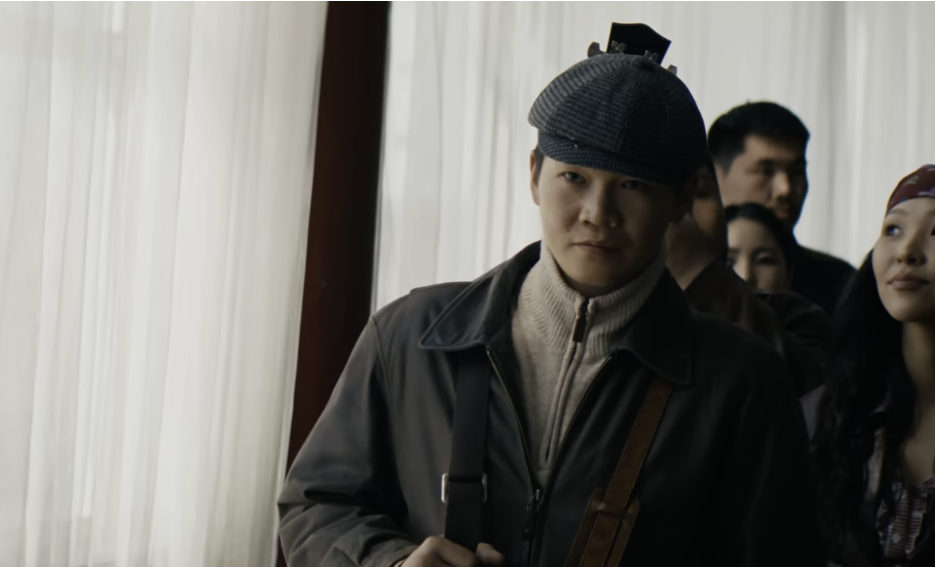
In May 2026, Mongolian singer-rapper Gangaa released “Martahgui” with Nachin billed as a featured name. The official video sits inside his Shiguu series — Episode 1 of a planned run of songs that behave more like chapters than singles. Credits split the labor with unusual honesty for a pop-rap track: lyrics by Gangaa, poetry by S. Nachin. Mix and production sit with Alagui Egorov. The title lands somewhere between “I won’t forget” and “unforgettable.”
That credit line is the story. Mongolia already has rappers who can sing and singers who can rap. What “Martahgui” makes visible is the other half of the current move: bringing a working poet into a beat that is built to stream, to soundtrack a film, and to look expensive on YouTube.
This Did Not Start With a Playlist Algorithm
Mongolian hip-hop arrives in the late 1980s and early 1990s, right as the socialist system loosens and Ulaanbaatar teenagers get hold of American rap tapes, dance battles, and the idea that a voice plus a beat can be enough. Early groups such as Khar Tas and Khar Sarnai mix techno-rap with social commentary. Their 1992-era clip “Bürkheg Tenger” (“Clouded Sky”) is still cited as the first Mongolian hip-hop music video — already a statement about transition, not just party music.
The next wave — Dain ba Enkh, Ice Top, Lumino, then 2000s names like Big Gee, Click Click Boom, Rokit Bay, ThunderZ, Tsetse, PacRap — keeps the protest and swagger. But something else sticks. Scholars of the scene, including Pola Szczap, point out that Mongolian rap never fully abandoned the older job of surgaal: teaching, moral argument, a verse that is supposed to leave you with a line you can carry. Dissident poet Renchinii Choinom (1936–1979) gets treated as a kind of godfather for that instinct. His work is not hip-hop. The attitude — street-level philosophy dressed as literature — is.
At the same time, the public keeps asking for melody. Dance crews in the 1990s rebrand as pop groups. Love songs sneak into rap sets and stay there. By the 2010s the commercial center of gravity is no longer purity. It is a hybrid: bars, hooks, film work, and a video that can live on a phone.
The Contemporary Turn: OSTs, Sung Rap, and Clips That Cost Too Much
The current chapter is less about discovering hip-hop and more about what happens when it becomes the default youth language and still has to compete with pop, K-drama scoring instincts, and cinema.
Gangaa is a clean example of that generation. Born Damdinpurev Ganbat in Ulaanbaatar in 1999, trained as a musical-theatre actor, he starts in 2019 as one half of the duo GangBay, then goes solo in 2023 with Tears of Happiness. “Duuren,” the theme for the film Bid Neg Ger Bul, does the thing local hits now have to do: sound like a song and a scene. Tens of millions of YouTube views later, the OST lane is not a side hustle. It is a career path.
Around him, the same grammar repeats. Vandebo bounce between rap records and sung hooks. ThunderZ builds myth-heavy “Tengri” tracks with videos that want to be folklore and music video at once. Mrs M, FLA, Minayu, Uge, NENE, Desant, AM-C keep crossing the rap/pop border until playlists stop pretending the border matters. GangBay’s later single “GINJ,” with SARYUNA and SUMENHUAR, is openly constructed as a four-way flex of singing and rapping on one beat.
Streaming payouts inside Mongolia are small. YouTube, cinema, brands, and live shows do the real work. That is why so many clips look like they were budgeted for a bigger market than they currently have. The video is the product. The song is the souvenir.
Who Nachin Is, and Why the Credit Matters
Nachin on the track is not a touring rapper borrowed for a verse. Sainjargal Nachin is a published poet — a Ser-Od Prize recipient who took first place at the 2023 Bolor Tsom poetry festival. His work lives on Mongolian poetry platforms and on his own page. In the “Martahgui” credits he is the poetry source. Gangaa is the lyricist who has to make that language sit on a beat.
That distinction is easy to flatten into “they put a poem on a trap beat.” The actual job is messier, and more interesting.
How the Collab Actually Works
From the public credits, this is not a spoken-word recital dropped under 808s. Gangaa still writes the lyrics. Nachin supplies poetry. The useful way to hear that is: Nachin writes the denser, more durable language — images, turns, the lines that feel like they could survive off the track — and Gangaa cuts, repeats, rhymes, and sings them into a song form.
A page poem does not automatically have a chorus. It does not care about bar counts, pre-chorus lifts, or the eight seconds a listener will give you before swiping. A rap-pop record does. So the collaboration is closer to adaptation than karaoke. Some phrases likely survive almost intact. Others get compressed, doubled, or turned into a hook the poet never had to invent because poems are allowed to refuse catchiness.
That is also why the feature credit is not decorative. If Nachin were only inspiration, his name would live in a thank-you. Putting “poetry by S. Nachin” on a Gangaa single tells the audience that literary labor is part of the record, not a mood board. For a poet, that is distribution. For a rapper who already writes emotionally loaded songs, it is a way to raise the specific gravity of the language without pretending he is a prize-winning verse-maker on the page.
We should be precise about what we cannot hear from the credits alone. There is no published side-by-side of Nachin’s original poem and the finished lyric in English-language sources. So the honest description is structural, not forensic: two writers, two jobs, one record that wants both the authority of poetry and the stickiness of a single.
Why This Makes the “Boring” Artform Feel Less Boring
Poetry in Mongolia is not dead. It is also not, for most people under 30, the first thing they open on their phone. Prize culture, festival readings, and literary sites can look like a closed room — serious, inherited, slightly homework-shaped. Rap has the opposite problem. It is everywhere, and therefore easy to dismiss as disposable: auto-tune, heartbreak, another night that will not end.
A track like “Martahgui” smuggles each form into the other’s crowd. The poetry listener who would never click a trap-pop thumbnail hears their register — compression, metaphor, the ethics of memory — inside a video that already has 1.8 million views on the official cut. The rap listener who would never buy a slim volume still has to sit with language that was built to be reread, not just replayed.
That is the unglamorous cultural work. You do not convert a nation to poetry by scolding it. You convert a few hundred thousand people by putting a poet’s cadence under a face they already trust, on a platform they already live on, in a song about not being able to forget someone. Suddenly the “pure” form is not a museum. It is a feeling they already had.
The reverse is also true. Rap gets accused, in Mongolia as everywhere, of thinning the language. When a Ser-Od poet is in the credits, the defense writes itself: this scene still cares about the line. Not every bar has to be literature. But the door between the notebook and the booth is open, and the audience can hear it.
Purity Was Always a Side Quest
There is still a hardcore lane. Big Gee, Ginjin, parts of Vandebo and Opozit, KA’s more political records — they exist, they matter, and they are not trying to be film themes. The point is not that Mongolia replaced rap with poetry-pop. The point is that the commercially dominant contemporary sound is a coalition: sung rap, OST logic, high-craft video, and now, sometimes, an actual poet.
That coalition has local roots. Oral culture already treated verse as public speech. Socialist-era didactic poetry already treated the page as a place to argue about how to live. Hip-hop arrived and recognized the job. The 2020s version just has better cameras and a film industry that needs songs.
Gangaa’s Shiguu series, if it continues as teased, is trying to make that coalition serial: six episodes, six songs, a narrative frame. “Martahgui” as Episode 1 is a thesis statement. Memory is the subject. Poetry is the method. Pop-rap is the delivery system.
What to Listen For, Besides the Hook
If you only know Mongolian music through The Hu’s folk-metal export version, this scene will sound like a different country — because it is a different city. Ulaanbaatar pop-rap is indoor music. It is about apartments, phones, winter nights, the person who did not come back. Traditional color shows up when an artist wants it (ThunderZ’s Tengri cycle, the occasional morin khuur cameo). Most of the current hits do not costume themselves as steppe mythology. They costume themselves as feeling.
Start with “Martahgui” for the poet-in-the-credits experiment. Then “Duuren” for the OST machine that made Gangaa unavoidable. Then a Vandebo hook record and a Ginjin track on the same afternoon, so the hybrid does not get mistaken for the whole map.
The movement, if we are going to use that word, is not a manifesto. It is a habit. Rappers sing. Singers rap. Poets leave the festival and enter the session. Videos cost more than the streaming math should allow. And every so often a credit list tells you, in plain language, that the line you cannot shake did not come from the booth alone.
AEC — Asian Entertainment & Culture. Reporting notes: artist bios and credits drawn from Gangaa’s official video listings, Mongolian-language poetry pages for S. Nachin, and published histories of Mongolian hip-hop including work on surgaal and first-wave groups.
