

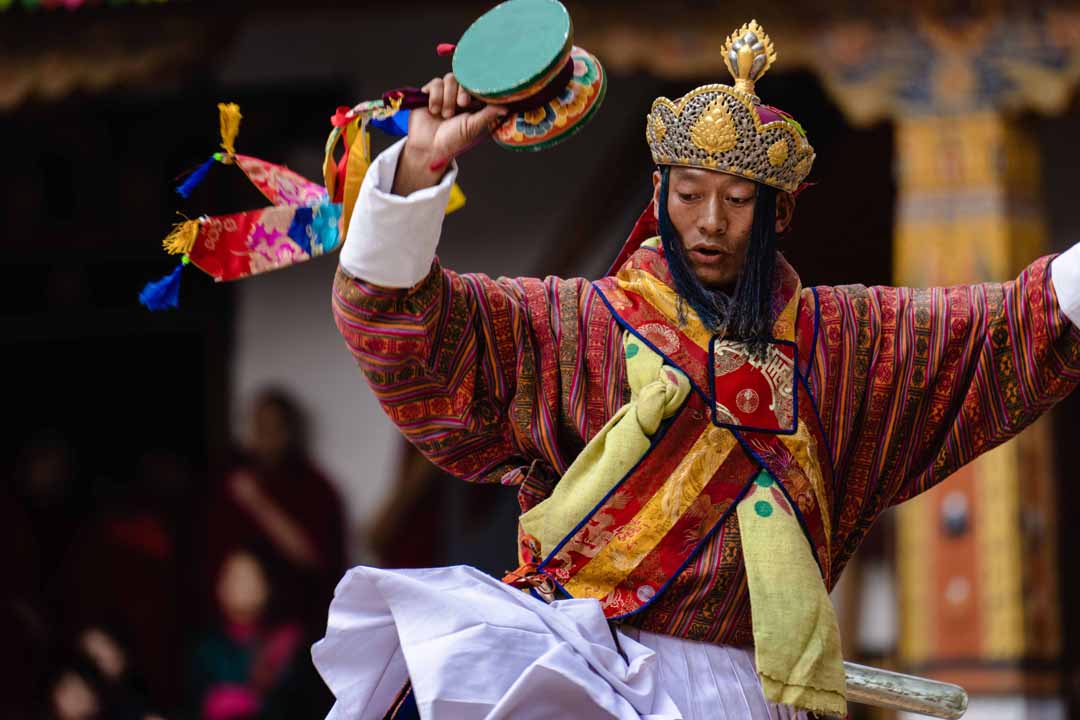
Bhutan deliberately limited foreign influence, introduced television only in 1999, and transitioned to democracy after a king voluntarily stepped down. Here’s how the Himalayan kingdom balanced modernization with cultural preservation.
Let’s unpack how that choice shaped the country.
Bhutan’s Isolation: Strategy, Not Accident
Bhutan limited foreign contact for decades to protect political independence and cultural cohesion. The monarchy, established in 1907, faced a geopolitical reality: two massive neighbors with competing interests. Restricting outside influence wasn’t romantic—it was defensive.
Until the 1960s, Bhutan had almost no paved roads, no formal banking system, and minimal foreign trade. Modernization began gradually under King Jigme Dorji Wangchuck, who introduced the National Assembly and opened limited diplomatic relations.
Economically, Bhutan survived through:
- Hydropower exports (primarily to India), which remain its largest revenue source
- Agriculture and forestry
- Carefully managed tourism
Tourism operates on a “High Value, Low Volume” model. Visitors pay a Sustainable Development Fee (recently set at $100 per day after being reduced from $200), ensuring tourism generates revenue without overwhelming infrastructure or culture.
The result? Fewer factories, fewer multinational chains, and a public philosophy built around Gross National Happiness (GNH)—a framework introduced in the 1970s that measures development through well-being, cultural preservation, environmental protection, and good governance.
Life moves slower there because the country structured it that way.


No Traffic Lights: Still True?
Bhutan’s capital, Thimphu, famously has no traffic lights. A single light was briefly installed in 1999—but residents disliked it. It was removed within days. Today, traffic in the capital is directed by white-gloved police officers standing in decorative booths.
This isn’t because Bhutan has no cars. Vehicle ownership has grown significantly, especially in urban areas. But the population is small—around 780,000 people nationwide—and urban congestion is modest compared to most Asian capitals.
Outside cities, roads are narrow and winding, carved into mountain terrain. You’ll encounter steep drops, blind curves, livestock, and occasional pedestrians. Drivers compensate by moving slowly and cautiously. Speed is socially discouraged.
Transportation affects daily rhythm. People plan travel with terrain in mind. Journeys that look short on a map can take hours. That physical geography enforces patience.
Television Arrived in 1999
Bhutan officially introduced television and the internet in 1999 under King Jigme Singye Wangchuck. Until then, broadcast media was prohibited domestically.
The first major international media exposure came in 1974, when foreign press were invited to cover the king’s coronation. That event marked Bhutan’s symbolic entry into global awareness.
Before TV, entertainment revolved around:
- Traditional music and dance (zhungdra, boedra)
- Religious festivals (tshechus)
- Oral storytelling traditions
- Archery competitions, which remain the national sport
Bhutan also developed a small domestic film industry in the 1990s, often referred to as “Bhollywood.” These films blended melodrama with local culture, typically screened in modest theaters.
When television arrived, leaders anticipated cultural disruption. And yes, exposure to global media accelerated change—urban fashion shifted, youth culture diversified, and migration to cities increased. Still, Bhutan has managed to retain a visible cultural core, especially through dress codes, architecture rules, and education policy.
Western influence exists. It just doesn’t dominate public space.
The King Who Stepped Down
King Jigme Singye Wangchuck, crowned in 1972 at age 16, voluntarily abdicated in 2006. He pushed for democratic reform years before stepping aside, overseeing the drafting of Bhutan’s Constitution.
His reasoning was pragmatic. He believed long-term stability required institutional governance, not dependence on a single monarch’s personality. The Constitution was adopted in 2008, transforming Bhutan into a constitutional monarchy with parliamentary democracy.
He was educated in both Bhutan and the United Kingdom, which likely shaped his global perspective. Exposure to international political systems didn’t lead him to discard tradition; it influenced how he structured reform.
Today, his son, King Jigme Khesar Namgyel Wangchuck, serves as constitutional monarch—symbolic head of state with moral authority, but executive power rests with elected officials.
Bhutan modernized politically without dismantling its monarchy.
Cultural Preservation: Policy, Not Nostalgia
National dress remains mandatory in schools, government offices, and formal settings. Men wear the gho, women wear the kira. Architecture regulations require traditional design elements in new buildings. Dzongs (fortress-monasteries) still function as administrative and religious centers.
This isn’t accidental preservation. It’s codified.
Bhutan’s development philosophy argues that culture is infrastructure. If identity erodes, economic growth becomes hollow.
Matrilineal Traditions
Bhutanese society contains strong matrilineal elements, particularly in rural areas:
- Property often passes through daughters
- Many men move into their wife’s family home after marriage
- Women maintain significant economic authority
Women account for a substantial share of landownership—estimates often cite around 40–50%, though figures vary by region.
Polyandry, where one woman marries multiple brothers, has existed historically in some rural communities. It is rare today and declining, but it reflects how property consolidation and land management shaped marriage customs.
Women also retain their surnames after marriage, reinforcing family lineage structures independent of the husband’s identity.
Bhutan is not universally matriarchal in governance—political representation still skews male—but domestic economic structures have long given women tangible power.
The Tension Going Forward
Bhutan today faces new pressures:
- Youth unemployment
- Brain drain
- Cryptocurrency mining experiments
- Climate vulnerability
Isolation is no longer absolute. The question now is calibration—how to integrate into global systems without dissolving the social architecture that made Bhutan distinctive in the first place.
What makes Bhutan compelling isn’t that it avoided modernity, it’s just assimilating it in its own terms. Slowly. Deliberately. Sometimes imperfectly.
And in a region defined by acceleration, that pace remains its most radical choice.
