

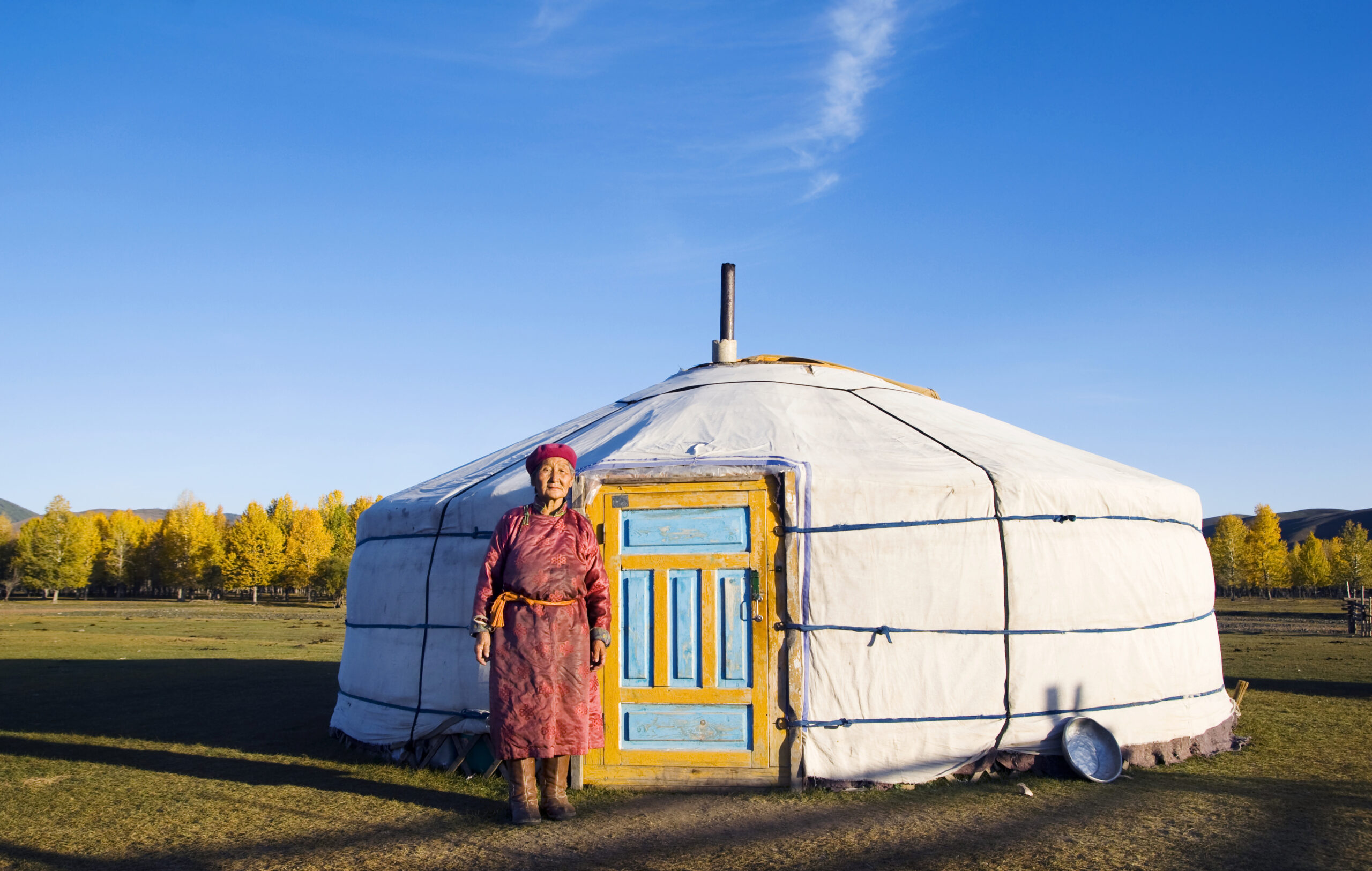
For centuries, Mongolians didn’t use last names the way much of the world does. Identity was tied to tribe and clan, not nuclear family surnames. A woman kept her own lineage after marriage, and people introduced themselves by clan affiliation rather than inherited last names.
That changed in 1924, when Mongolia’s communist government banned clan surnames to simplify taxation and administration. In their place, a patronymic system—using the father’s given name—became standard. Even after surnames were reintroduced in the 1990s, many Mongolians remained more comfortable using patronymics in daily life.
The result is a rare case study of how politics reshaped identity at a national level—and how cultural memory doesn’t always return in the same form.
1924: When Names Became an Administrative Problem
After Mongolia’s 1924 revolution and the establishment of the Mongolian People’s Republic under communist influence, sweeping reforms reshaped the country. Among them was a ban on the use of traditional clan names.
The reasoning was bureaucratic.
Many people shared the same clan names, and from a state-building perspective, that created confusion. Taxation, census-taking, property records, and social control all required clearer individual identifiers. The solution was to eliminate clan surnames and shift to a patronymic system.
Instead of identifying by tribe, individuals attached their father’s given name to their own.
If your father’s name was Mark, you became Jane, daughter of Mark. Official documents would list your father’s given name first, followed by your own. In practice, though, people increasingly just used their personal given names in everyday life.
Over time, the ban on clan names did something subtle but powerful: it disrupted collective memory. Without regularly using ancestral surnames, many lineages faded from common knowledge. What began as an administrative reform became a cultural erasure—intentional or not.


The Unintended Consequence: Lost Lineages
Mongolian historian Sergy Jambak Dorjian has pointed out one particularly striking consequence of the surname ban: increased risk of inbreeding.
When clan identities are clear, they function as social safeguards. They help communities avoid marriages between close relatives. But if ancestral names disappear and genealogical awareness weakens, those safeguards erode.
People may unknowingly marry relatives simply because they no longer recognize shared lineage. It’s a reminder that surnames aren’t just aesthetic or ceremonial—they can serve as living maps of kinship.
The 1990s: A Cultural Reset
The collapse of communism in the early 1990s sparked a wave of national identity revival across Mongolia. Culture, language, religion, and history resurfaced as pillars of post-socialist reconstruction.
And that included names.
The government encouraged citizens—roughly 2.5 million at the time—to trace their lineage and reclaim their ancient clan names. The idea was powerful: reconnect people to Mongolia’s pre-communist heritage and restore historical continuity.
But tracing lineage after decades of suppression proved difficult. Many families no longer had reliable records or oral histories strong enough to reconstruct their ancestry. So the government pivoted. Instead of requiring genealogical proof, it provided a list of traditional surnames people could choose from—or allowed individuals to create their own.
In other words, clan identity was reintroduced, but often symbolically rather than genealogically.
So What Do Mongolians Use Today?
Officially, surnames are back. On paper, many Mongolians now have family names. But in practice, the patronymic system remains deeply embedded.
In everyday conversation, people often continue to use given names. On formal documents, the father’s name still appears at the beginning, functioning almost like a prefix. For many, it feels natural. It’s what they grew up with.
The surname revival exists—but it doesn’t always dominate daily life.
And that creates a fascinating cultural duality:
- Legally, Mongolia recognizes surnames again.
- Socially, patronymics still feel familiar.
- Historically, clan names carry weight.
- Practically, many identities are still fluid.
More Than a Naming Convention
What makes Mongolia’s naming history so compelling isn’t just that it’s different. It’s that it reveals how identity can shift under political pressure—and how difficult it is to fully reverse that shift.
A surname is more than a label. It can anchor memory, map relationships, and preserve lineage. Remove it long enough, and a society adapts. Restore it, and you may find that people have already internalized something new.
It also raises broader questions that resonate far beyond Mongolia:
- How much of identity is organic, and how much is administrative?
- What happens when governments reshape something as personal as a name?
- Can cultural memory be paused and then resumed decades later?
- For Mongolians today, the answer seems to be layered rather than absolute.
A Question for Mongolians
If you’re Mongolian, what feels more natural in daily life—your surname or the patronymic system? Are clan names mainly for official forms and passports, or are they genuinely returning to social use?
And for everyone else, if you found this interesting, you’re not alone. Naming systems are one of those quiet cultural details that reveal entire histories when you look closely.
Sometimes the smallest administrative reform can reshape generations.
