

In This Article:
- Do we still professional journalists? Traditional celebrity interviews are becoming less important
- How BTS built artistic intimacy without relying on parasocial relationships: They are giving ARMY what it wants, more content, open communication, and presence.
- Why audiences crave spontaneity more than “authenticity”
- How BTS turned creative vulnerability into a strength
- Why the group is transitioning from idols to lifelong artists
- How BigHit can stop inappropriate comments from reaching BTS and making it actually better for both the group and ARMY
- Why BTS may have created the future of artist-fan communication
For decades, there was a clear formula for becoming a global musician. Release a new album.Appear on morning television or late-night interviews. Do magazine profiles. Repeat the cycle every comeback.
Traditional media acted as the bridge between artists and the public. When BTS first entered the American market, they followed that same practice. Those helped tremendously. It introduced BTS to audiences who had never heard of them.
But somewhere along the way, something changed… for everyone.
COVID-19 forced celebrities into their homes, shut down television studios, canceled promotional tours, and stripped away much of the glamour that had traditionally surrounded fame. Audiences suddenly found themselves watching actors from their kitchens, musicians performing from their living rooms, and creators speaking directly into webcams instead of polished television sets.
Today, people willingly spend two or three hours watching podcasts, livestreams, gaming broadcasts, cooking videos, or creators simply talking to a camera.
BTS happened to be unusually well-positioned for that transition.
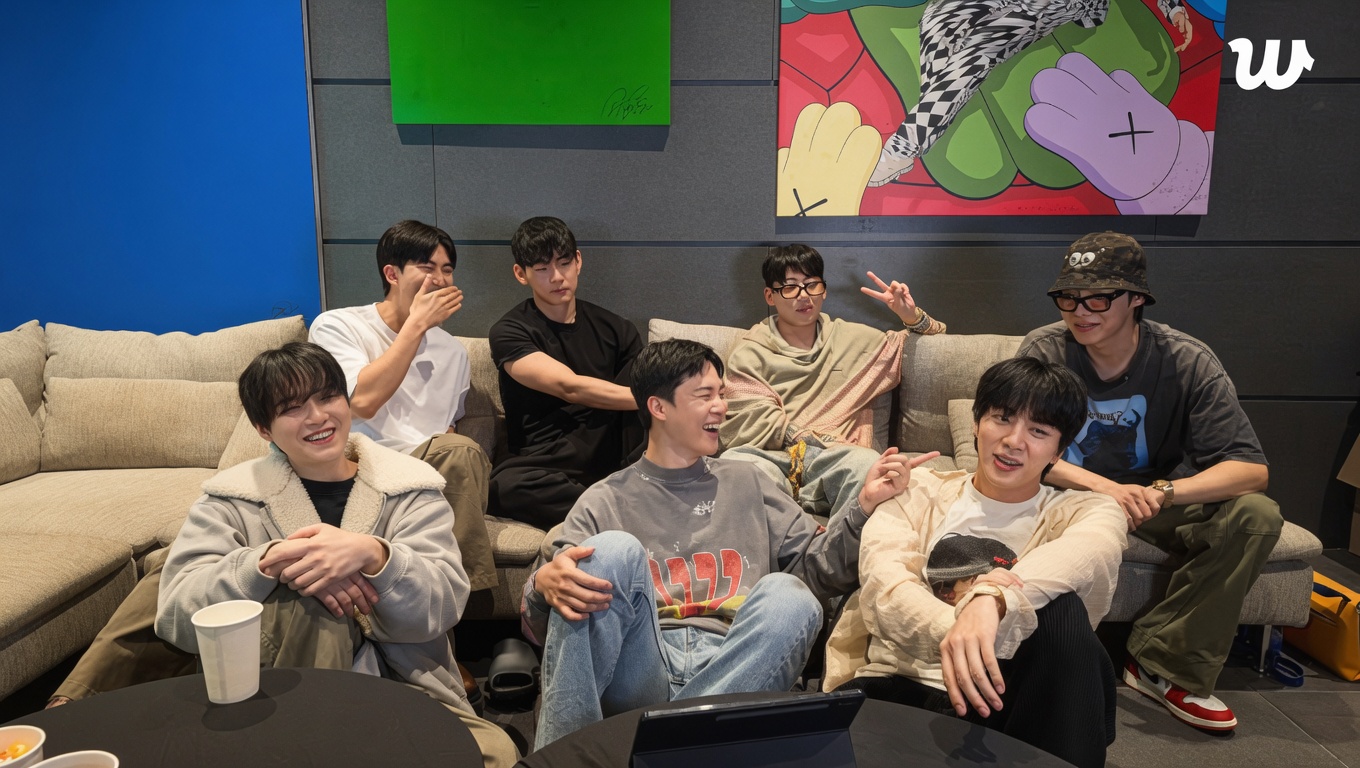
Long before the pandemic, they had already been building direct lines of communication with ARMY through livestreams. In this era, BTS has significantly streamlined many aspects of their public exposure. They became more selective with interviews and appearances outside of official promotional activities.
Yet one thing never became less frequent. Their conversations with fans through livestreams.
Now, these livestreams are an entirely different model of celebrity communication. No, it does not replace interviews with Rolling Stone or Spotify but many fans find it even better.
Do We Still Need “Professional” Journalists?
There is still tremendous value in sitting down with experienced journalists who know how to ask thoughtful questions. BTS’ conversation with Rolling Stone, for example, remains one of the strongest interviews they’ve ever done.
But time and space are unavoidable limitations.
Most televised interviews are bound by time limits. Even magazine profiles have to be condensed to a specific number of pages.
Artists rarely control which stories make the final edi. Journalists naturally have their own narrative, publication style, and audience expectations.
Livestreams remove nearly all of those limitations.
One of the clearest examples came during the release of ARIRANG. Rather than relying solely on interviews to explain the album, RM simply went live for more than an hour.
He walked fans through each track one by one—not only discussing the meaning behind the lyrics but explaining how the songs came together in the first place. He talked about when certain tracks were written, who participated in the process, the ideas that inspired particular lines, and even offered glimpses into conversations happening inside BigHit Music’s A&R department about which songs ultimately deserved a place on the record.
Compare that to even the best traditional interview. There is simply no contest when it comes to depth.
In many ways, BTS have replaced the function interviews used to serve. Instead of asking a magazine to explain their creative process, they simply invite millions of people into the conversation themselves.
And in doing so, they’ve rendered one of traditional media’s most valuable roles far less essential.
Fans Are Bonding With Bts Through Their Art, Not Their Private Lives
One of the biggest criticisms surrounding K-pop has always been the parasocial nature of idol culture. Fans become emotionally invested in artists they will likely never meet. There is truth to that. But I think BTS have gradually built something different.
BTS built a relationship built on their creative lives, not private lives.
When BTS go live, they’re rarely revealing deeply personal family matters or inviting fans into every corner of their private lives. They spend an incredible amount of time talking about music and professional projects.
They create intimacy, sure. .
It’s not to say it’s all serious talk. They play online games, build a lego set, or talk through some philosophical things about life in general. They know how to be spontaneous but they set clear boundaries that transform the relationship.
Rather than encouraging fans to become emotionally attached to an imagined version of the members’ private lives, BTS continuously redirects attention back toward the work itself.
Ironically, that often creates a deeper connection.
Art has always been one of the purest ways to understand another person. Long before social media existed, people connected with authors through novels, filmmakers through cinema, and painters through their canvases. BTS have expanded that same principle into the livestream era.
Every new artistic discussion gives ARMY another layer to revisit. Songs become richer because fans now understand the conversations that happened before the recording began. Lyrics gain additional weight because the audience understands what the writers were wrestling with at the time. Even disagreements during production become fascinating because they reveal how seven artists negotiate different perspectives before arriving at a finished piece of music.
Perhaps that’s one of the least appreciated aspects of BTS’ livestream culture. BTS managed to satisfy one of the internet’s biggest demands—constant connection—without making their personal lives the product.
People Don’t Actually Want Authenticity. They Want Spontaneity
People say audiences crave authenticity. Brands and artists are supposed to be authentic.
I’m not entirely convinced that’s the right word. I think it’s often misunderstood. The truth is, none of us are completely authentic all the time.
We all present different versions of ourselves depending on where we are. The person you are at work isn’t exactly the same person you are with your closest friends. That’s not deception. That’s simply how human beings function in society.
Celebrities are no different.
Expecting someone to become completely “authentic” the moment they turn on a camera isn’t realistic. Nor should it be. Every public figure has boundaries, responsibilities, and aspects of their life they choose to keep private.
I think what they’re actually responding to is something else. Spontaneity.
A traditional television interview is built around structure. Questions are prepared beforehand. Time is carefully managed. Topics are selected. Answers are edited.
Dinner doesn’t work like that. Neither do BTS’ livestreams. Someone suddenly remembers a funny story. A member interrupts to tease another. The conversation shifts from music to food, then somehow ends up talking about military life or creative burnout.
That’s how most of us experience conversations in our own lives. That spontaneity makes the experience more human.
ARTISTIC VULNERABILITY
One of the more interesting things BTS have done over the past several years is redefine what it means to be vulnerable as public figures.
Traditionally, celebrity vulnerability has often meant revealing deeply personal aspects of one’s life. It might involve discussing relationships, family issues, mental health struggles, or traumatic experiences. While those conversations certainly have value, they also blur the line between the artist and the individual.
BTS have taken a different approach. Rather than opening every door into their private lives, they’ve opened the door to their creative lives.
One of the earliest examples came during their 2022 FESTA dinner, when the members openly admitted that they had reached a point where they felt creatively exhausted. They spoke candidly about losing direction, struggling to figure out what BTS should sound like moving forward, and questioning where they wanted to go as artists.
For many fans, it was an emotional conversation because they admitted something many creative people understand all too well. Sometimes you simply don’t know what comes next.
That honesty changes how fans experience the music.
Instead of imagining masterpieces appearing fully formed, audiences begin to appreciate the countless decisions, revisions, and frustrations that happen long before anyone presses play. Even the members’ recent conversations about touring have reflected that same philosophy.
When V asked fans through Weverse not to wait outside hotels or reveal the members’ locations while they were traveling. He explained why.
One of the greatest joys of touring, he said, is being able to experience each country—to try local restaurants, walk through the streets, and enjoy places comfortably. He also acknowledged that constantly being followed affects the members’ ability to rest, and ultimately, the quality of the performances they give their fans.
He wasn’t asking for privacy because celebrities deserve special treatment.
He was explaining how respecting boundaries ultimately benefits the very thing that connects BTS and ARMY in the first place: the music and the performances.
Again, notice what isn’t happening. The members aren’t inviting audiences deeper into their private lives. They’re defining where those private boundaries begin.
From Idol To Human
I also don’t think this evolution has happened by accident.
BTS first operated within the expectations of the idol industry. An idol is expected to be endlessly energetic, available, polished, etc. The problem is that perfection isn’t sustainable. Not for ten years. Certainly not for forty.
As artists grow older, their priorities naturally change. They may want to slow down between projects. Some may eventually settle down and start families. Others might explore entirely different creative fields.
These changes become much harder to accept if audiences continue viewing artists through the lens of perpetual idolhood. I think BTS understands that.
Over the past several years, they’ve gradually shifted the conversation away from maintaining an image of perfection and toward embracing the realities of being artists.
That may be one of the smartest long-term branding decisions they could make.
If audiences become accustomed to seeing BTS as human beings rather than untouchable idols, then future changes won’t feel like betrayals of an image that never truly existed.
How Bighit Can Make These Livestreams Even Better
None of this is to suggest that the current format is perfect.
In fact, the members themselves have occasionally expressed frustration while livestreaming. The members ask for questions, scroll through the comments for a few seconds, and end up finding an endless stream of repetitive messages or spam. Sometimes the comments are simply immature. Sometimes they’re outright inappropriate.
To be fair, that’s almost inevitable when you’re broadcasting to millions of people simultaneously. But I also think that’s precisely why Weverse has an opportunity to evolve.
Better Moderation Doesn’t Mean Less Freedom
The first improvement is probably the simplest. Better moderation.
AI can certainly help but I don’t think AI alone is enough. Context also matters. A human moderator can distinguish between genuine criticism, humor, inside jokes, and comments that are actually harmful.
A short delay—perhaps fifteen or twenty seconds—combined with human moderation could dramatically improve the experience without making the livestream feel artificial.
Reward Good Questions
The second opportunity is making quality easier to find. One thing I’ve noticed over the years is that BTS genuinely wants audience participation.
The problem is that good questions, suggestions, or comments get buried beneath hundreds of thousands of comments appearing every minute.
Imagine a separate section dedicated to curated questions.
Comments could first be screened—using AI as an initial filter and human moderators for final selection—before appearing in a highlighted panel that the members can easily browse.
That way, BTS wouldn’t have to spend several minutes searching through an endless waterfall of comments hoping to find something meaningful.
Membership Could Improve Conversation Quality
Another possibility would be limiting who can participate in the comment section. I’m not suggesting restricting access to the livestream itself. Everyone should still be able to watch.
But perhaps commenting could become a membership benefit. Realistically, that alone would dramatically reduce the volume of messages.
Would it eliminate inappropriate comments entirely? Of course not but cutting the number of comments in half.
Turn Weverse Into A Creative Ecosystem
I also think there’s an even bigger opportunity. Right now, one of the most valuable things produced during BTS livestreams doesn’t actually stay on Weverse.
It leaves almost immediately. Within minutes, fans begin clipping memorable moments.
They’re also introducing BTS to entirely new audiences. A thirty-second clip on YouTube Shorts, TikTok, Instagram, or X may become someone’s first exposure to BTS before they ever watch a full livestream.
I don’t think BigHit should discourage that.
Quite the opposite. I think they should embrace it. Imagine if Weverse became the central hub for curated fan creations. short clips. Long-form edits. Essays. Translations. Video analyses.
Creators can submit their work and when it gets approved and published, they could receive proper credit, allowing readers and viewers to discover their YouTube channels, social media accounts, or other creative work.
BigHit wouldn’t necessarily need to pay for every submission. For many creators, simply having their work officially featured would be meaningful.
The fandom has already demonstrated that it’s capable of doing remarkable work.
The Future Of The Artist-Fan Relationship
Whether intentionally or not, I think BTS have begun establishing a model that artists across the industry—both in the East and the West—will increasingly adopt.
For decades, careers followed a familiar rhythm. Release music. Promote it. Go on tour. Disappear. Repeat two years later.
Today’s audiences don’t experience media that way anymore.
People have grown accustomed to ongoing conversations rather than occasional appearances. That doesn’t mean artists need to constantly reveal more of their private lives.
If anything, BTS demonstrates the opposite. The conversation doesn’t have to revolve around relationships, homes, vacations, or personal drama. It can revolve around work. The music. And they have total control over that conversation.
Over the past several years, BTS have invited millions of people into songwriting sessions, creative frustrations, production discussions, artistic disagreements, philosophical conversations, and ordinary dinners that somehow evolve into reflections on music, life, and the future.
In doing so, they’ve expanded the space where fans can connect with them without opening their personal lives. They remain artists and fans remain fans but with a tighter bond based on art.
