

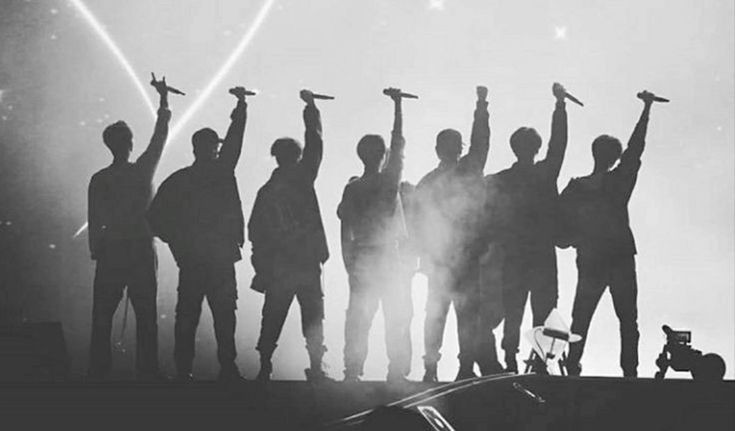
Within the music industry, the whispers about BTS’s return are so loud they might as well be headlines. Behind closed doors, the industry is buzzing. Every label, promoter, and analyst is talking wondering, how big BTS really is.
Everyone wants to know how far this comeback will go—and how much it will change. The whole world is watching BTS’s return to the limelight. Many are already speculating on the scale of the concert. The Hyundai Research prediction puts their tour at 65 cities with over a billion dollars in revenue. That in itself is impressive, but what matters more to ARMY is how to be a part of this event.
What’s about to roll out isn’t just bigger stages or louder pyros—it’s a re-engineering of how fans plan, purchase, travel, spend, and relive a show.
Based on industry predictions and HYBE’s recent business moves, here are the events, experiences, and offerings that could be on the table for ARMY.
1. THE ROLE OF CONFIRM360
One major clue came when HYBE acquired Confirm360, a VIP and hospitality company known for bundling premium fan experiences.
Think packaged travel, hotels, curated access, and behind-the-scenes moments—similar to F1 bundles that include flights, paddock passes, and track walk-throughs.
For BTS, this likely means tiered, location-aware VIP ecosystems that function like multi-day itineraries, including exclusive access and priority accommodations for specific events.
Some packages could easily reach five figures—but for fans who want an all-in experience, it’s worth it.
Expect two formats:
- Venue-linked packages, where select cities offer deeper experiences.
- Standalone VIP events, happening before or after show day.
This is important because it segues into the future of concerts and the evolving relationship between fans, music, and artists. As AI, the metaverse, and immersive digital experiences develop, access will become more affordable and will allow more people to expand their connection with artists. The downside, however, is the rise of AI-generated music and art.
The market is proving that while audiences are becoming more open to AI, it doesn’t replace real art—art made by humans. It’s actually making people more willing to spend on experiences and merchandise that deepen their connection to their favorite artists and to the art itself.
Offering a VIP experience will certainly not be for everyone, but it introduces a new way to offset what artists may lose to technology-driven shifts. It gives artists a way to earn more from those who can pay, without losing the opportunity to engage fans who prefer—or can only afford—digital experiences.
2. BTS UNIVERSE IN PHYSICAL FORM
While the industry may view BTS’s next move from a business perspective, for ARMY it all comes down to connection—returning to the BTS Universe. I interviewed live events organizer Neil Rosenbaum, who revealed that before the pandemic, BTS had been developing a “fan experience campus” tied to the Map of the Soul tour—multi-week brand activations and installations across major cities.
I can’t reveal everything he shared, but in our interview he did confirm that the entire project was well-integrated and involved multiple brands.
That tour was canceled and the project paused, but industry insiders say it’s returning in an evolved form: interactive exhibits, hands-on zones, and branded experiences that will keep fans engaged with BTS, with each other, and with the BTS Universe for weeks. It’s spread across different locations and has a festival-like, otherworldly feel.
It’s a way to turn early arrivals into part of the experience—and to make the trip worthwhile even if you didn’t score floor seats.
If the industry is analyzing BTS’s moves purely from a business perspective, it would benefit them to understand that every revenue-generating activity BTS puts out remains grounded in their connection with their community.
3. A SYNCHRONIZED GLOBAL MOMENT
There’s also talk of a simultaneous global event—not a delayed cinema replay, but a true worldwide broadcast happening in real time. Technically, it’s ambitious. Culturally, it’s monumental.
For the first time, fans everywhere could share the same moment, at the same second. It’s still vague, but it doesn’t sound impossible.
Global cultural events have happened before: the Olympics, Live Aid in 1985, BTS’s own concert live streams, and others. However, most of these events positioned the audience as spectators. ARMYPEDIA was different—it was the first global fan event that called for active participation beyond donations. ARMYPEDIA was a global fan treasure hunt that allowed fans to contribute to documenting BTS’s history. Expanding on that model, BTS could become the first artist to truly mobilize people from all over the world into a unified, participatory cultural moment.
4. THE ECONOMICS OF EMOTION: HOW BTS TURNS STORIES INTO DESTINATIONS
We’ve already seen what happens when BTS lands.
In Los Angeles, Permission to Dance: LA generated an estimated $100 million in local economic activity.
Las Vegas called it the “BTS Jackpot,” pulling in around $160 million in additional tourism spending from a four-day stop. This figure excludes the direct spending of fans related to travel and accommodation—it represents additional spending not directly tied to the concert itself.
This time, cities and states are preparing in advance—programming city-wide activations: museum tie-ins, BTS-themed food routes, and local pop-ups that keep fans engaged for days. Many of these won’t be official; tour agencies and freelancers may offer organized tours to places that hold special meaning to BTS and their fans, such as shooting locations, concert venues, and restaurants BTS has visited.
Many places in Seoul already enjoy this benefit. The restaurant BTS frequented as trainees, for instance, is a must-visit for any ARMY traveling to Seoul. Their old building, the dormitory converted into a coffee shop, and the music video filming sites—all of these have become pilgrimage points.
This demonstrates the power of BTS’s narrative. Many artists have used beautiful locations for music videos, movies, and photoshoots, but BTS manages to turn ordinary places into cultural landmarks that don’t just live in blogs—they generate measurable economic gains for the cities and business owners connected to them.
5. STREAMING AND THE NEW MUSIC ECOSYSTEM
From Permission to Dance to the members’ solo concerts, BTS has proven that live streaming doesn’t replace the desire for a live experience—it enhances it. Watching the concert stream helps ARMY prepare fan projects, learn Korean lyrics, and feel even more invested when the live show arrives.
We can expect more live-streamed concerts and instant replay events, even for sold-out shows. BTS understands that live and digital don’t compete—they amplify each other.
What could be in the works is the ability to stream songs directly through Weverse and a creator program to encourage ARMY to contribute to the tour’s promotion.
6. REIMAGINING FAN CLUBS
Ticketing has always been a pain point.
This round, HYBE is expected to implement a fan-first system: verified Weverse memberships, stricter anti-scalping rules, and possibly digital identity tickets linked directly to fans. BTS is in a unique position to dictate terms that prioritize real fans over resellers—and they’ve done it before.
After the chaos of Permission to Dance: LA ticketing, when SoFi members bought nearly all tickets before fan club presales, HYBE fixed the issue in Las Vegas by closing ticket access to stadium members.
Following the FTC’s lawsuit, Ticketmaster now allows artists to decide whether resold tickets must retain the original price. If HYBE partners with Ticketmaster, this could be a strong tool for fairness.
For context, a Ticketmaster executive once said “about a billion people” tried to enter the system during a BTS on-sale. Even if that figure includes bots, it’s still staggering.
If BTS tightens ticketing to ensure ARMY gets priority, it could redefine how fan club memberships are valued. Fan clubs were once dismissed as niche or obsessive—meanwhile, stadium memberships are essentially repackaged fan clubs. When connected to real benefits and live experiences, a fan club becomes a legitimate loyalty ecosystem, not just a hobby.
7. NEW MAP, NEW MATH
It’s common for Western acts to stop in nearly every U.S. state because of their broader domestic market, but foreign acts tend to stick to traditional hubs like Los Angeles and New York. However, there are talks that BTS will include new cities in their upcoming tour.
That approach spreads tourism revenue more evenly, gives more fans access, and introduces the group to markets that have never hosted them before.
This could have a major impact if foreign fans who usually flock to LA or New York choose new destinations instead. Offering flight and hotel bundles, discounted lodging and travel, local transit options, museum passes, and BTS-themed location tours creates a fully packaged itinerary that turns every stop into a small-scale festival.
WHAT THIS MEANS FOR THE WORLD
It’s not just South Korea that’s expected to study this next tour as a case study in cultural diplomacy—proof that pop culture can operate as economic infrastructure. The global music industry and cultural ministries around the world will likely take note, as BTS has already demonstrated how soft power can translate into tangible economic value.
What I hope, however, is that executives don’t miss the main point. All of this is possible because of the connection BTS built with ARMY, their multi-channel storytelling, and their deep integration of fans into their universe.
BTS has always treated music as an architectural experience. Every comeback expands the definition of what a concert can be. Now, the show becomes a trip, the city becomes a stage, and the fandom becomes a real-time, global audience.
