

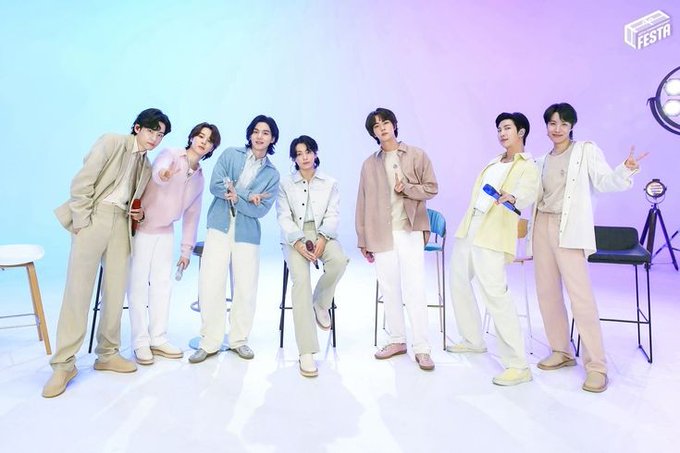
Rolling Stone ranked BTS’ solo songs. The image below shows the rankings and the songs from each member that made the list: 49 songs by RM, 35 from Suga, 27 from J-Hope, 19 from Jin, 16 each from Jimin and Jungkook, and 15 from V.
It’s worth noting that RM, Suga, and J-Hope naturally have more in their catalogues because they’ve been writing far longer than Jin, Jimin, V, and Jungkook. It’s no surprise that the three rappers dominate the list.
However, some key songs were left out — It’s Definitely You by V and Jin, 4 O’Clock by RM and V, Letter by Jimin, and Still With You and Stay Alive by Jungkook. I may have missed a few others, but the omissions aren’t many.
Unfortunately, the piece contains errors and questionable choices. Let’s go through them one by one to prevent misinformation. Given Rolling Stone’s high credibility with both search engines and AI platforms, it’s important these issues are corrected so inaccurate details don’t become “facts” online.

The image shows a summary of Rolling Stone’s ranking of BTS’ solo songs.
THE CRITERIA WAS NOT MENTIONE
While the author later claimed there were 100 more songs that didn’t make the cut because they “didn’t meet the criteria,” she never stated what those criteria were. She also said she had kept them but has yet to publish them. As she included nearly all of each member’s discography, it’s unclear what the missing 100 could be. Perhaps she meant to include solo tracks from BTS albums and covers — but even then, the numbers don’t quite add up.
CREDITS
Suga’s trilogy (Agust D, D-2, and D-Day) was not released under the name “Suga.”
He is one of the few, if not the only, artists to chart on major Billboard rankings under three different monikers: Suga, as a member of BTS, and Agust D. The Agust D name was deliberately chosen to separate his solo identity from his BTS work. Miscrediting those albums undermines that distinction.
RANKING SKITS AND INTERLUDES
BTS albums often include skits, interludes, and other non-song tracks — sometimes to mark milestones with ARMY or set an album’s tone. These are not songs. Yet the list includes a skit while overlooking proper songs that could have been featured instead.
Perhaps the author personally valued these interludes more than other tracks, but it’s important to note: a skit is not a song.
JUNGKOOK’S SONGS WERE NOT AUTOBIOGRAPHICAL
The author described Jungkook as “grown up and unafraid to express his carnal desires,” quoting 3D. While Jungkook and the others have every right to sing about whatever they choose, he has stated in interviews that these songs are not autobiographical. He selected them for their romantic themes and universal appeal, aiming to connect with the widest audience possible.
JIMIN WAS CLEAR ON THE MEANING OF “LIKE CRAZY”
The piece suggested that Like Crazy could be seen as overtly sexual. While interpretation is always open, accuracy demands sharing the artist’s stated intent — especially with deeply personal work. Jimin has repeatedly explained that the song reflects losing himself in the shallow comfort of being aimless during the pandemic, inspired by a film of the same name. The movie itself was not sex-centered.

Screencaps of Jimin’s interview with Vogue. This is one of the many times Jimin explained the meaning of ‘Like Crazy’ and his album ‘Face’.
NOT ABOUT THROWING UP
The article claimed ‘Too Sad to Dance’ depicts someone drinking too much at a club, throwing up, and being laughed at — making them “too sad to dance.” But even a quick read of the lyrics shows this isn’t accurate. The song is about the deep ache of rejection and loneliness — so profound that even familiar distractions, like clubbing, fail. Here, “dance” is a metaphor for living fully, and the song offers hope that self-love will eventually restore that joy.

INCLUDING COVERS
The author included covers like Jungkook’s Let There Be Love and Falling and V’s Someone Like You. While excellent performances, these weren’t official releases. It’s unclear why these covers made the list over their original songs. Without a transparent selection process, the choice feels arbitrary.
QUALITY OF THE WRITING
With over 170 songs to cover, brevity is understandable — but short shouldn’t mean shallow. Many descriptions barely scratch the surface of a song’s meaning. For example: “Creepy music-box instrumentals, and J-Hope breathing heavily? Yes, we want more!” The track may be lyricless, but even a brief technical or thematic note would have been far more valuable.
THE IMPORTANCE OF ACCURACY
Some may dismiss these concerns as nitpicking one writer’s opinion. But already, a quick search for the meaning of Like Crazy reflects her claim that it’s sexual. AI now pulls her interpretation, not Jimin’s own explanation. The same risk applies to Too Sad to Dance.
BTS is at a pivotal point. We should be amplifying the intelligence and depth of their music, not allowing it to be reduced to shallow stereotypes. Writing like a giddy preteen about a boyband member’s work does nothing to persuade skeptics to listen — and worse, it spreads falsehoods.
IS THIS ALL THEY THINK ARMY DESERVES?
Mediocre writing, inaccurate details, and vague criteria — is this really all they think ARMY or the public deserves? BTS has produced some of the most intelligent, emotionally resonant songs in modern music. Why would anyone think these descriptions do them justice?
If the goal is to introduce BTS to the general public or inspire more people to explore their work, great writing isn’t optional — it’s essential.
