

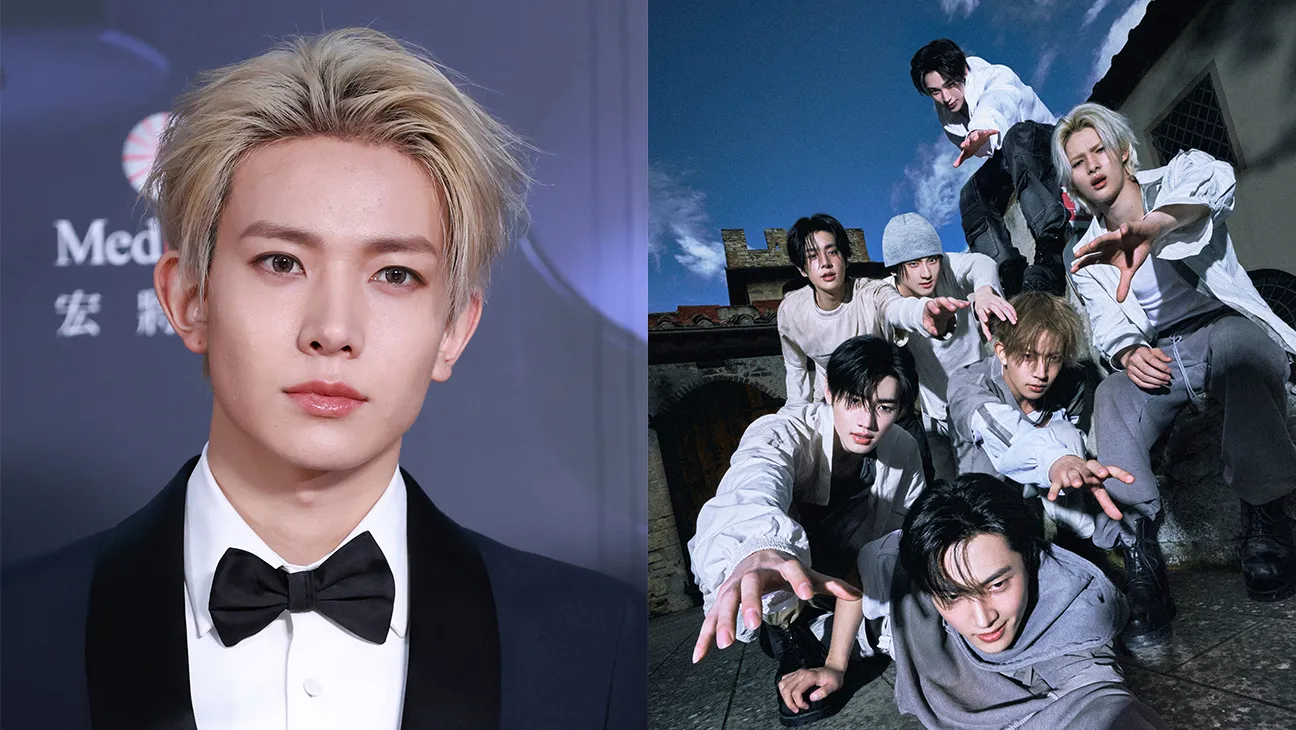
Most K-pop solo careers don’t fail because of talent—they fail because they break a pattern no one talks about. As Heeseung steps into a solo path, history offers a clear framework for what works, what doesn’t, and why timing, fandom, and identity matter more than people think.
Heeseung has the talent. That part is not really the question. The harder question is whether he has all the other elements needed to make it because much as we want to believe otherwise, talent isn’t the only thing needed to launch and sustain a successful career.
When an idol leaves a major group and goes solo, fans tend to reduce the whole thing to individual ability. Can he sing? Can he perform? Does he have star power? In Heeseung’s case, those are the easiest boxes to check. He has long been seen as ENHYPEN’s strongest all-around vocalist, one of its most reliable performers, and one of the members most central to the group’s musical identity. BELIFT LAB has now confirmed that he will not return to ENHYPEN and will instead pursue solo activities.
So yes, he stands a chance.
Whether he can make it big is a different matter, because K-pop solo success has never been a simple meritocracy. It follows a pattern. Not a perfect formula, not a law of physics, but a pattern clear enough that when an artist breaks from it, the industry notices.
And that pattern matters here, because Heeseung is stepping into one of the hardest lanes in Korean pop: the idol-to-soloist transition.
The pattern is real
If you look at the most durable idol soloists, the same structural features show up again and again.
Taemin debuted solo in 2014 with Ace while SHINee was still active. Taeyeon debuted with I in 2015 while Girls’ Generation was still active. Sunmi made her solo debut under JYP in 2013 and later rejoined Wonder Girls for the group’s 2015 return. Baekhyun launched City Lights in 2019 while EXO remained active, and the EP became a major commercial success. Zico also did not begin as a post-Block B soloist; he made his first solo release in 2014 while still identified with the group.
That list matters because these are not fringe cases. They are the reference points people return to whenever the industry talks about solo careers that actually lasted.
Once you line them up, the pattern becomes hard to miss.
First, they became important inside the group before they ever stood alone. Not just present, not just liked, but necessary. Taeyeon was not merely a member of Girls’ Generation; she was its defining voice. Taemin was not simply SHINee’s maknae; he became one of the strongest performers of his generation. G-Dragon was not just in BIGBANG; he was central to its creative identity. Baekhyun, likewise, entered solo work with years of public recognition as one of EXO’s standout vocalists.
Second, their solo careers usually began while the group still existed.
That point is more important than people realize. A solo debut that happens while the group is active does not ask fans to choose. It lets them support the individual without treating the move as abandonment, exile, or replacement. It also allows the company to present the solo career as an expansion of the group brand rather than a break from it. Taemin, Taeyeon, Sunmi, Baekhyun, Zico, and the BTS members all benefited from some version of that sequencing. BTS, even at a much larger global scale, still followed the same basic logic: individual projects grew while the group itself remained intact as an active identity.


Third, they usually stayed in the same agency, at least at the start.
That is not because labels are generous. It is because continuity lowers risk. The company already knows the artist’s audience, strengths, production style, and market position. Taeyeon and Taemin launched solo careers under SM. Sunmi launched under JYP before moving later. Baekhyun’s breakthrough solo debut was still under SM’s system. Zico’s early solo work came while he was still operating within the Block B era rather than after some clean institutional reset.
Fourth, the soloist usually offers something the group does not.
This is the artistic part of the pattern. The successful cases are not just “member, but alone.” They establish a different proposition. Taemin’s solo work leaned darker, more sensual, and more performance-driven than SHINee’s group output. Taeyeon’s solo catalog gave her room to foreground emotion, vocal texture, and a more intimate register. Sunmi developed a distinctive off-kilter pop persona that was recognizably hers. Zico’s solo identity leaned even more heavily into authorship, production, and his dual credibility inside idol pop and Korean hip-hop.
That is the pattern in plain English: become indispensable in the group, keep the group intact while launching solo, use the agency infrastructure at first, and present an individual artistic identity strong enough to justify the separation.
Why the pattern exists
This is where the conversation gets more interesting, because the pattern is not random. It reflects how K-pop actually works.
An idol solo career does not begin from zero. It begins from a fan economy.
That means fandom support is not just helpful in the beginning. It is often the entire bridge between group fame and individual viability.
Albums, chart performance, early streaming traction, ticket demand, brand deals, press interest, social media engagement, even the aura of inevitability around a debut — all of that is easier when the soloist inherits an activated, emotionally invested fanbase. Launching while the group is still active makes that transfer smoother. Fans are not being asked to mourn something first. They are simply being asked to widen their support. That difference matters.
It matters to agencies too. A solo debut is expensive. It requires songs, visuals, staff, marketing, choreography, media rounds, and usually a whole new narrative. Companies are far more willing to spend that money when the artist already comes with a proven fandom and a built-in storyline. A group-backed soloist is not a cold start. It is a leveraged asset.
There is also a psychological side to it. Fans need time to adjust to seeing an idol as a complete artist rather than one piece of a group machine. A gradual solo rollout gives them that time. They learn the member’s taste, tone, writing style, performance habits, and emotional vocabulary. It turns recognition into authorship.
That is why the pattern keeps repeating. It is not just tradition. It is risk management, fan psychology, and market logic all working in the same direction.
The exceptions are fewer than people think
This is where people usually start throwing out names that do not really hold up under scrutiny.
Somi is visible, but she is not the kind of example that disproves the pattern. She has recognition, brand value, and periodic relevance, but not the kind of dominant, durable solo position people usually mean when they talk about top-tier idol solo success.
Chungha and Kang Daniel are more substantial cases, but they came out of project groups that were designed to end. That is a different structure entirely. I.O.I and Wanna One were not permanent groups whose members later chose solo independence; they were temporary formations that effectively trained audiences to expect the post-group transition. That makes them relevant, but not perfect counterexamples to the usual idol-group model.
Zico is often treated like an exception, but he really is not. He did not need to leave Block B to become Zico. His solo identity was built while his group identity still existed. In fact, his case reinforces the pattern more than it breaks it. He had public credibility, authorship, and a strong enough personal brand to stretch beyond the group without severing it first.
Jay Park is the real exception, and even his case proves how difficult this path is.
He did not smoothly transition from 2PM into a carefully managed solo career. He left under crisis conditions, had his contract terminated, rebuilt his audience through YouTube, then re-entered the market through a different cultural lane, one far more tied to Korean hip-hop and R&B than to the traditional idol model. Later, he built AOMG and H1GHR Music and turned himself into something bigger than a former idol. That worked because he did not simply continue the idol template. He changed ecosystems.
That is why Jay Park cannot be treated as proof that anyone can leave a group and make it. His path required a scandal, a forced exit, a genre pivot, entrepreneurial skill, cultural timing, and a willingness to become a different type of artist altogether.
Most idols do not have that combination, and most companies would not know how to build it even if they tried.
Where Heeseung aligns — and where he doesn’t
Heeseung fits part of the historical pattern very well.
He was not a peripheral member. He enters this transition with real standing. He is widely recognized as one of ENHYPEN’s most musically important members, which gives him a level of credibility that many soloists struggle to build from scratch. He also remains under BELIFT, which means he retains access to the infrastructure that typically supports early solo careers.
Those are not small advantages. They are the reason this is even a viable path.
But he also diverges from the pattern in ways that matter.
The most immediate difference is timing. Historically, the safest solo transitions happen alongside an active group. Heeseung is stepping into something closer to a replacement structure than an expansion. That changes the emotional equation for fans. Supporting a solo project is one thing. Adjusting to the absence of the group dynamic is another.
There is also the question of scale.
Many of the most successful soloists launched from groups that had already reached clear saturation. BIGBANG, Girls’ Generation, EXO, SHINee, BTS — these were not just successful groups; they were dominant cultural forces at their peak. That level of exposure creates broad public familiarity, not just fandom recognition.
ENHYPEN is successful, but still in a growth phase rather than a legacy phase. That means Heeseung is not launching from universal recognition. He is launching from a strong, but more concentrated, fanbase.
Then there is identity.
Heeseung is known as a strong vocalist and a reliable performer. But that is still a group-defined role. It does not yet answer a more difficult question: what kind of artist is he when the group context is removed?
The most durable soloists tend to have some version of that answer before their official solo debut. A production style, a conceptual direction, a recognizable musical preference. In Heeseung’s case, that identity will likely need to be established in real time.
The transition itself is also sharper than usual.
Many idols ease into solo work through OSTs, mixtapes, collaborations, or subunits. These serve as bridges, gradually teaching the audience how to engage with them as individuals. Heeseung’s move feels more immediate, which removes some of that runway.
None of these are disqualifiers. But they are points where the usual support system is thinner.
Can he make it big?
He has the skill. Unfortunately, skill isn’t the only deciding factor in a solo kpop career.
If his existing fanbase follows him as an individual rather than remaining attached to the group memory. If his music gives audiences a clear sense of who he is outside of ENHYPEN. If his solo work establishes a distinct artistic center rather than relying on technical ability alone.
That is where many idol solo careers stall. Not because the artist lacks skill, but because the identity remains unclear.
Heeseung has more in place than most. He has recognition, ability, and institutional support. What he does not fully have yet is a defined solo proposition.
That is the part that will decide everything.
If he and his team can build that quickly and convincingly, then he is not just following the pattern. He is operating at its edge.
And if he manages to convert group importance into a lasting individual identity without the gradual transition most of his predecessors had, then the conversation shifts.
At that point, he is no longer being measured against the pattern.
He becomes part of how the pattern evolves.
