

SB19 may be primed for a much bigger U.S. push
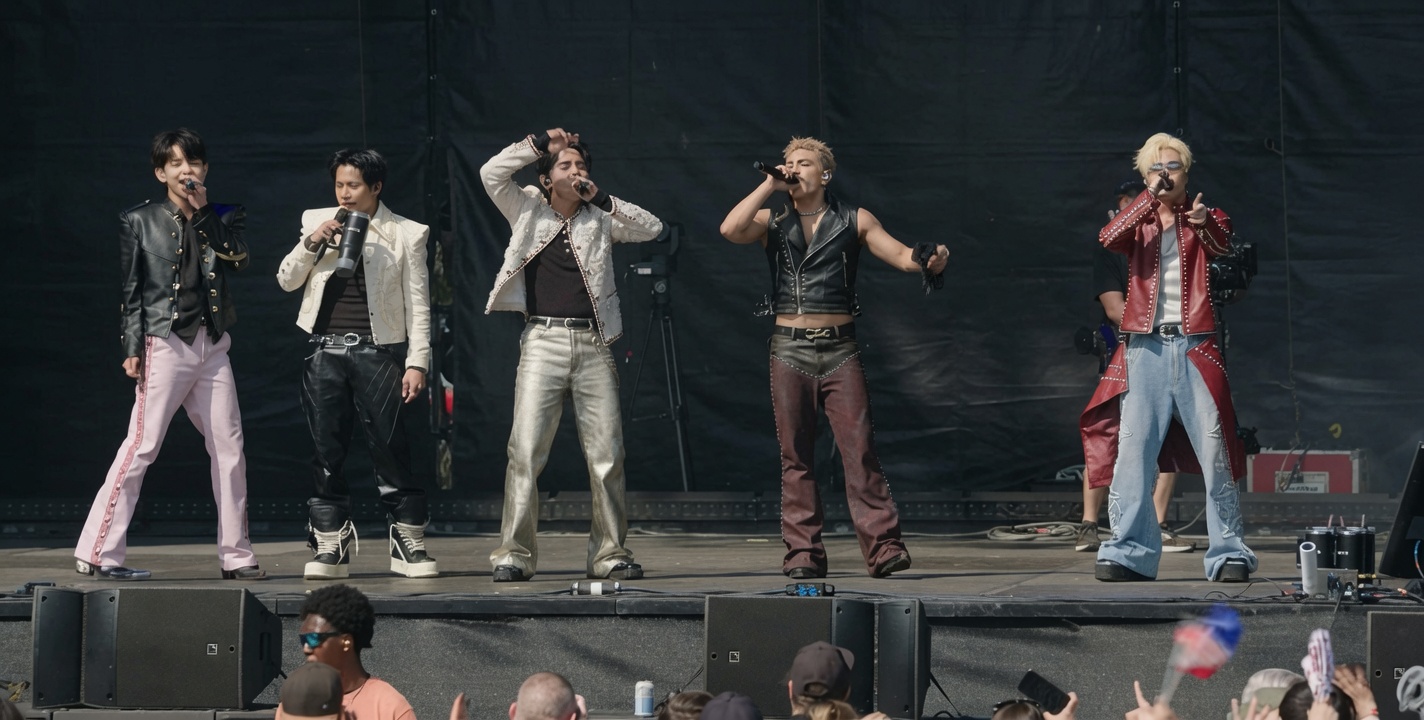
SB19 just made history at Lollapalooza Chicago, becoming the first Filipino act to perform at the festival—and I think the bigger story is that they are increasingly looking like a group primed for a much larger U.S. market push.
The five-member group took over the Allianz Stage on Thursday for an hour-long set that included “DAM,” “Gento,” “Emoji,” “Mapa,” “Wakas,” “Visa,” “Dungka!” and “Crimzone.” They also debuted “Lawless” live and previewed their cover of Francis Magalona’s “Mga Kababayan,” which will appear in DreamWorks Animation’s Forgotten Island.
And because this was Chicago, they apparently decided they needed a sixth member.
Chicago Bulls mascot Benny the Bull came out during “Dungka!” and actually joined the choreography. It was funny, extremely shareable and exactly the kind of festival moment that can travel beyond an existing fandom.
But what really caught my attention was what happened around the performance.
SB19 weren’t playing one of Lollapalooza’s headline slots. They performed at 3:30 in the afternoon on the Allianz Stage. Yet reports from Chicago described the crowd growing during their performance, while the show became an enormous event thousands of miles away in the Philippines.
There were organized watch parties, including a free Department of Tourism event at Rizal Park in Manila. The performance was also available internationally through streaming platforms including Weverse and Disney+, giving SB19 an audience far beyond Grant Park.
SB19 already has something many artists trying to enter America spend years attempting to build: a highly organized international fandom that can create demand before mainstream U.S. audiences fully know who they are.
What Lollapalooza gives them is something different—discovery.


Festivals put artists in front of people who didn’t necessarily buy a ticket for them. Someone waiting for another performer can hear “Gento,” wander over and suddenly find themselves watching five Filipino guys dance like the electricity bill is due tomorrow.
That is where SB19’s strengths translate particularly well.
They can sing live. They can dance. Their performances are extremely physical. Their catalog moves between pop, hip-hop, ballads and more aggressive performance tracks. And unlike an arena filled primarily with A’TIN, a festival lets them demonstrate that appeal to people who may have absolutely no relationship with P-pop.
Lollapalooza also wasn’t a one-off American stop.
SB19 are staying active in the U.S. with shows at Graton Resort & Casino in Northern California on August 8 and 9. Then on October 31, they’re scheduled to perform at KPOPWORLD at the Alamodome in San Antonio.
There is also infrastructure behind this expansion. SB19 have been working with Live Nation Philippines, while remaining under their own 1Z Entertainment. That combination is important because international expansion requires more than popularity: artists need promoters, booking relationships, venues and touring infrastructure capable of turning online demand into actual shows.
And SB19 is arriving at an interesting moment.
For years, the Asian-pop conversation in America has overwhelmingly centered on South Korea. K-pop did the incredibly difficult work of proving that Asian artists singing primarily in an Asian language could build enormous Western audiences.
Now that door is open wider.
SB19 don’t have to recreate K-pop’s path. They can walk into an American market that is already considerably more comfortable with Asian pop—and introduce audiences to something distinctly Filipino.
That’s why Lollapalooza feels bigger than another line on SB19’s résumé.
The important question isn’t whether everyone at Grant Park knew SB19 when they walked onto that stage.
It’s how many more people knew them when they walked off.
And with California coming next, followed by San Antonio, SB19 have several more opportunities this year to turn that curiosity into an American audience.