

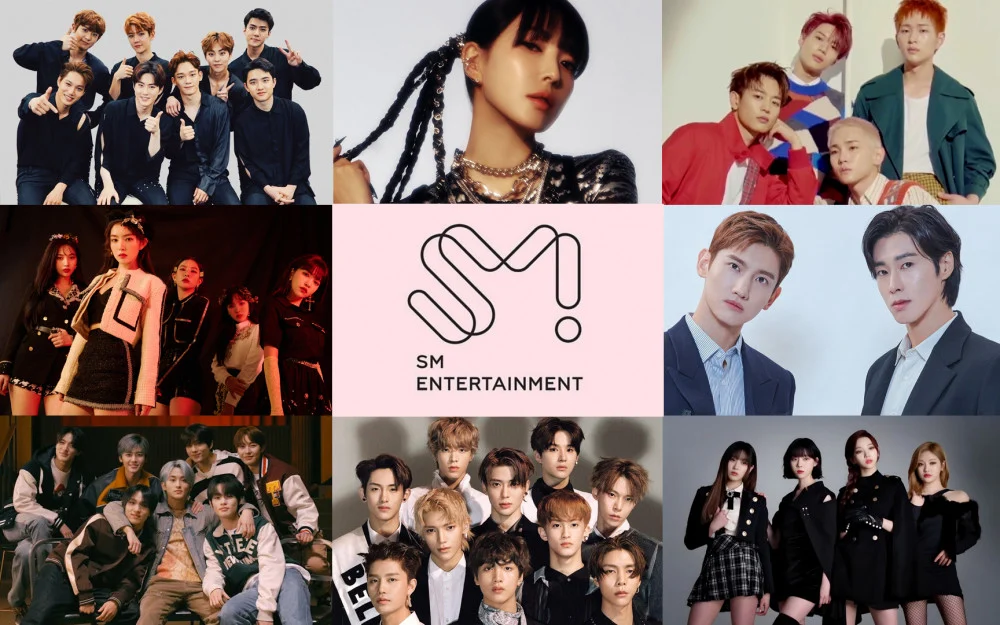
SM Entertainment just posted another solid quarter, and the numbers quietly confirm what the industry has been feeling for a while: K-pop isn’t really about album sales anymore. It’s about building a year-round, multi-channel fandom economy—and SM is executing that shift better than most.
Consolidated revenue hit KRW 279.1 billion (roughly $203 million), up 20.6% year-over-year. Operating profit rose 18.5% to KRW 38.6 billion. The net profit drop to KRW 36.7 billion looks ugly at first glance, but it’s almost entirely a one-time math thing: last year’s big gain from the additional DEARU share acquisition created a high base, plus some tax timing. Strip that away and the underlying business is firing on all cylinders.
The Real Story Is in the Breakdown
SM Entertainment, the parent company, climbed 14.4% to KRW 189.3 billion despite a tough comp from one-off digital revenue last year. Physical album/digital music actually dipped 15.2%, but that was more than offset by two much faster-growing buckets:
- Concert revenue: KRW 60.8 billion, +56.0% YoY.
- MD & licensing: KRW 47.4 billion, +20.3% YoY.
SM ran multiple overlapping tours in Q1—Super Junior’s SUPER SHOW 10 (12 shows), NCT DREAM’s DREAM THE FUTURE (11 shows), aespa’s SYNK: aeXIS LINE (4 shows), RIIZE’s RIIZING LOUD (11 shows), and NCT WISH’s INTO THE WISH (12 shows). That scale, plus strong pop-up MD (think EXO “REVERXE THE WORLD” and NCT WISH “WISH BAKERY”) and fan-light renewals, turned fandom excitement into direct cash.
Further, gross profit at the parent level held up at KRW 60.0 billion even with higher touring costs, and operating profit was still a healthy KRW 38.8 billion. The machine is efficient.
Touring Is Becoming the Center of the Business
Streaming changed how audiences consume music, and in the process, it lowered the value of individual song ownership. Entertainment companies responded by building larger commercial ecosystems around artists themselves.
In SM’s case, the artist is no longer just a musician releasing albums every few months. The artist has become an intellectual property capable of generating continuous revenue through touring, merchandising, fan communication platforms, licensing, pop-up events, sponsorships, and collectible culture.
The company’s touring business is now one of its strongest financial engines. Global tours from Super Junior, NCT DREAM, aespa, RIIZE, and NCT WISH all contributed to the jump in concert revenue.
And SM’s upcoming concert schedule suggests the company is scaling that operation even further.
According to its presentation, aespa’s next world tour will stretch across South Korea, Latin America, and North America, while EXO concerts, fan meetings, and touring activities from multiple artists continue throughout the year.
The density of the schedule itself is revealing. There is almost no downtime. One artist releases music while another tours, another launches merchandise, and another begins fan events in Japan or Southeast Asia.
That consistency is intentional. Entertainment companies increasingly prefer recurring, year-round revenue flows rather than depending heavily on a few blockbuster album cycles.
Merchandise Has Become a Fandom Experience
Merchandise is also becoming far more important than many casual observers realize.
SM specifically highlighted strong sales tied to EXO pop-up events, NCT WISH projects, and aespa’s renewed fan-light products.
In the West, merchandise is often treated as supplementary income attached to touring. In K-pop, merchandise has evolved into something much larger: a fully integrated extension of fandom participation itself.
Light sticks, for example, are no longer simple concert accessories. They function as collectibles, identity markers, synchronized concert technology, and recurring upgrade products. Pop-up stores operate less like traditional retail and more like immersive fan experiences designed to generate social media engagement, exclusivity, and repeat spending.
The result is a business model where fans are not simply consuming music. They are participating in an ongoing ecosystem built around the artist.
Subsidiaries Are No Longer the Weak Link
The consolidated picture gets even better when you zoom out. Major subsidiaries delivered KRW 136.8 billion in revenue (+30.8% YoY) and flipped to positive operating profit of KRW 2.4 billion. Standouts:
- SM ENT JAPAN (formerly SMC): revenue +46.5%, operating profit swung from loss to KRW 2.4 billion. Japan remains a rock-solid market for physicals, fan events, and repeat touring—exactly the kind of high-margin, high-loyalty business SM is leaning into.
- DEARU (Bubble platform): fully consolidated and still printing stable profits (KRW 9.7 billion OP). This is the quiet recurring-revenue engine everyone underestimates. Paid fan messaging isn’t flashy, but it’s predictable cash that doesn’t depend on chart positions.
Other units like SM BM (pop-ups) and SM LDG (album printing) also grew nicely. The portfolio is finally working together instead of dragging.
Global-by-Design: The Hearts2Hearts Signal
SM’s report also highlighted rookie girl group Hearts2Hearts as part of its long-term growth strategy.
According to the company, songs like “The Chase” and “STYLE” have already surpassed 100 million Spotify streams globally, while “RUDE!” reportedly receives around 85% of its streams from overseas listeners.
Earlier generations of K-pop often expanded internationally only after establishing strong domestic popularity. Today, many companies build groups with global streaming audiences already in mind from debut onward. International playlist compatibility, multilingual promotion, TikTok circulation, and overseas touring potential are increasingly embedded into the strategy from day one.
Japan also remains a major pillar of SM’s business. Revenue at SM Japan rose 46.5% year-over-year thanks to expanded artist activities in the country.
While American expansion tends to dominate headlines, Japan continues to be one of the most financially reliable markets for K-pop companies because of its strong physical sales culture, touring demand, and willingness among fans to spend consistently on collectibles and events.
The Pipeline Is Relentless
SM’s Q2 and Q3 are packed including music drops from Taeyeon (full album), aespa (full album), SHINee (multiple minis), RIIZE, NCT 127, Red Velvet, and more.
Tours and fan-cons already rolling or confirmed: EXO’s massive EXHorizon trek across Asia, aespa’s upcoming North/Central America + Europe legs, Jaehyun fan-con, NCT JNJM fan meetings, and layered Asia tours from almost every major act.
There is almost zero downtime. One group is on the road while another drops music, while another launches merch drops and Japanese promotions. That constant activity creates steady cash flow instead of the old “comeback or bust” rollercoaster.
What This Quarter Really Says About Where SM Is Headed
SM isn’t a traditional music label anymore. It’s a global live-entertainment and fandom-experience company layered on top of an IP powerhouse.
Concerts have moved from “promotional tool” to core business. Merch and licensing are no longer side hustles—they’re high-margin, repeatable revenue tied to emotional connection (light sticks aren’t just toys; they’re collectibles, identity markers, and app-synced hardware). DEARU/Bubble proves subscription-based direct fan relationships can deliver recurring income that streaming royalties can’t touch. And Japan continues to be the most reliable high-spending market while the West gets the viral headlines.
It seems that SM has realized that chasing the next viral hit won’t grow a company globally. You have to build deep, develop sticky fandom infrastructure around artists who can tour globally, sell merch year-round, and keep fans paying monthly for direct access.
SM’s Q1 2026 results show that model working in real time. Revenue is up, profitability is stable, the touring calendar is aggressive, and the release slate is loaded. The high base effects and accounting noise made the headline net profit look messy, but the operational momentum is unmistakable.
K-pop’s next era isn’t about bigger albums. It’s about bigger, smarter fandom economies. And right now, SM is one of the best at building them.
