

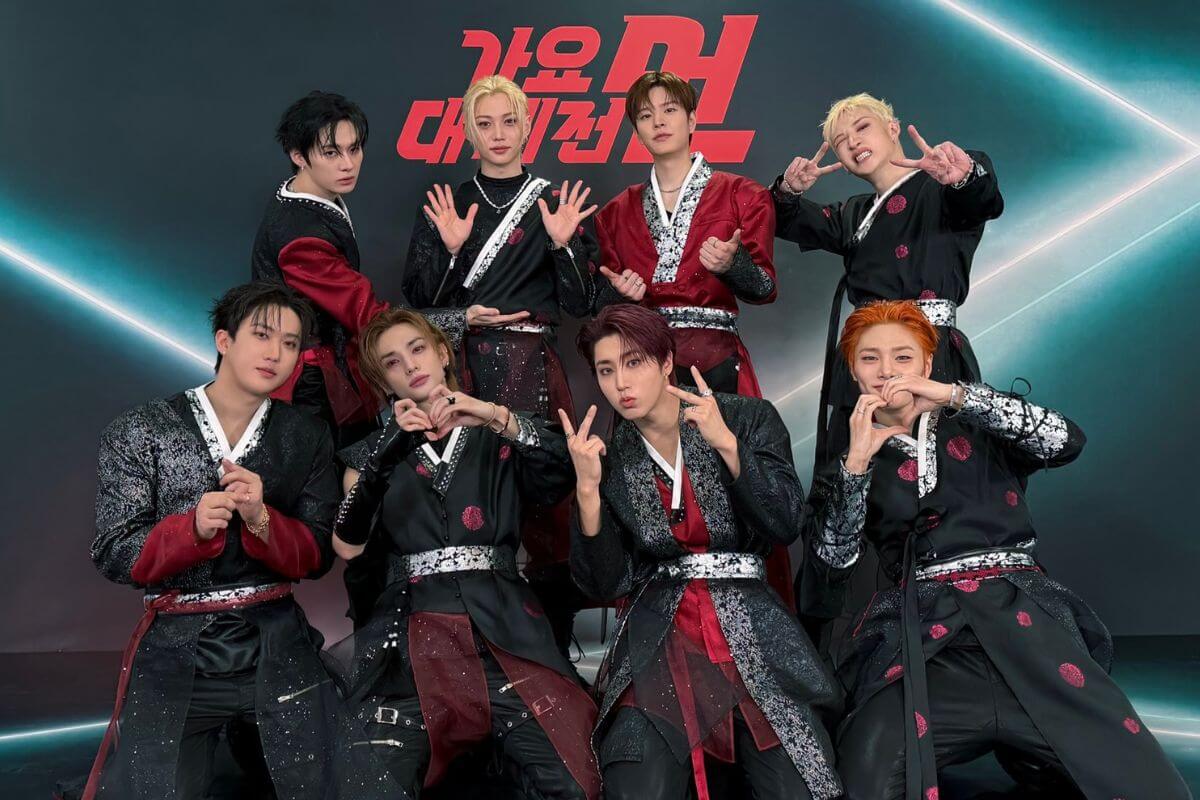
Stray Kids’ The Dominate Experience opened at No. 1 at the global weekend box office with $19.1 million across 61 countries, marking a milestone for K-pop concert cinema. While BTS still holds the all-time gross record, the strong debut signals that theatrical concert films are becoming a permanent fixture in how fans experience music.
Sixty-one countries. Nineteen million dollars in one weekend.
Stray Kids did something no K-pop concert film had done before: open at No. 1 at the global weekend box office with Stray Kids: The Dominate Experience. That distinction refers specifically to opening-weekend positioning — a snapshot of global dominance during that release window. Built around their SoFi Stadium show in Los Angeles, the film grossed $19.1 million across 61 territories in its opening frame. In North America alone, it pulled in over $6 million within days of release. Premium formats drove the margins higher — IMAX alone accounted for roughly 20 percent of the global haul, marking the biggest IMAX opening weekend ever for a Korean-language release.
The numbers are striking, but the context matters even more.
BTS established the commercial ceiling for K-pop concert cinema. BTS: Yet to Come in Cinemas ultimately grossed around $53 million worldwide, while earlier films such as Bring the Soul: The Movie and Burn the Stage proved that fans would show up for theatrical experiences beyond the stage itself. Stray Kids have not surpassed those lifetime totals, but their opening weekend momentum strengthens the case that concert films are no longer experimental extensions of tours. They are fixtures.
And that shift says something deeper about how fans experience music now.
The Premium Experience as a Signal
Part of the success lies in execution. The film was directed by Paul Dugdale, whose résumé includes Adele, Coldplay, Taylor Swift, and the Rolling Stones. The production emphasizes scale without sacrificing intimacy — sweeping drone shots over SoFi Stadium, multilevel camera coverage, close vocal tracking.
The rollout strategy also reveals how the market has evolved. IMAX, 4DX, ScreenX — these are not standard screenings. They are sensory amplifiers. Motion seats, wind effects, vibrations synchronized to choreography. Tickets in many territories ran $25 and above, yet fans opted in.
This is no longer about watching a recording. It is about extending the concert into a second, engineered environment.
Why Concert Movies Are Becoming Core to Fandom
There is a psychological shift underpinning this trend.
1. Scarcity and Access
Stadium tours are limited by geography and time. A concert film democratizes access while preserving scale. Fans who could not attend in person gain proximity; fans who did attend revisit the event through a different lens. The cinema becomes a controlled replay of collective memory.
Scarcity remains intact — theatrical runs are often short — but the access window widens.
2. Collective Emotion in a Controlled Setting
Concerts are communal experiences. Cinema recreates that collectivity in a different architecture. Fans gather, chant, light up their phones, sometimes treat screenings as quasi-live events.
In an era of hyper-individualized streaming, shared physical environments carry emotional weight. Concert films preserve that shared energy without the logistical strain of touring.
3. The Process Is Now Part of the Product
Perhaps the most consequential shift is not technological but cultural.
Modern fans want to understand how music is built — rehearsals, staging, camera blocking, vocal preparation, creative decision-making. Documentary segments woven between performances, as in Stray Kids’ film, reflect that appetite.
The interest is no longer limited to the polished final performance. The scaffolding fascinates. How the lighting grid was constructed. How the choreography translates from rehearsal room to stadium. How a director chooses which vocal line to follow. The machinery behind spectacle becomes content.
This aligns with broader digital culture. On TikTok and YouTube, process-driven content performs strongly. Studio clips, songwriting breakdowns, behind-the-scenes footage generate engagement comparable to official releases.
The making of art has entered the artwork.
Why This May Be Structural, Not Temporary
The economics reinforce the psychology.
Premium cinema formats increase per-seat revenue. Production budgets can be amortized across global theatrical runs. Touring cycles are physically finite; filmed versions extend their lifespan.
For artists, concert movies preserve legacy moments in cinematic form. For agencies, they diversify revenue streams. For fans, they provide immersive access.
When both sides benefit, repetition follows.
The BTS Benchmark and the Expanding Field
BTS remains the commercial benchmark. Their concert films demonstrated that global audiences would treat K-pop stadium performances as cinematic events. Stray Kids’ opening weekend strengthens the argument that this was not a one-off phenomenon tied to a singular group’s scale.
It suggests that concert cinema has matured into an industry layer — one that sits between streaming content and live touring.
A Shift Toward Process as Art
For decades, music culture emphasized the finished artifact: the song, the album, the live show. The rehearsal room remained hidden.
Today, fans track teaser rollouts, choreography practice clips, stage build-outs, and documentary fragments. They want narrative continuity — not just results.
Concert films sit at the center of that evolution. They present the performance as spectacle while revealing the labor underneath. The audience consumes both simultaneously.
This may be the strongest signal of all: art is no longer experienced as a sealed object. It is experienced as an unfolding system — visible, dissectible, participatory.
Stadium lights turn off. The cinema lights dim. The experience continues.
