

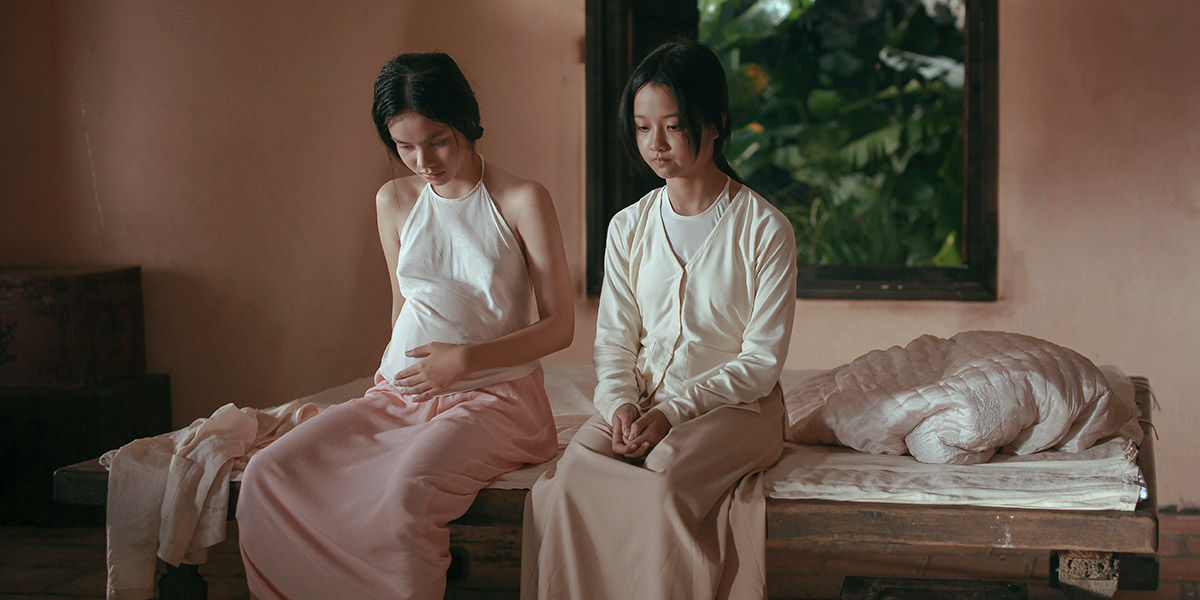
When the first thing you hear about a film is the controversy surrounding an “intimate” scene between a child and an adult actor, you brace yourself. The Third Wife was banned in Vietnam for precisely that reason—its 13-year-old lead, Nguyen Phuong Tra My, appears opposite a 46-year-old co-star in scenes that many considered unacceptable even within the film’s historical context. The uproar was immediate; the ban came soon after.
But beyond the headlines is a film far more delicate, thoughtful, and unsettlingly quiet than the discourse around it ever suggested.
Third Wife Summary
The story follows May, a young girl who becomes the third wife of a wealthy landowner. She enters this household with little preparation and even less agency, expected to adapt quickly to a life where hierarchy is permanent and obedience is her contribution to the family.
Her journey is less about romance and more about survival—learning what “being a wife” means in a structure designed to keep her small.
What makes Bollywood so different from Hollywood.
The Ban
The controversy was inevitable the moment the casting was announced. Vietnam News reported widespread public anger over a child actress portraying a role that includes marital intimacy. The director, Ash Mayfair, defended the decision, stating that the set handled every sensitive scene with extreme care. The parents echoed this, insisting their daughter wanted the role and was protected throughout the filming.
The response did not soften. Many argued that, careful or not, the production crossed a cultural line. Others criticized the parents for allowing their daughter to participate. The debate was so loud that the film itself nearly disappeared beneath it.
The Narrative
The subject matter is uncomfortable because it depicts something that once happened—and in some regions still does. Child marriage, while increasingly challenged, remains a part of Asia’s social history. Indonesia only recently outlawed it; other countries still struggle with enforcement.
The Third Wife does not attempt to sensationalize these realities. Instead, it treats them with the kind of restraint that leaves you uneasy. There are no explosive confrontations, no dramatic speeches, no villains twirling metaphorical mustaches. The film simply follows daily life as it was, letting the audience piece together the emotional consequences on their own.
It also touches lightly, but meaningfully, on themes of sexuality and forbidden desire—especially between characters whose choices are limited by tradition. Again, no theatrics, just the quiet ache of people negotiating lives already decided for them.
Treatment
The rhythm of the film is gentle, almost to the point of stillness. The camera moves as if afraid to disturb the air. The dialogue is soft, the blocking graceful, the performances minimalistic.
This restraint isn’t stylistic decoration; it reflects the social expectations of the time. Women were taught to be composed, men to be controlled, and turbulent feelings were expressed through whispers, glances, and discreet rebellion.
Even among the wives—who share the same husband—there is an unexpected tenderness. Rivalry isn’t the foundation; community is. They comfort each other, guide each other, and in their own way, form a family shaped by circumstance rather than choice.
The film refuses to condemn them or the husband. No one is painted as a villain. Everyone simply exists within the confines of their era. That gentleness is what makes the story unnerving—it removes the easy moral escape hatch and forces you to sit in the quiet discomfort of empathy.
Confession: One of Korea’s Finest Movies About Friendship
Writing and Performance
The writing and performances dovetail so seamlessly that it’s difficult to tell where one ends and the other begins. Every gesture feels designed yet natural, as if the script and acting shared the same breath.
Nguyen Phuong Tra My delivers a performance far beyond her years. She balances innocence with a subtle ambition—enough to make her character’s decisions both believable and heartbreaking. Her eyes reveal fear she tries to hide beneath practiced grace, and the clarity of that internal conflict becomes more obvious as the story progresses.
Every actor fits into the narrative with the precision of a photograph where not a single corner feels accidental.
Cinematography
The visual design mirrors the film’s emotional language. Soft pastels, subdued fabrics, slow movements, earth tones, and natural textures dominate the frame. Beauty exists everywhere, but it’s never indulgent.
Even the darker moments—literal and figurative—are expressed through small, controlled details: a streak of blood, a muted shadow, a dirty footprint that shouldn’t be there.
It’s meticulous without drawing attention to its own craftsmanship.
The Sensitive Scenes
Spoiler warning applies after this point.
Yes, the sex scene exists. Yes, it’s sensual. No, it is not explicit. And yes—filmmakers have techniques to execute scenes like this safely. The uncut version shows the director using every cinematic tool to ensure the actress was not placed in harm’s way. Blocking, angles, fabric placement, body doubles, editing—all employed with care.
The childbirth scene and other intimate moments follow the same approach: aesthetically delicate, emotionally charged, but shot with caution.
The young actress later confirmed her mother was present at all times and that the production’s priority was her safety. Her co-star reportedly exercised extreme care as well.
The controversy remains valid, but the film itself is not the exploitative spectacle critics feared.
Recommendation
The Third Wife is a quiet film. The shock does not come from shouting or violence but from the slow realization that you are watching something historically accurate yet deeply uncomfortable. The emotional tremor happens in you, not on the screen.
If you’re looking for action, twists, or confrontations, this will not satisfy you.
If you’re open to mood, symbolism, subtle hints, and emotional archaeology, this film is astonishing.
It demands attention, patience, and a willingness to sit with discomfort—a cinematic experience that is gentle on the surface and deeply unsettling underneath.
