

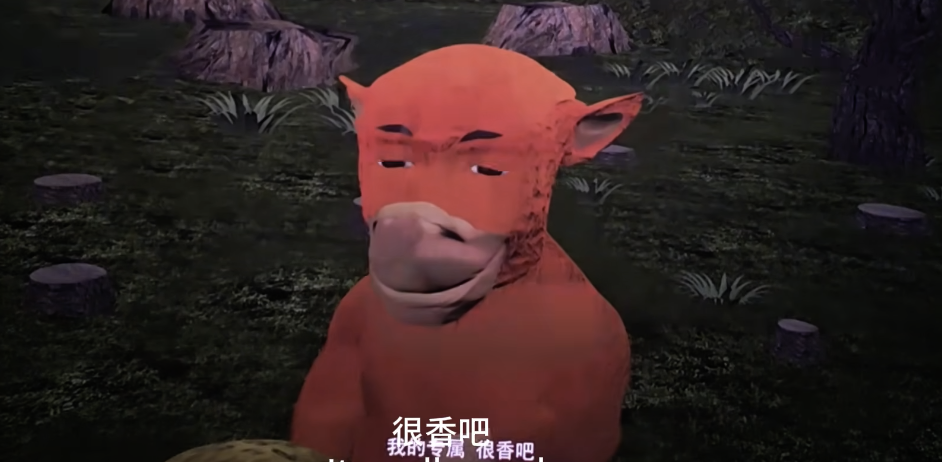
Let’s start with the numbers, because they’re the whole plot twist here. A hand-made Chinese animated movie about a baby cow who can’t stand up opened on August 5 to 122 people and 3,420 yuan. Nine days later it had made a grand total of 7,705 yuan — less than the price of a decent office chair. By August 17 it had crossed 10 million yuan. Somewhere in there, “Niu Lai” quietly became one of the strangest box office stories in recent Chinese cinema, and it did it without a single frame that anyone would call good.
The Setup: A Mother, A Son, and SketchUp
Here’s the part of the story that actually is kind of lovely. “Niu Lai” was made by two people. Director Xin Yumeng handled the modeling and animation solo — using SketchUp, which is architectural design software, the kind of program you’d use to plan a kitchen renovation, not animate a feature film. Her mother, Sun Lifang, wrote the script, composed the music, sang the closing theme, and did voice acting. Five years. No studio. No investors. No AI.
That last part matters, because the internet’s first instinct watching this thing was “surely this is an AI generation gone wrong.” It is not. This is five years of two people building an 86-minute movie about a dream-questing calf entirely by hand, on software built for floor plans. If anything, that makes the finished product more impressive as an act of will and slightly less impressive as an act of animation.
The Story: A Cow Learns to Stand, Metaphorically and Also Literally
The plot, stripped of its more chaotic detours: a newborn calf named Niu Lai — which roughly translates to “come on, cow, stand up” — can’t get on his feet. His mom, undeterred, names him accordingly as encouragement. A talking lark shows up, they fall asleep together, and the movie’s dream sequence eats basically the entire runtime. Inside the dream: snake bites, river crossings, a wolf attack, a genuinely touching maternal sacrifice, and — this is not a typo — a Transformers-style vehicle that attacks a herd of cattle on the open grassland, for reasons the film does not attempt to explain. Niu Lai wakes up. He can stand now. Roll credits, mom’s voice over it.
Is the theme sincere? Yes, genuinely. A kid has to learn courage and independence because eventually mom won’t be there to save him — that’s a fine premise for a children’s film. Is the execution held together with narrative duct tape and vibes? Also yes. Characters appear with zero introduction. A cow serves her husband milk from a wooden cup and casually mentions a wild boar taught her the recipe, and then the movie moves on like that’s normal. It is, charitably, a movie that means well and, less charitably, a movie that might have benefited from a script editor who was allowed to ask “wait, why is there a car.”


The Real Plot Twist: The Internet Did This, Not the Movie
Here’s where it gets interesting, because the film itself did not go viral — the box office number did. On August 14, a hashtag started circulating that just read, essentially, “Niu Lai’s total box office is 7,352 yuan, doesn’t even break 10,000.” That’s it. That’s the whole spark. Not a scene, not a review, not a trailer — a genuinely embarrassing dollar figure, posted for mockery, that made an entire country go “wait, I have to see how bad this actually is.”
From there it was the internet doing what the internet does best: turning contempt into content. Clips of the stiff 3D models and glitchy character movement spread as comedy. People started buying tickets specifically to participate in the joke. Theaters — caught completely off guard, since nobody had prepared marketing materials for a movie nobody expected to matter — started making their own fan-drawn posters because there weren’t official ones to put up. Some cinemas arranged empty seats to spell out the Chinese character for “cow” as a promotional stunt. Stock market investors, noting that “niu” also means “bull” as in bull market, started showing up as a superstitious ritual, hoping the title would manifest a rally. None of this happened because the movie is good. All of it happened because the movie is a story now, and stories are what people actually show up for.
The Joke Nobody Needed But Everybody’s Making
Every discussion of this movie eventually arrives at some version of: couldn’t they have just typed a prompt into Claude or Adobe Firefly and gotten smoother animation in an afternoon? Sure. Probably. A modern AI tool would have fixed the clipping issues, the stiff walk cycles, the character models that look like they’re still loading. But here’s the thing — a competing director, watching his own well-reviewed, professionally made film lose screening slots to this thing, posted online that it felt like “Niu Lai” had torn off the last fig leaf covering Chinese theatrical cinema, and that he was done making films for theaters. That’s not a guy losing to bad animation. That’s a guy losing to a story an algorithm can’t manufacture on demand — the story of two people who made something completely uncynical, without a marketing plan, without polish, and without a safety net, and got rewarded for it anyway, just not for the reasons they probably hoped.
An AI tool can smooth out a cow’s gait. It cannot manufacture “mom sang the theme song” or “the production company used to install kitchen cabinets.” Authenticity, it turns out, is a harder special effect to fake than fur physics.
Blame Social Media. Also, Thank It.
If you want a villain in this story, social media is right there, cackling. A single trending hashtag turned a film that 236 people had bothered to watch in nine days into a movie that made 6 million yuan in a single day a week later. That’s not a discovery mechanism working as designed — that’s a public shaming that accidentally became a marketing campaign. Nobody planned this. Maoyan’s own box office predictions kept getting blown past because there was no model for “movie goes viral for being bad,” because that’s not usually how virality works. Usually the bar is “must be entertaining.” “Niu Lai” cleared a much lower bar: “must be discussed.”
And maybe that’s the actual takeaway here, and it’s a strangely human one. We say we want quality. We say we want polish, competence, professional execution — the things critics and marketing departments spend fortunes trying to manufacture. But given the choice between “well-made and forgettable” and “rough and absolutely bizarre,” a huge number of people, across an entire country, chose bizarre. Not because it’s good. Because it’s interesting, and interesting is rarer, and rarer is worth a ticket.
“Niu Lai” is not a good movie. It might, by the numbers, be one of the more successful ones this year regardless — and if that doesn’t perfectly sum up how humans actually behave versus how we claim to behave, nothing does. We built entire industries around chasing “good.” Then a mother-and-son team with architectural software and zero ad budget accidentally proved that “memorable” was the metric that mattered all along.
Title: Niu Lai (牛来) Director: Xin Yumeng Writer/Composer/Vocals: Sun Lifang Runtime: 86 minutes Release Date: August 5, 2026 (China) Where to Watch: Chinese theatrical release only, as of this writing